(Text and photos: author)
For a long time I paid no attention to the appearance of the MiG-21. Its shape was familiar to me from every angle; after all, since 1988 there has hardly been a year in which I have not seen a MiG-21. Since 1994 not a single year has passed without a flying example. And especially in flight the MiG-21 is unmistakable from every side.
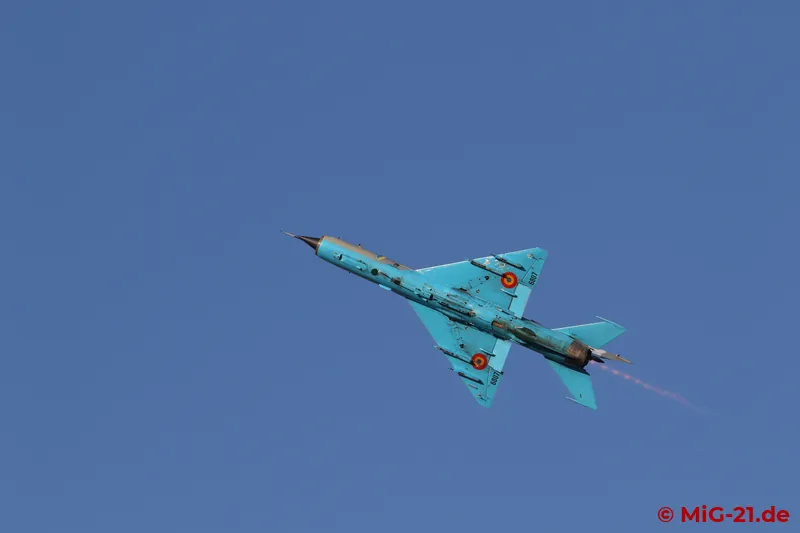
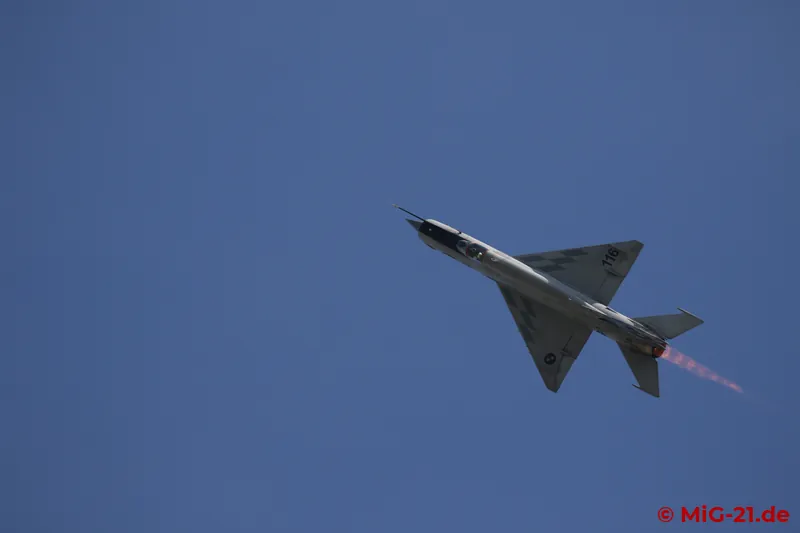
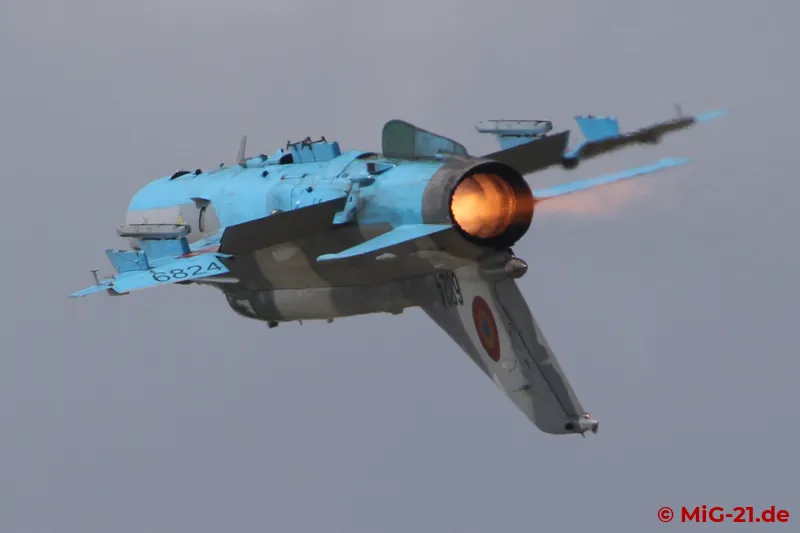
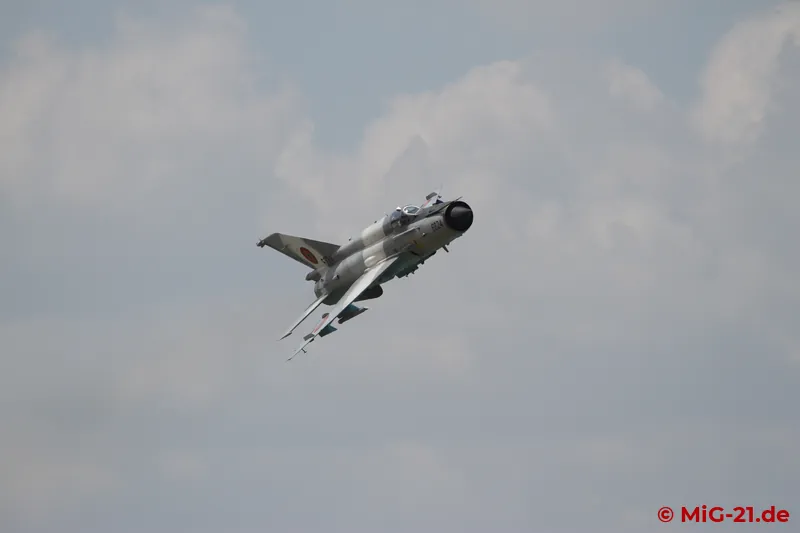
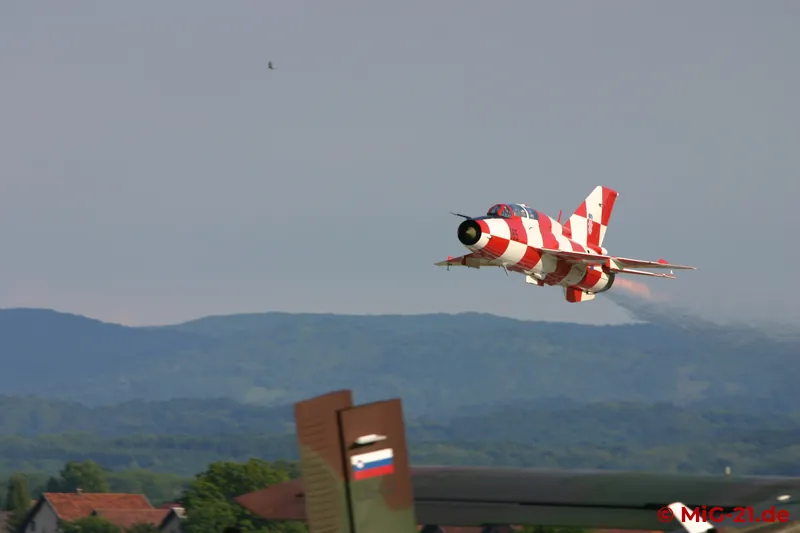
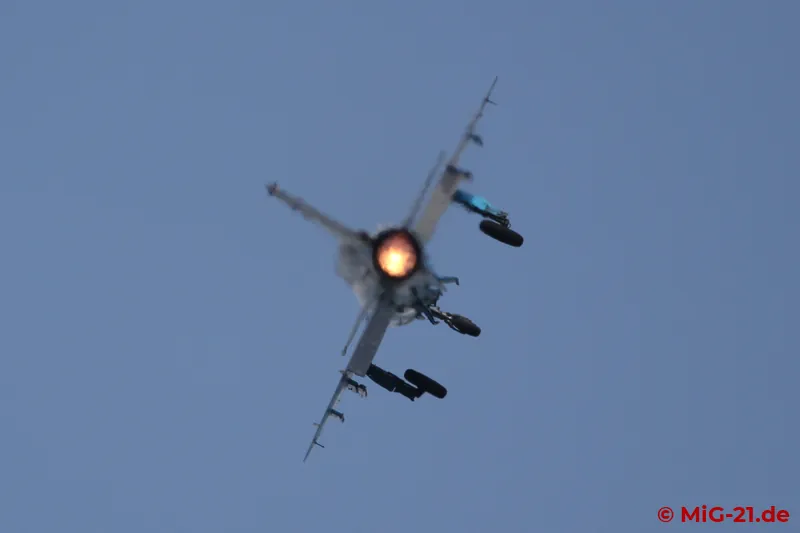
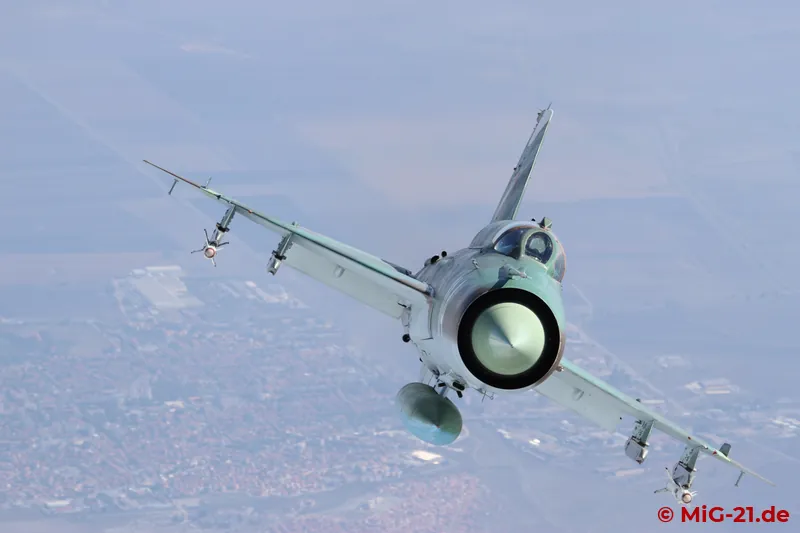
But only since the days of the MiG-21 have been numbered, at least in Europe, have I begun to look more closely and really consciously perceive the familiar silhouette. It is indeed unique, both striking and delicate. From above and below it looks like an arrow. That it reaches Mach 2 with a comparatively weak engine is immediately apparent. That the characteristic delta wings were combined with swept all-moving tailplanes underlines the lightness of the design, as does the fuselage, long in comparison with the wing chord.
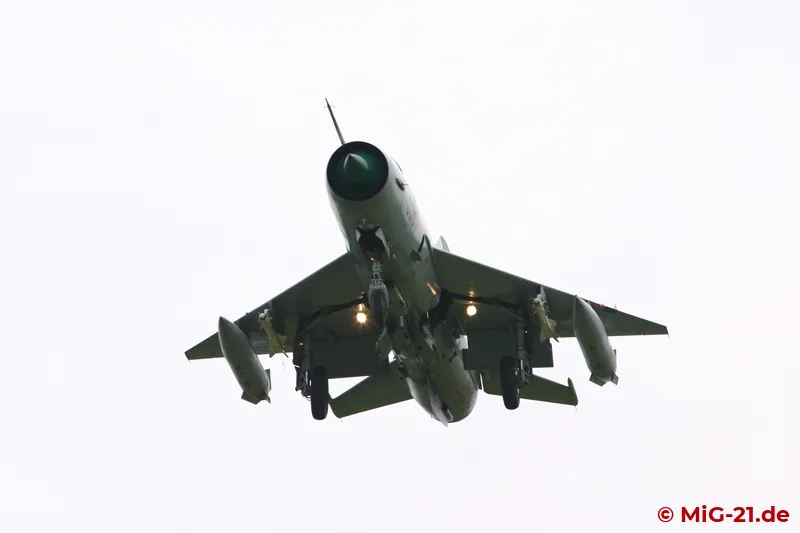
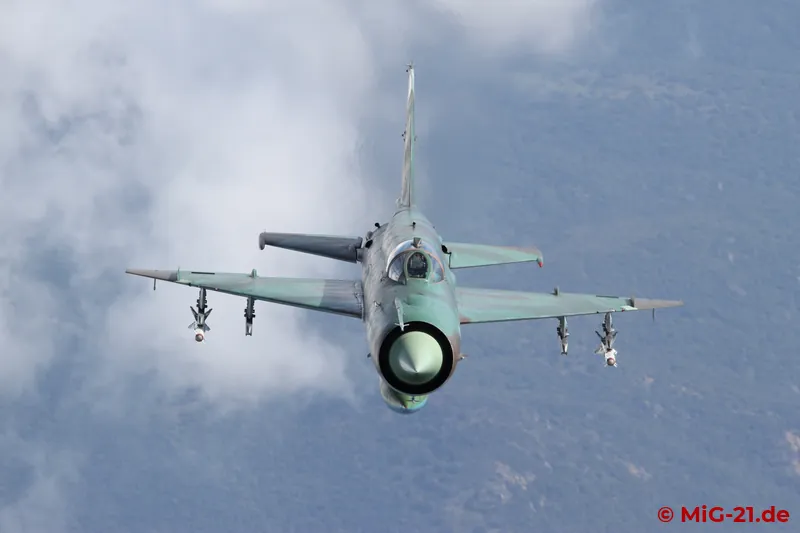
From the front, the incredibly small frontal area is astonishing, making it difficult for opponents to spot the MiG-21 at all in air combat. At greater distances at most the engine's smoke trail can be made out. Only when the MiG-21 has come quite close does one see the circular fuselage and three thin lines extending from it – two wings and a tall fin. And this picture remains even when it has shot past the observer – usually at high speed.
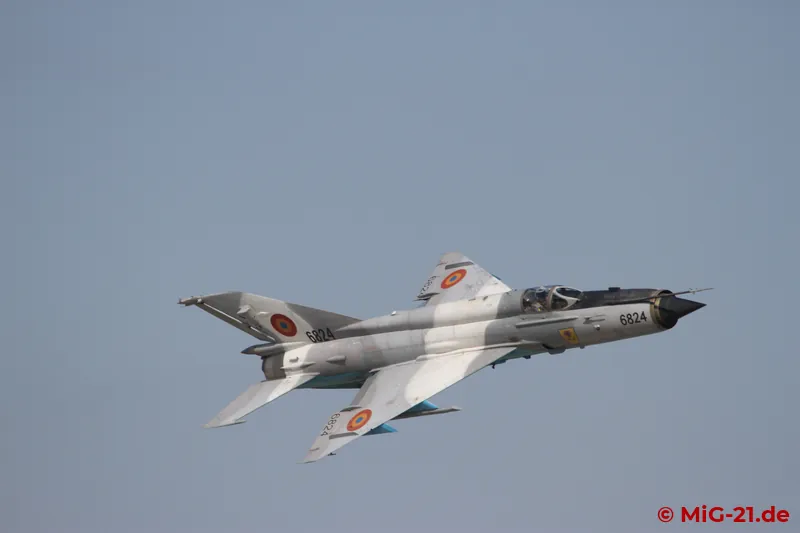
In general, the MiG-21, quite unlike today's combat aircraft, can be reduced to a few basic geometric shapes: the fuselage – a cylinder, the wings – triangles, tailplane and fin – trapezoids. And finally the characteristic feature par excellence, the intake cone at the nose – a cone. Only the spine cannot so easily be assigned a shape. Perhaps that is why its design makes the MiG-21 look so different – sometimes delicate and sometimes stocky.
In technical analysis, the simplicity of the design is striking, which in turn is reflected in its aesthetics. The only high-lift devices on the wings are the rectangular flaps. Otherwise there are ailerons, all-moving tailplane and rudder, not forgetting the movable intake cone – and that is the aerodynamics of the MiG-21, which, thanks to capable pilots – according to the findings of the USAF's Constant Peg programme – was able to out-manoeuvre newer types in air combat.
The comparatively simple layout is also responsible for another typical MiG-21 sight – that on landing. At a high angle of attack, with the characteristic no-frills landing gear extended, the MiG-21 plunges towards the landing, only to float gently over the last metres in the hands of experienced pilots or, with an obviously less experienced Korean pilot at the controls, to slam hard onto the runway. The robust design survives that, too.
As much as the double-delta wing from China contributed to improving low-speed handling, it diluted the aesthetic concept – if one wants to call it that. This becomes apparent on approach, where the increased span is noticeable, but above all in plan view, where the dynamics of the classic arrow shape have been lost. Only the side view remains largely unaffected. When in the latest Chinese developments a fixed nose and lateral air intakes then replace the central intake cone and finally even the shape of the fin is changed, the MiG-21 genes can only be recognised on very close inspection. And even on the Chinese-built two-seaters, which kept the classic delta wing but had a lengthened fuselage, it is striking how perfect the proportions of the original Soviet design were.
Of course, not every MiG-21 is the same, and in the course of development there were conspicuous external changes affecting two areas with corresponding visual effect: the diameter of the air intake and its cone, and the spine. In my opinion there were two aesthetic high points in the evolution of the MiG-21, at the beginning and at the end of its development. The MiG-21F/F-13, which with its small intake and without a fuel tank on its back looks almost fragile. And the MiG-21bis, which with its large intake cone and wide spine tank radiates power without spoiling the classic elegance of the lines typical of the MiG-21. Of course the latter is my favourite, after all "my" aircraft was also a "bis".
So it is to be hoped that the unique sight of a MiG-21 in the sky will remain for me and all who can enjoy it for a long time to come – whether with the few remaining military operators or thanks to a handful of aircraft in private hands – an icon of the Cold War with an iconic appearance. The following pictures speak for themselves ...