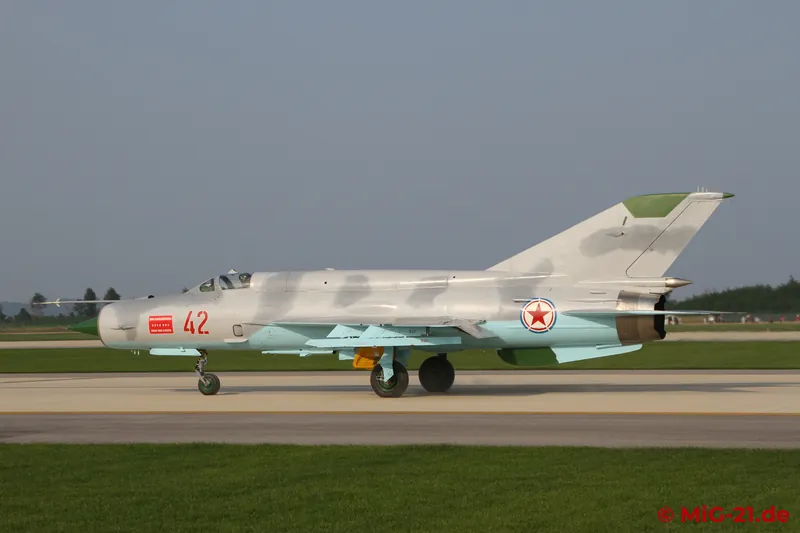
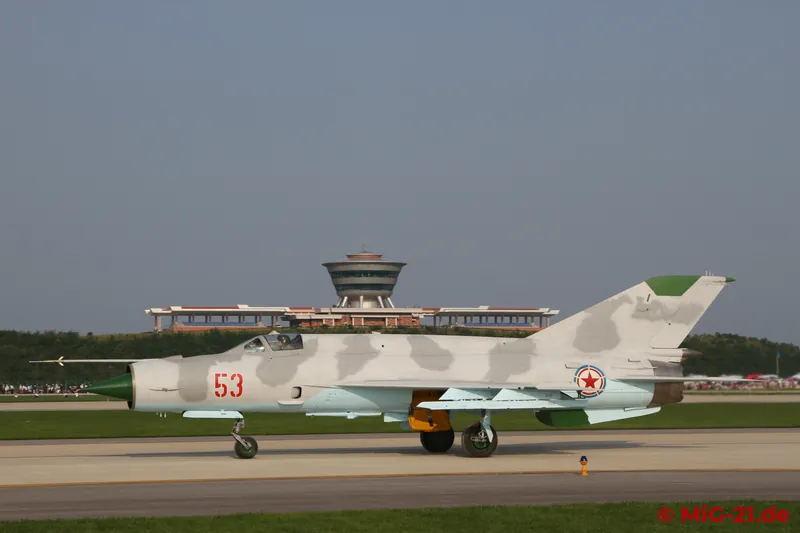
Wonsan International Friendship Air Festival (DPRK) 2016
Sometimes overwhelming experiences begin quite mundanely – for example with the booking of a package tour related to aviation, as the author did at some point in spring 2016 when he signed up – without really believing in the success of the venture – for a trip to North Korea's first airshow, which – so the incredible announcement – was to take place with military participation. And as new information on the event and the trip kept coming in over the following weeks and months, confidence and anticipation remained subdued, after all a lot could get in the way, from high politics to the technical problems of everyday life, which are surely a little more critical in the north of Korea than in the rest of the world. Finally the day of departure (first to Beijing) approaches and the tension – combined with the vague hope of perhaps seeing quite incredible things after all – rises ...
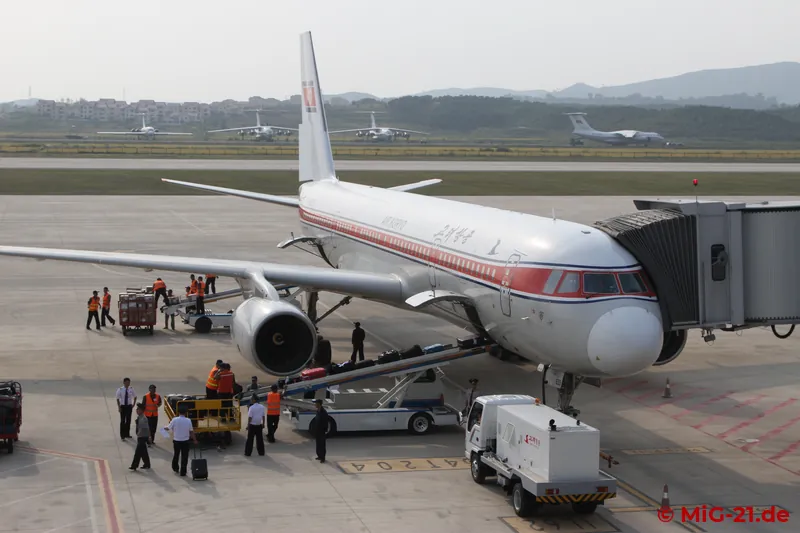
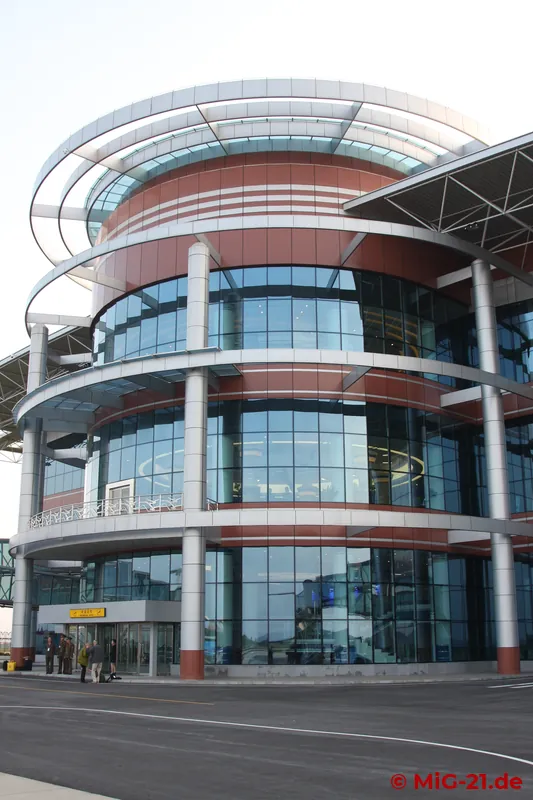
As far as Beijing it is a perfectly normal journey, unfortunately quite long and, because of the time difference, quite exhausting. A pre-tour meeting (a rather strange institution for someone who has organised his own aviation trips for 20 years) is to bring further insights, and finally the decisive sentence is spoken: yes, the MiG-21 is also to be seen at the event, advertised under the bombastic name "Wonsan International Friendship Air Festival". Now the excitement is there. One more night in Beijing and the next morning to the airport, where the Air Koryo Tu-204 is already waiting to take us to Pyongyang. On board it is not particularly exciting for someone who only ever sees civil aircraft, however rare and exotic, as a means of transport. Only the attractive stewardesses, who differ considerably in appearance from the average of their German colleagues, provide a first "aha" moment. Otherwise the flight remains pleasantly uneventful, and the arrival in Pyongyang is unspectacular too: a small, modern and very tidy-looking but not very busy airport awaits the visitors. It looks more interesting on the apron ...
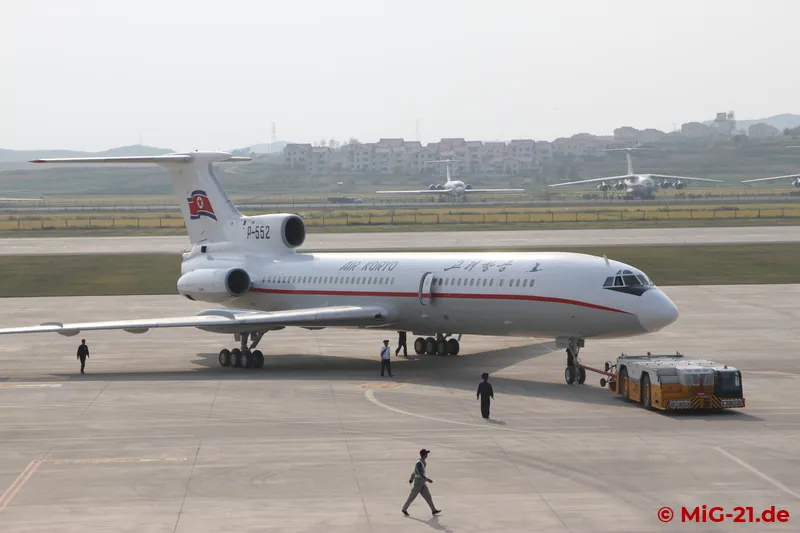
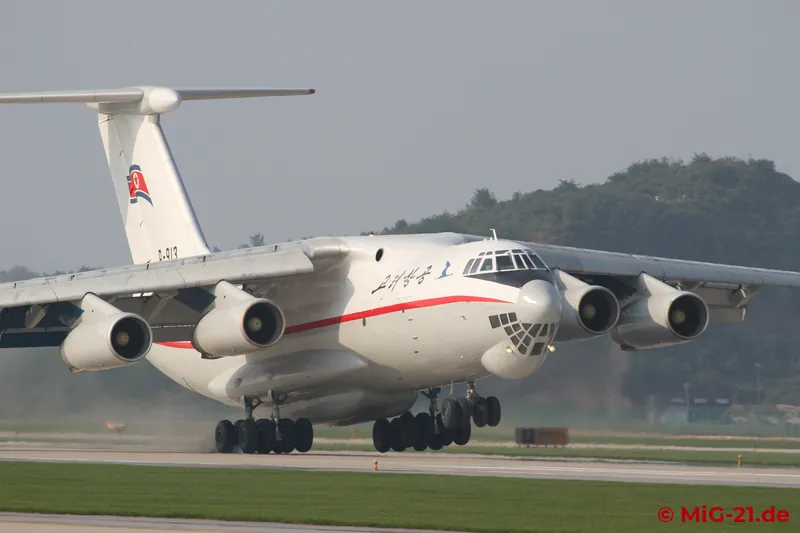
... – while the Tu-204 that has brought us here is being unloaded, first an Il-62 ...
... and a Tu-154 are made ready next to it to take the roughly 170 visitors to Wonsan. In the background further aircraft of the Air Koryo fleet can be seen, including an Il-76. A little later we board, and after less than half an hour's flight – after all only 170 kilometres have to be covered – we land ...
... at the new and almost unused Kalma airport on the outskirts of Wonsan.
Besides the two aircraft that brought us here, more soon stand on the airfield, and so the participants swarm out in the golden evening sun to photograph first the Korean civil aircraft, which are quite interesting because of their exoticism. Only there are no combat aircraft to be seen here – but on landing some tour participants had spotted military aircraft under a weather shelter at the other end of the airfield – including MiG-21s. The tension rises.
But the gods (or rather the powers that be) in North Korea have placed some more hurdles before the aircraft. The first is entry. Very politely we are checked more thoroughly than the author has ever experienced at any airport before. Particular stress is caused by the fact that bags are checked for any publications, and the author of course has two copies of his book with him as possible gifts. How will the inspectors take this? And will the author then be regarded in their eyes as one of the journalists who are refused entry? But all the excitement is in vain. The books are noted, counted, recorded and returned. Then at last we have arrived in the country, our Korean guides receive us and we go by bus through Wonsan to our accommodation. At night the port city appears comparatively dark. Only the pictures and statues of the two leaders Kim Il Sung and Kim Jong Il are brightly lit, so first real impressions have to wait until the next day.
We move into our rooms at the Songdowon International Children's Camp, an international children's holiday camp which – also new, modern, bright and friendly – has obviously not seen many visitors yet either. At the front of the accommodation building a monument shows the two late leaders surrounded by children (and the visitor has to bow before this monument); at the back "the party is in full swing", with spirits served to loud Korean music. That is still the case when the author returns to his quarters with his tour group after a Korean dinner, which will cost him quite a lot of sleep.
So it is rather overtired that we go to a rather spartan breakfast the next morning and then ...
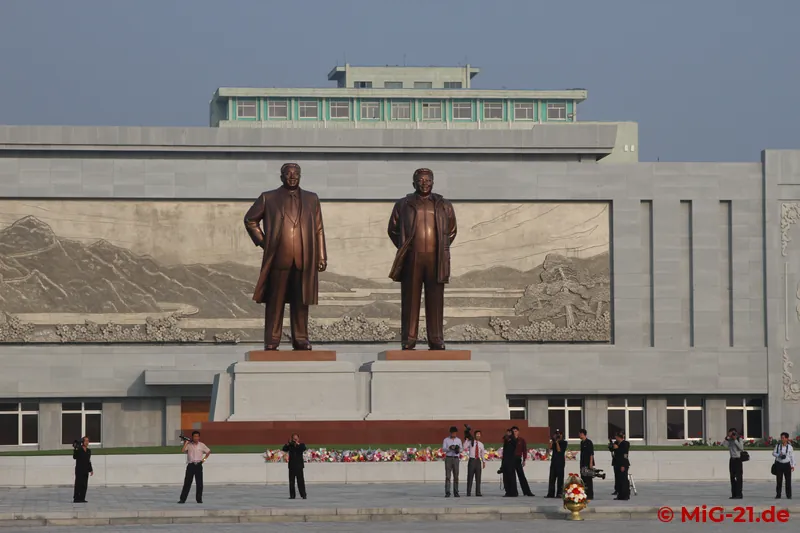
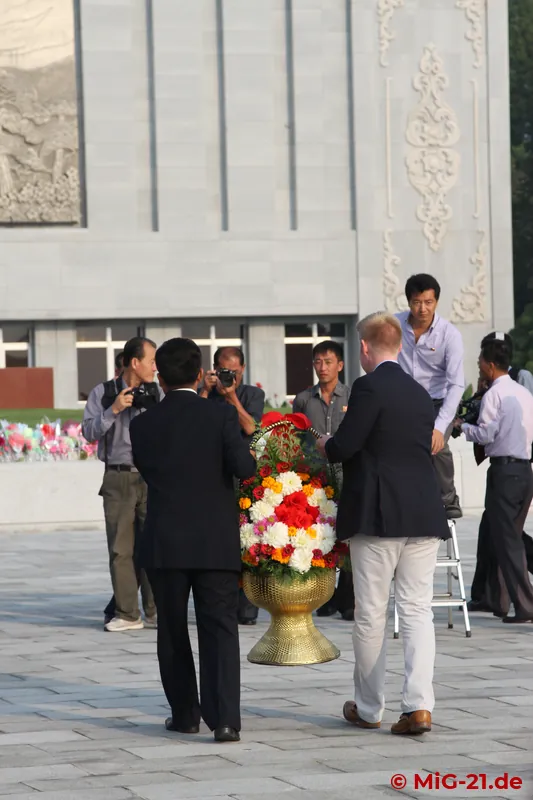
... – no, still not to the airfield – to the monument of the Kims in the city centre, where we again have to pay our respects ...
... and flowers are laid. Only then do the buses roll to the airport, ...
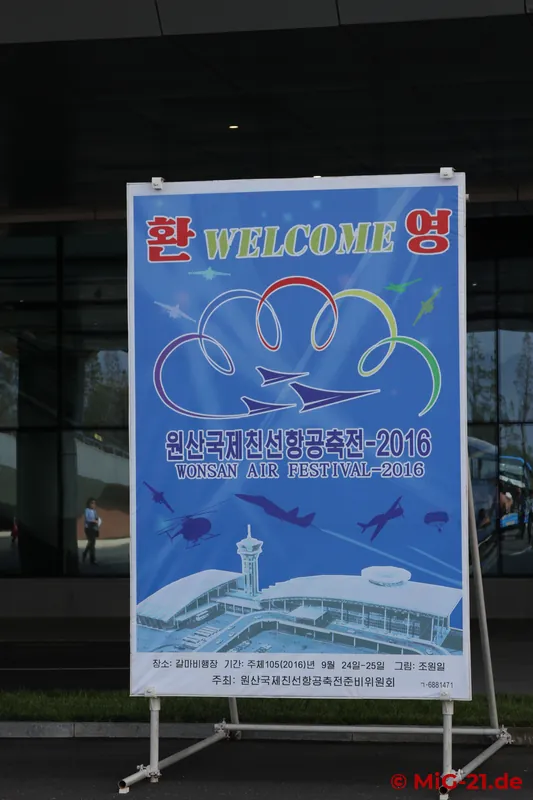
... where posters and banners welcome the visitors.
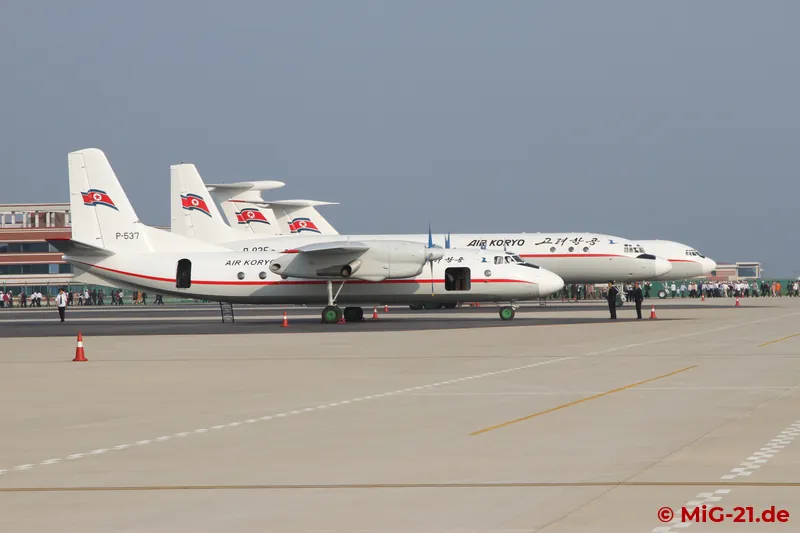
On the apron disillusionment sets in, as the same civil aircraft are there as the evening before – no sign of the military types here, ...
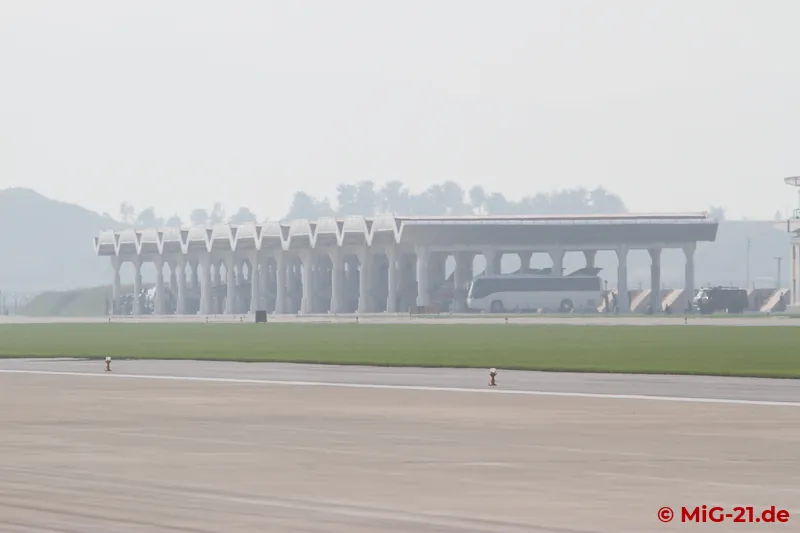
... because they are under this weather shelter at the other end of the runway.
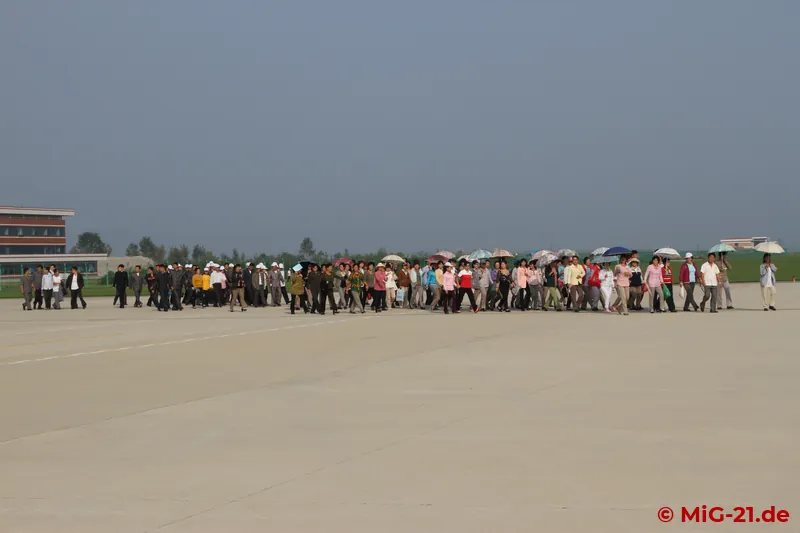
So while we photograph the civil aircraft up and down, large crowds of local visitors arrive – on foot and obviously organised in groups. 150,000 Koreans – so we are told – will attend the show.
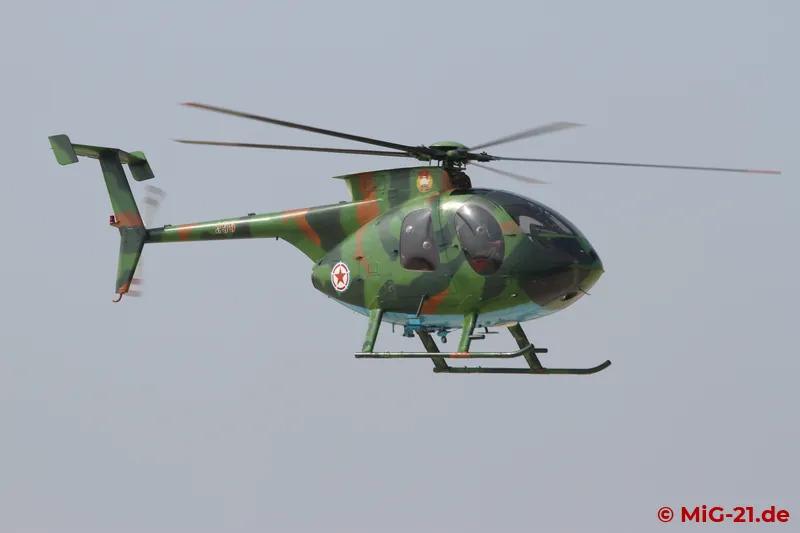
After the obligatory opening speeches, the programme begins with the flying display of a Hughes 500, a type the Koreans bought on the civil market in the 1980s, circumventing international sanctions.
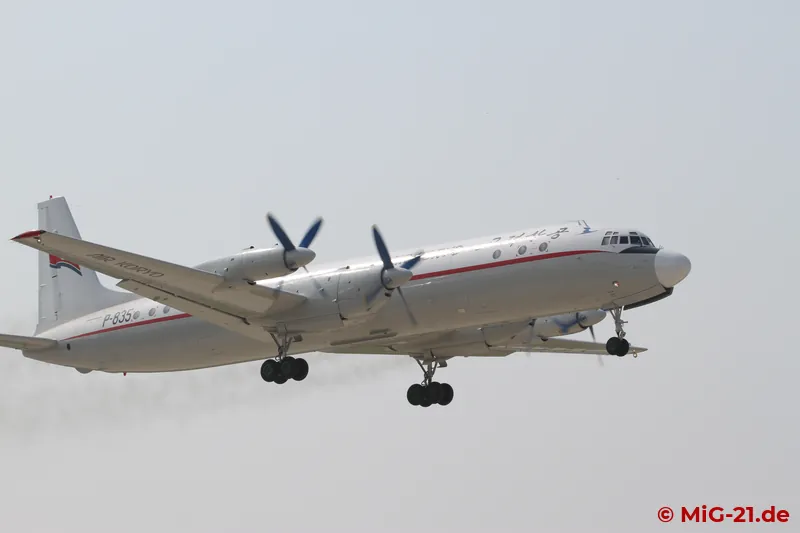
This is followed alternately by civil – here an Il-18 – and military aircraft.
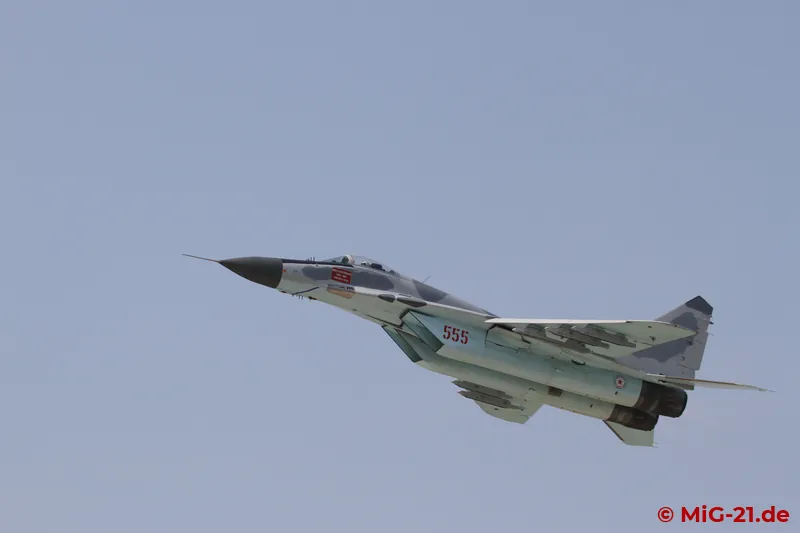
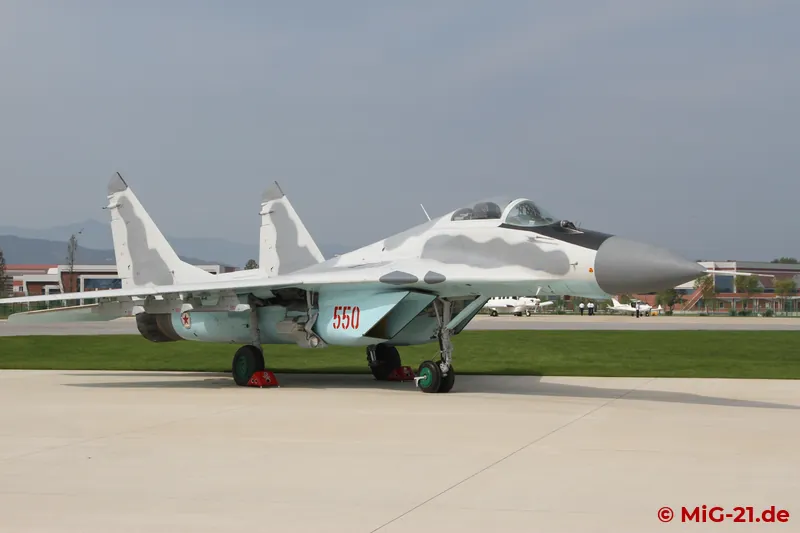
The MiG-29 display is rather unspectacular and suggests rather low flying hours. Striking is the grey two-tone paint scheme, introduced only recently and worn by all three combat aircraft types shown at Wonsan.
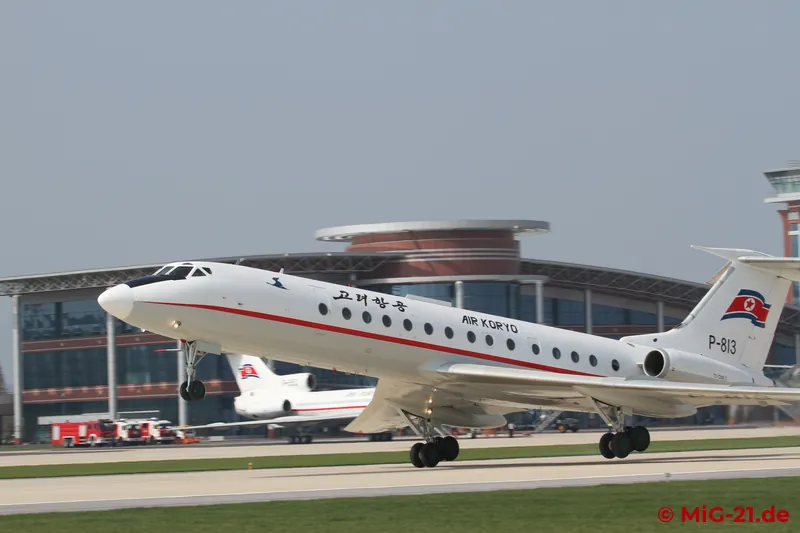
The flypast of the Tu-134 is followed by ...
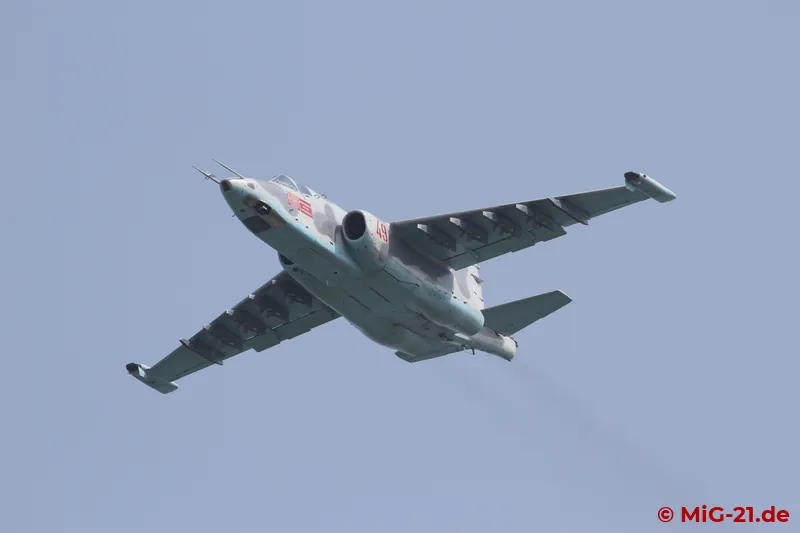
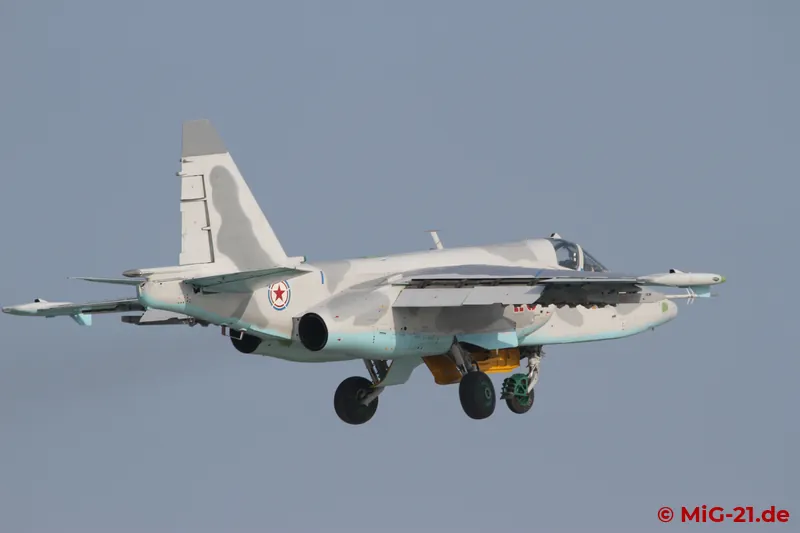
... the solo display of the Su-25, which is considerably more appealing than that of the MiG-29.
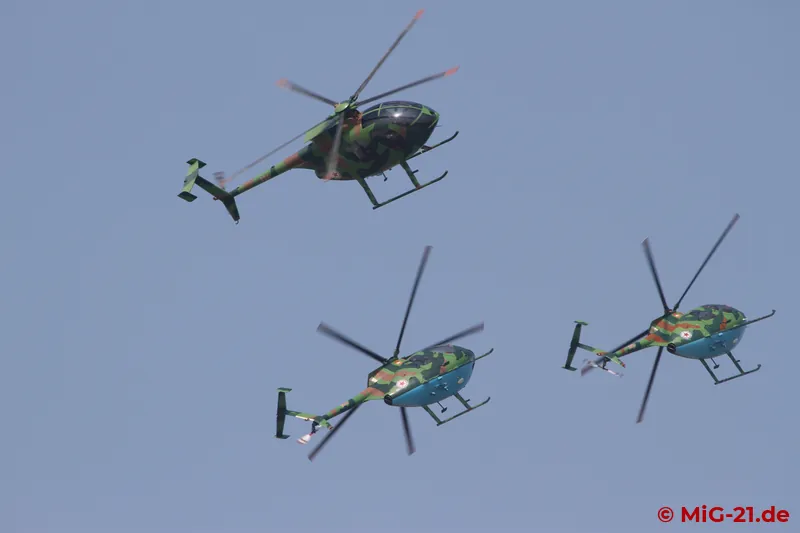
The displays before the lunch break end with a four-ship formation of Hughes 500s.
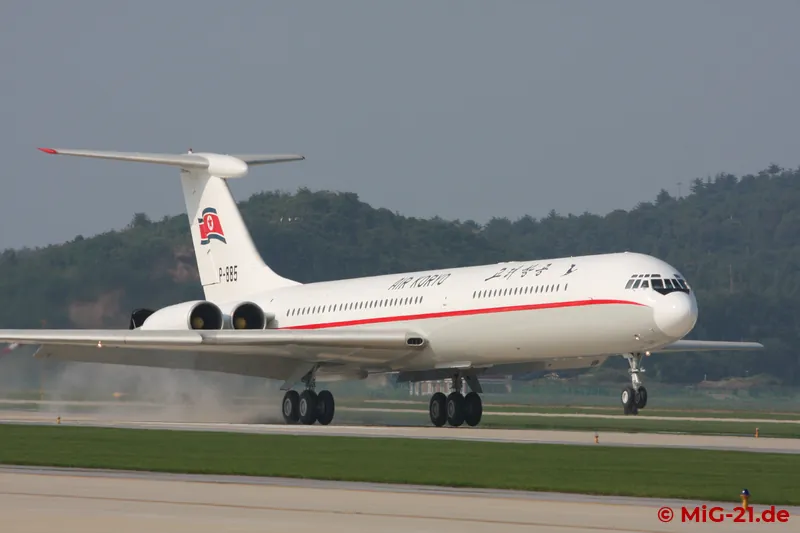
With the start of the afternoon programme the tension rises – when will the MiG-21s finally come? But first the Il-62 flies ...
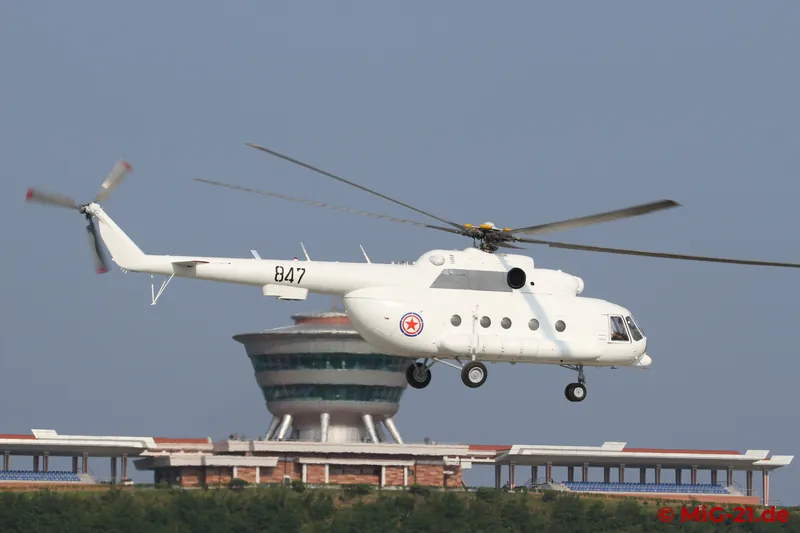
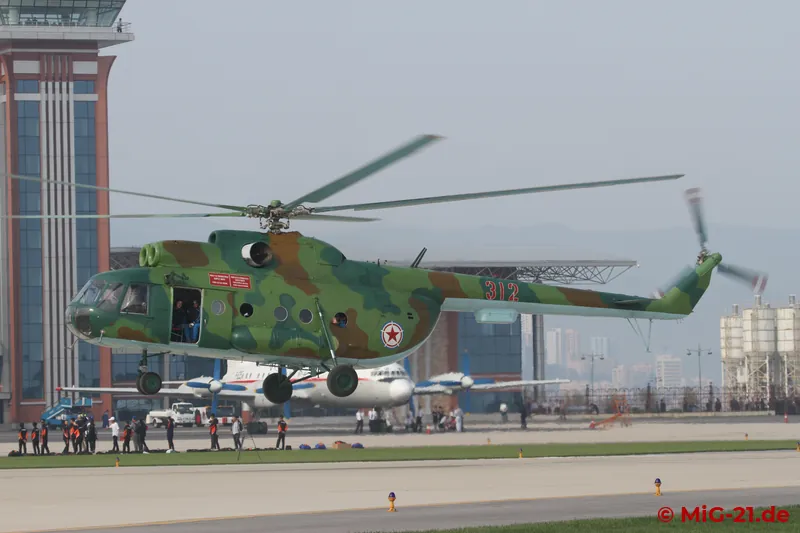
... and a military Mi-17 in civil guise.
When the Il-76 takes off, one of the two hours of the second part of the programme is already over. Then military engines can finally be heard from the other end of the airport. That can really only be the MiG-21s, ...
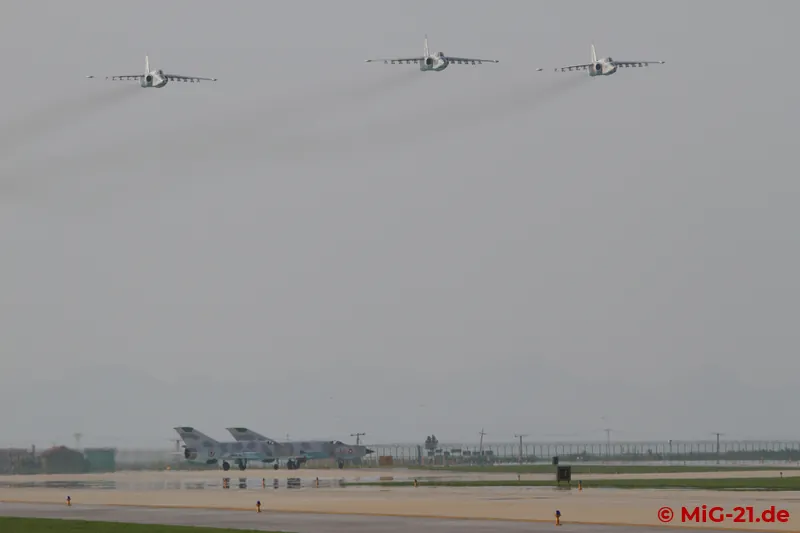
... but they are Su-25s, three of which now take off. When their display is in full swing, ...
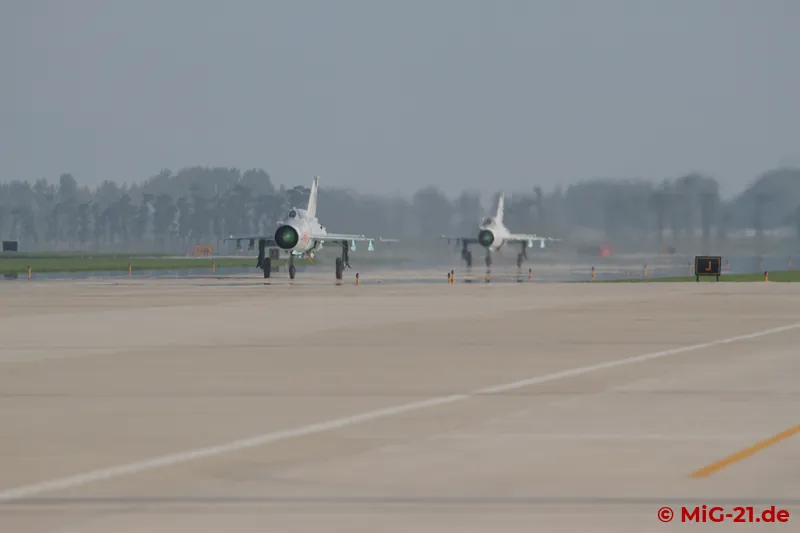
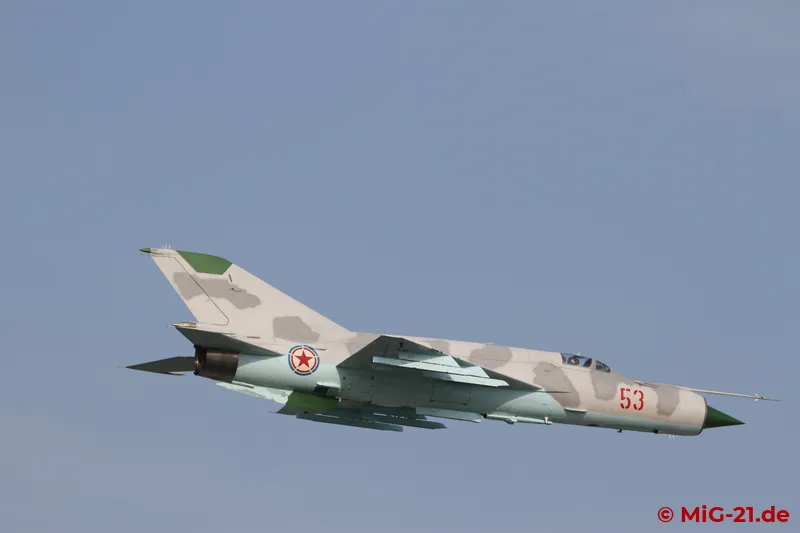
... a MiG-21 finally appears at the end of the runway – and then another one.
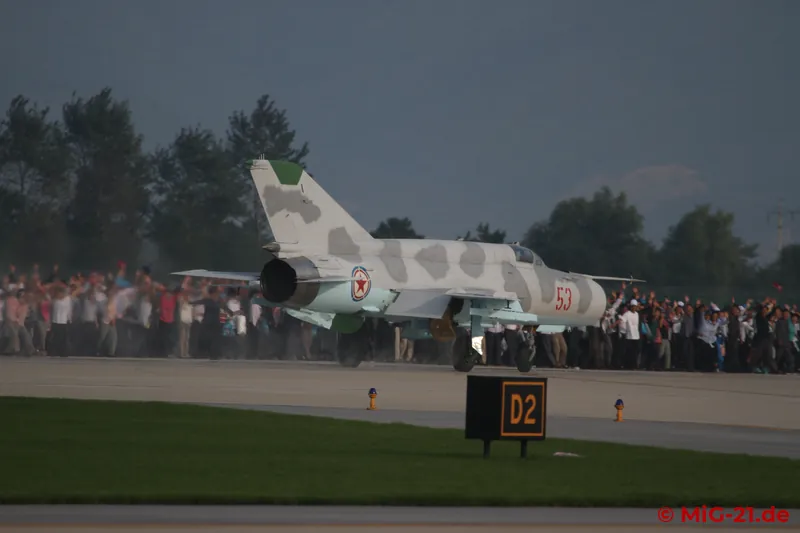
Both MiG-21bis taxi out for take-off in front of the photographers, ...
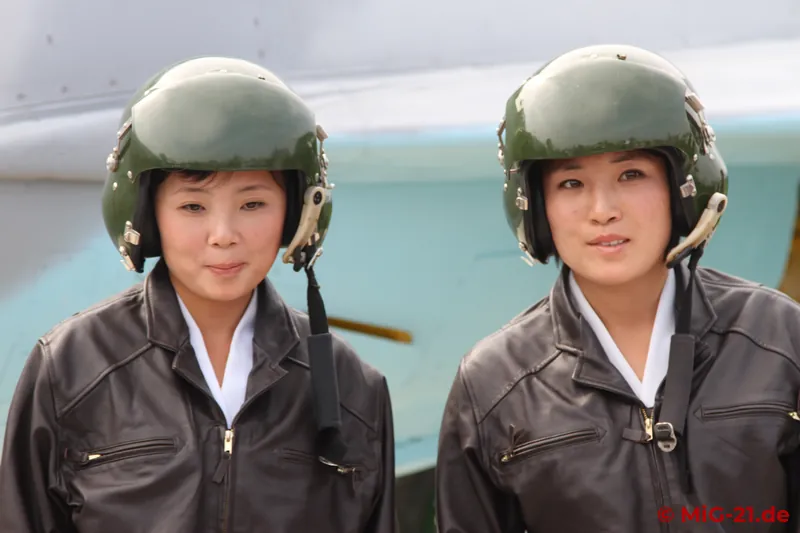
... flown by female pilots.
One last flypast of the Su-25 formation ...
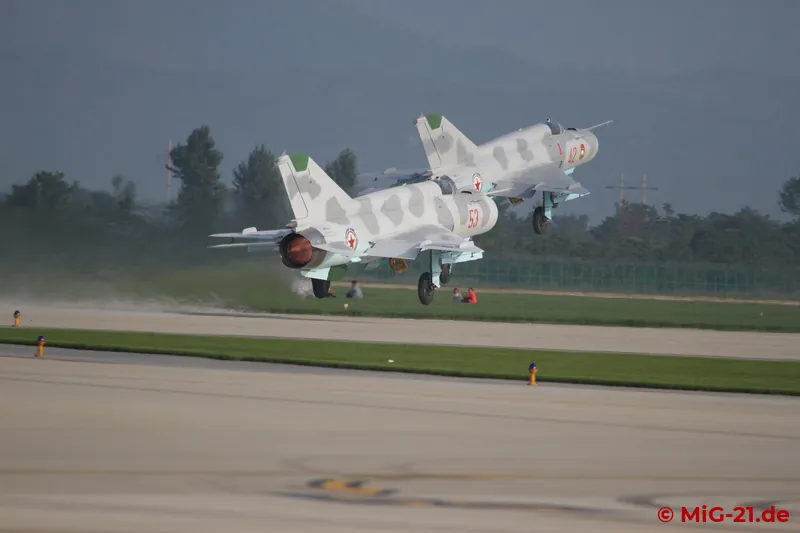
... and the MiG-21s take off as a pair, ...
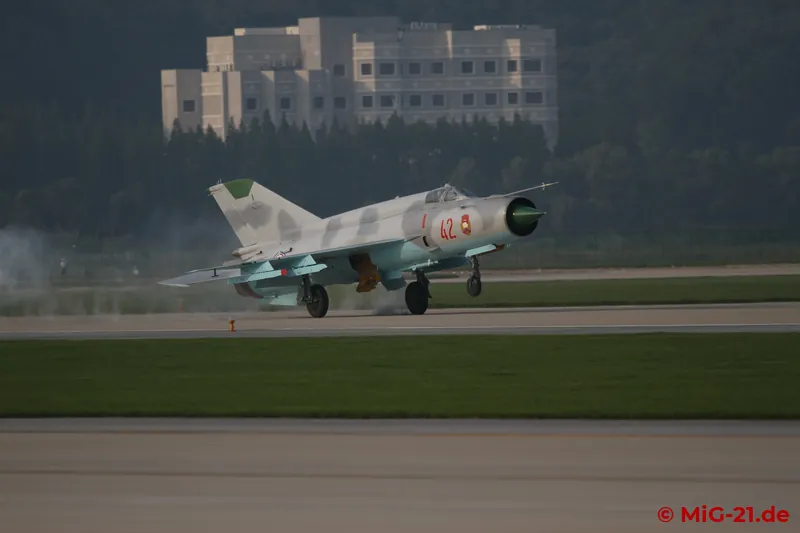
... make some low flypasts and then come in to land again, ...
... with the first aircraft only narrowly escaping a crash. After an approach that is too high and too flat, the pilot increases the angle of attack massively, so that the aircraft sinks tail first and hits the runway hard.
The second landing goes without problems, and the aircraft rolling out and its pilot are cheered by the audience.
On the evening of the first day the hosts invite us to a cultural programme – actually one item too many on a long, exhausting day. But the performances are so fascinating and rousing that the good hour of the show flies by.
There are no flying displays on the second day. Instead, flights in various types and parachute jumps are offered. The day promises to be boring, but then everything turns out quite differently.
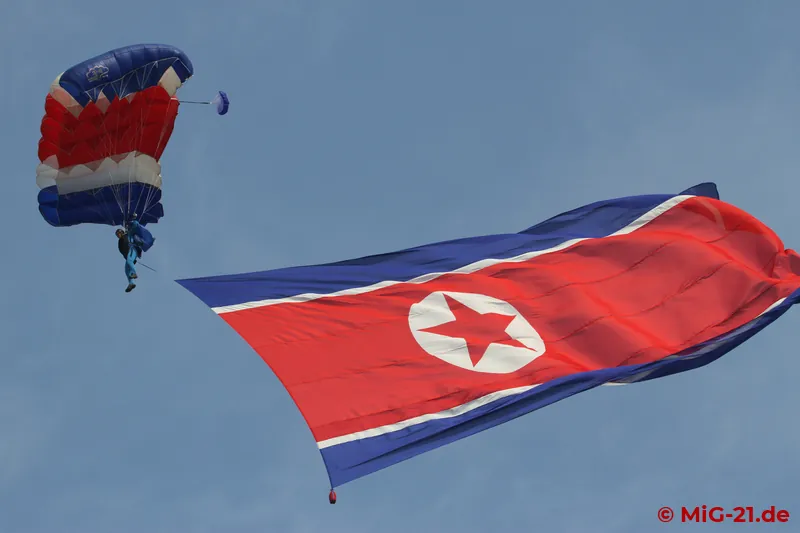
The day's programme is opened by Korean parachutists with fireworks on their bellies (!), which are ignited in the air, and with large flags of state and party. The performances are frenetically celebrated by the spectators.
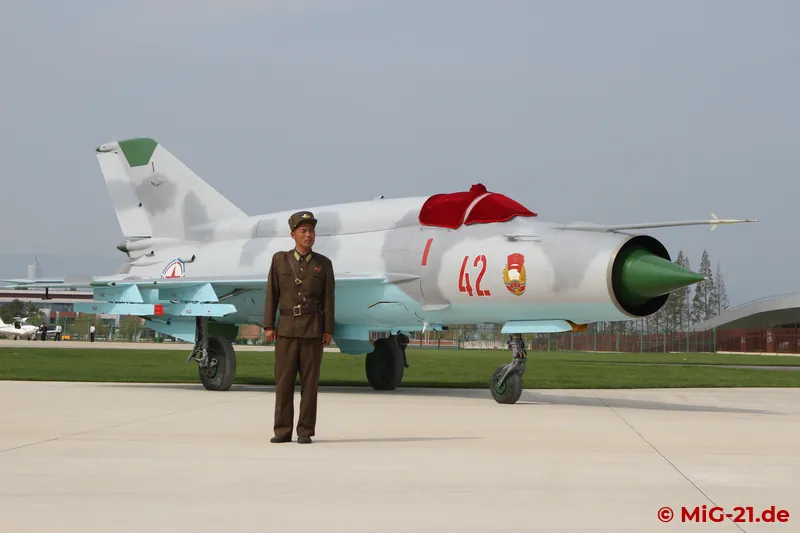
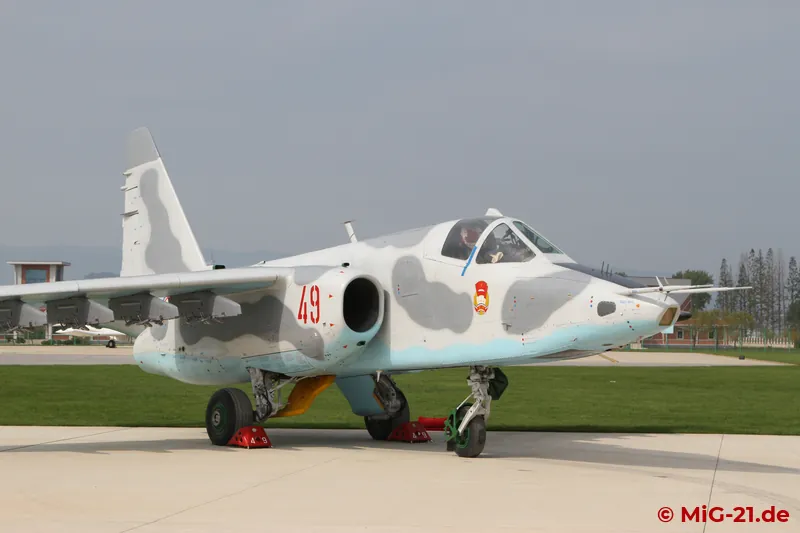
The evening before, one example of each of the military types from the first day's flying programme had been brought close to the terminal. Now there is finally the opportunity to inspect the aircraft at close range. Specially posted guards make sure that nobody gets too close to the aircraft.
Like the MiG-21, the Su-25 ...
... and MiG-29 present themselves externally in excellent condition.
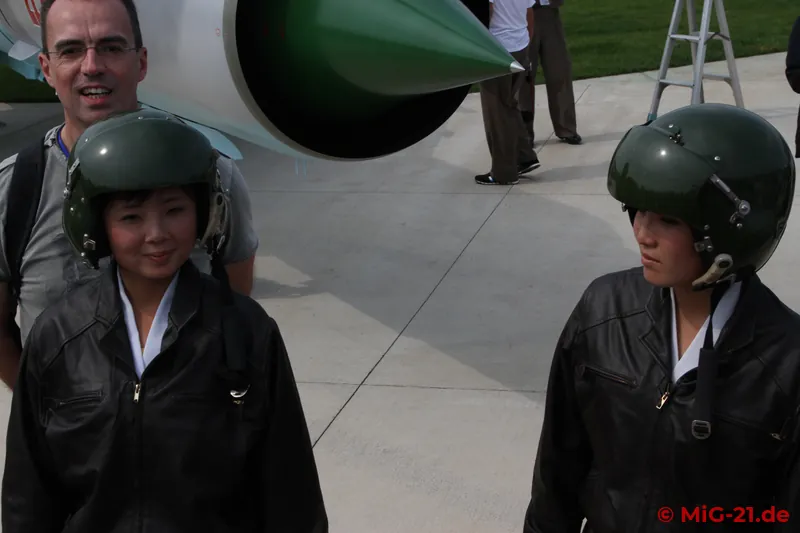
While everything has been very orderly so far, tumultuous scenes unfold when the two MiG-21 pilots appear at the displayed aircraft. Press and photographers pounce on the two young ladies with such vehemence that at first they obviously feel quite uncomfortable. Later they give animated interviews until they are rather rudely pushed away by officials.
As official pictures with the pilots are not possible, but the author very much wanted a picture with the ladies, who had also already been photographed with head of state Kim Jong-un, he had to sneak into the picture. Unfortunately the fellow traveller entrusted with taking the pictures was not particularly skilful, so the nicest motifs remained undocumented.
The attempt to present the two pilots with a copy of his book was prevented by the tour guides on the grounds that the content first had to be checked. Where the copy handed over then disappeared to will probably never be clarified ...
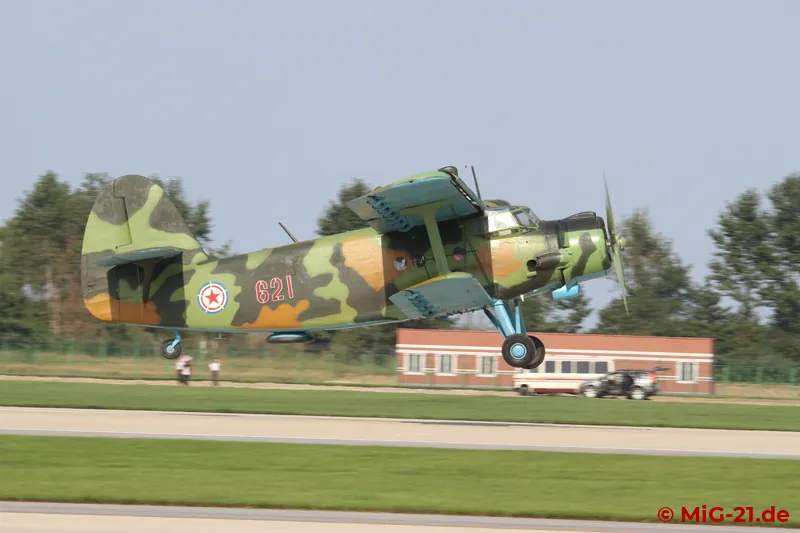
The flights continue until dusk, among others in the Chinese variant of the An-2, the Y-5.
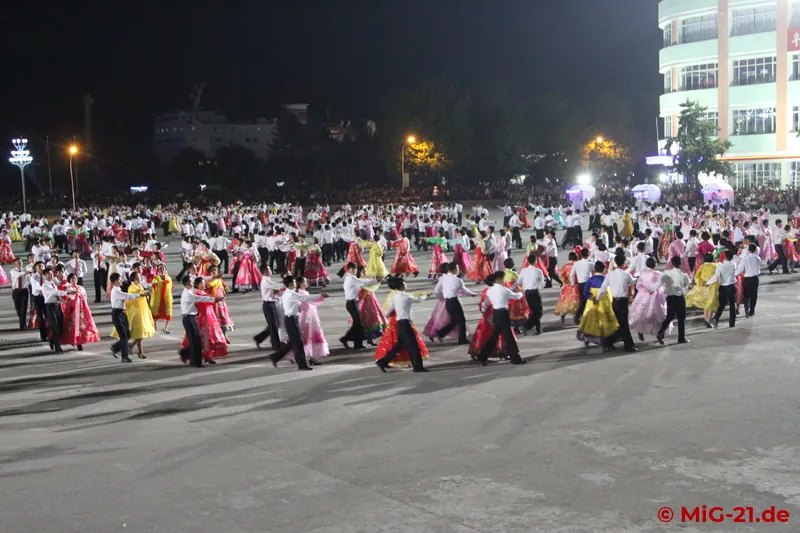
On the second evening, too, aviation is followed by culture, and it is similarly impressive as on the first evening: a mass dance event in the centre of Wonsan.
And then it is all over already. After a big dinner and far too little sleep, the next morning the Il-62 takes us to Pyongyang and from there – after less than 72 hours in the country – via Beijing back to Berlin. Of course a reliable picture of a country cannot be gained in such a short time, and all the impressions can only be processed little by little, but what was experienced makes you want to do it again ...