MH Kiss József 86. Helikopterdandár Szolnok (Hungary) 2026
However worthwhile the visit to the Reptár aviation museum Szolnok was, the author would not have made the long journey to Hungary for that alone. The reason for the trip to Szolnok was a different one: in view of the almost complete withdrawal of the MiG-21 worldwide and the very limited access to the F-7 operators, other subjects have come into the author's focus, not least because Soviet / Russian aircraft and helicopter types are increasingly disappearing from European arsenals. After the Polish Su-22s, it was the turn of the Hungarian Mi-24s, which were to be retired in February 2026 (and then were). Because part of the fleet consisted of examples from NVA stocks, the idea arose to visit their base at Szolnok shortly before closing time. Thanks to the support of the German military attaché in Budapest, the Hungarian Air Force was open to the idea and even suggested an air-to-air photo shoot. And so on January 27 a small group of expectant visitors gathered at the gate of the base at Szolnok.
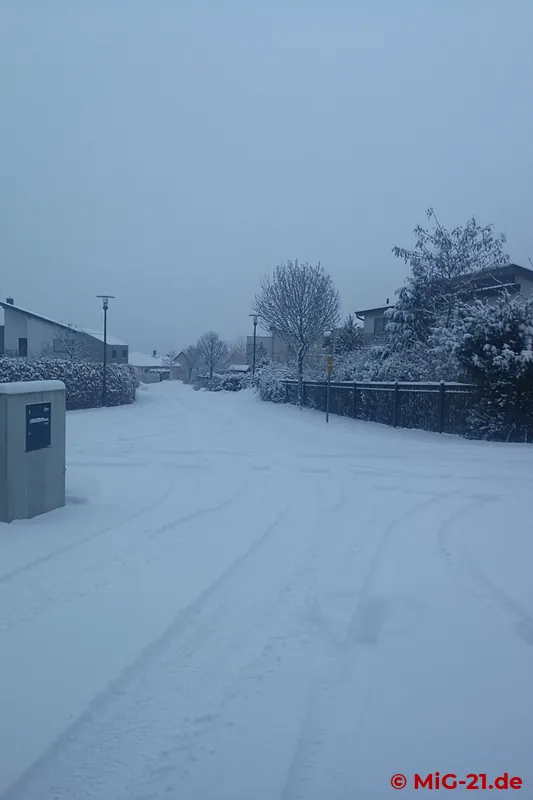
Two obstacles stood in the way to Szolnok. The first was a clash of dates with the Black Lion Airshow in Ethiopia taking place at the same time. There – if at all – only MiG-21s already retired would have been seen, so the author decided, without too heavy a heart, in favour of flying helicopters instead of stored MiGs. The second was a sudden onset of winter that turned the drive as far as Regensburg into a test of patience.
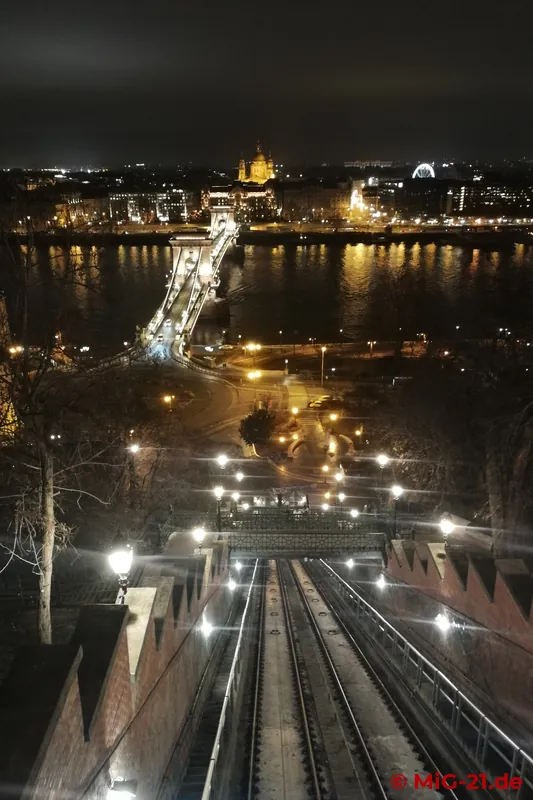
On arrival in Budapest, however, there was no sign of winter any more ...
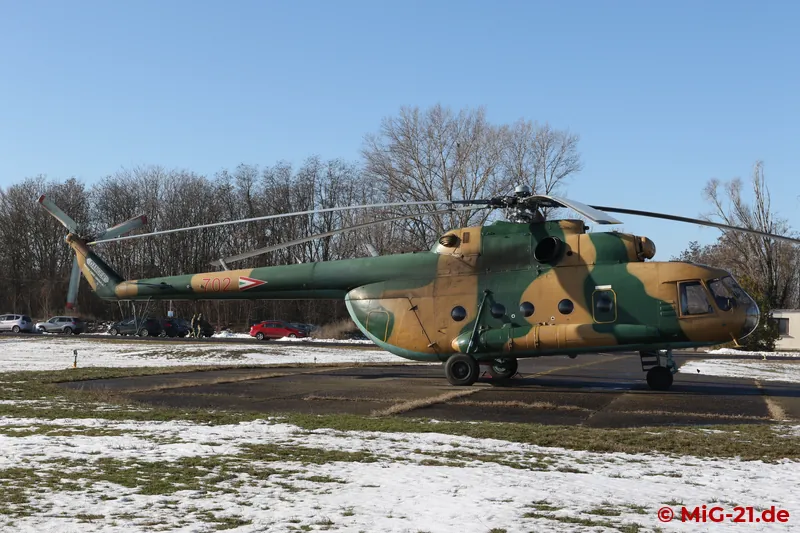
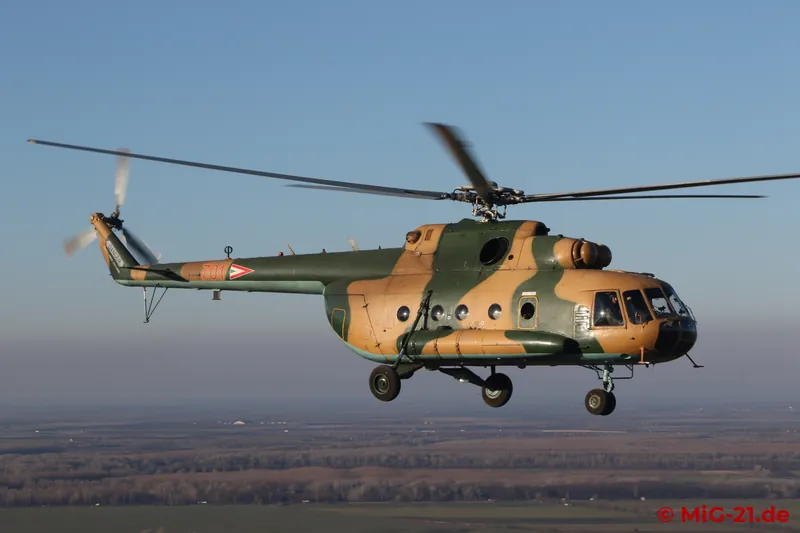
... and the next morning in Szolnok the winter sun shone on Mi-17 ...
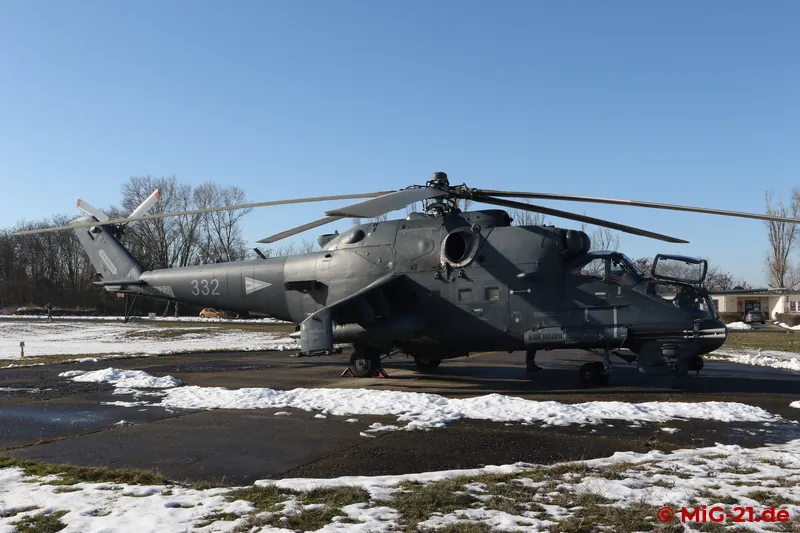
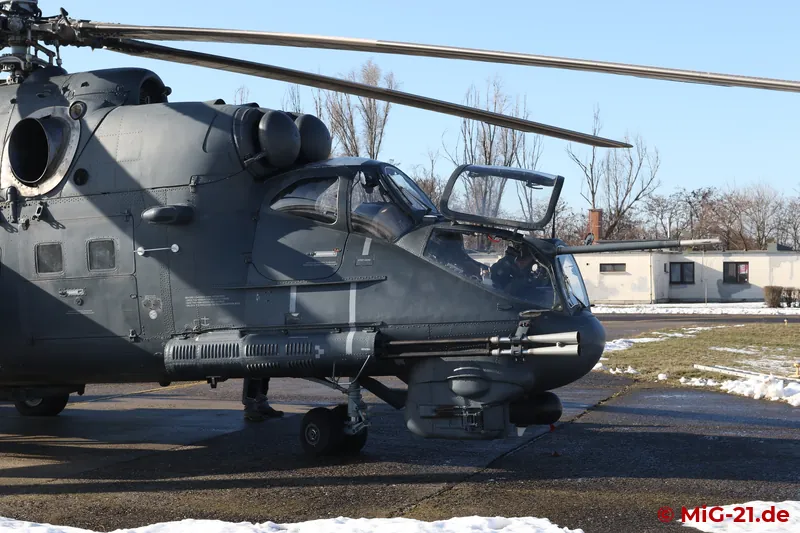
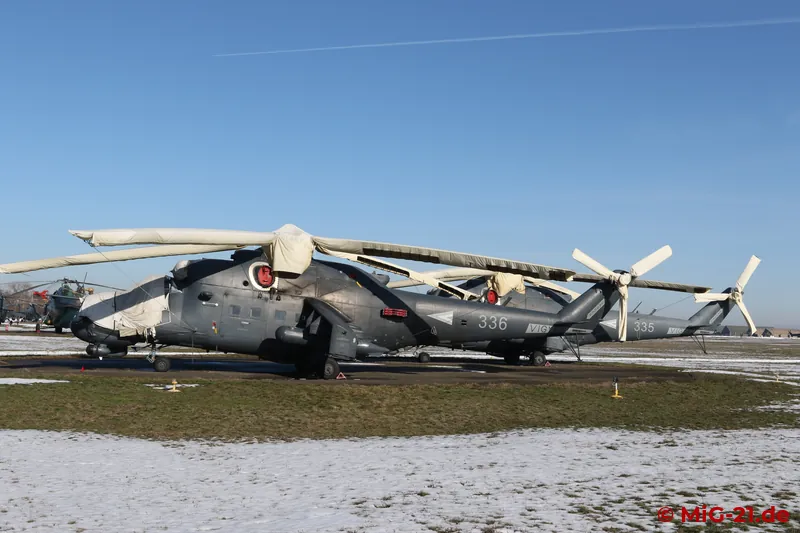
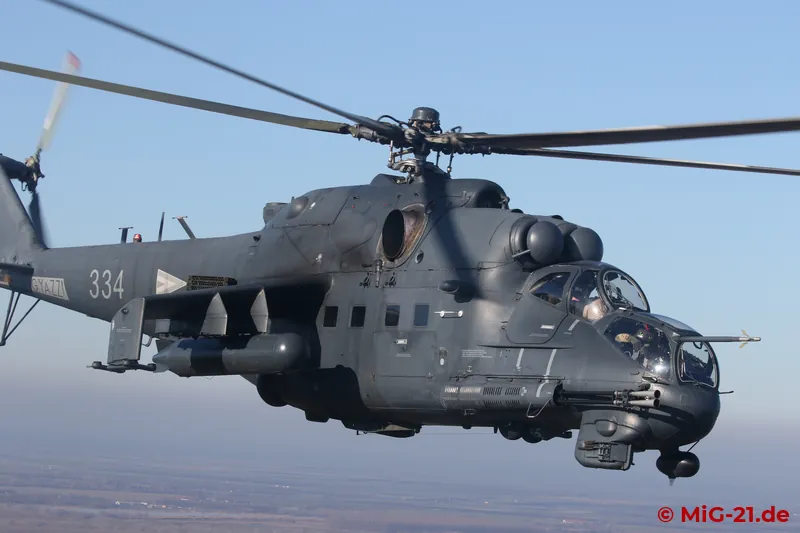
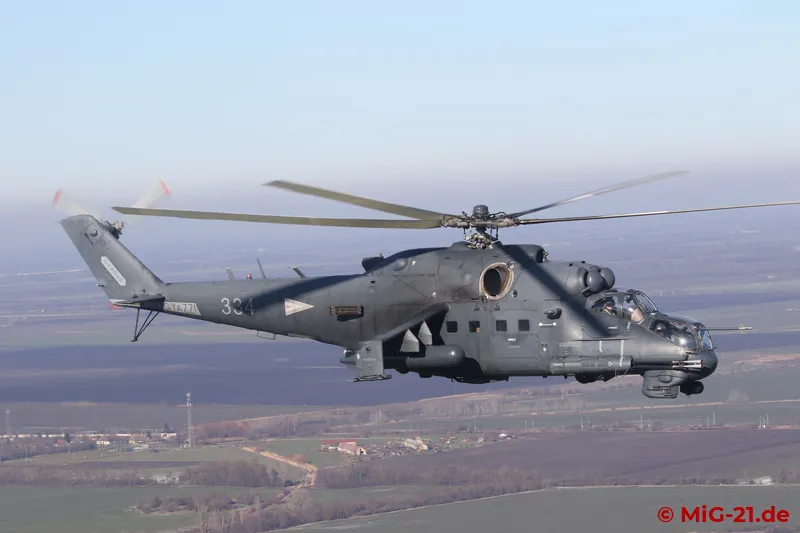
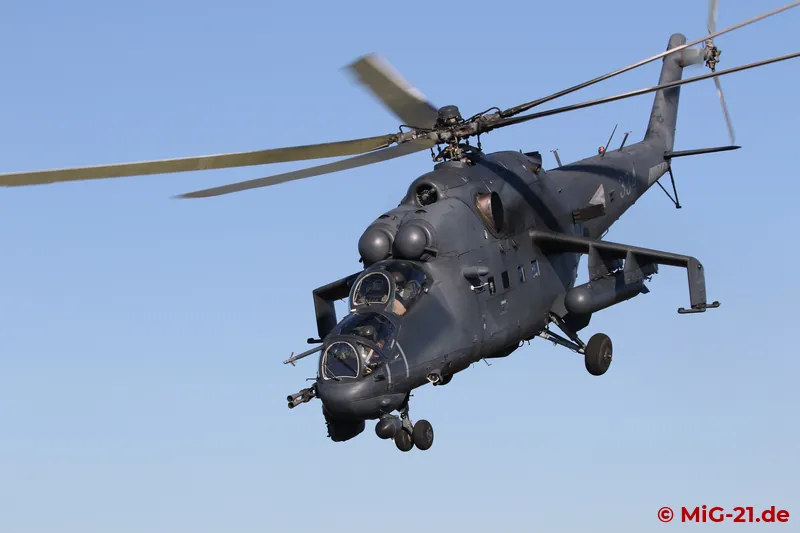
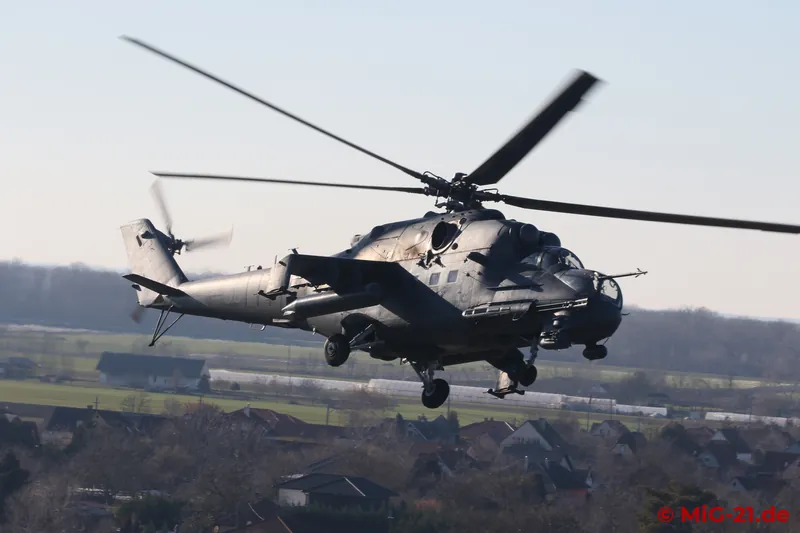
... and Mi-24P.
The aircraft with the impressive twin-barrel 30 mm cannon all come from NVA stocks. 332 is the former 316, ...
... 335 and 336 used to carry the serials 422 and 439.
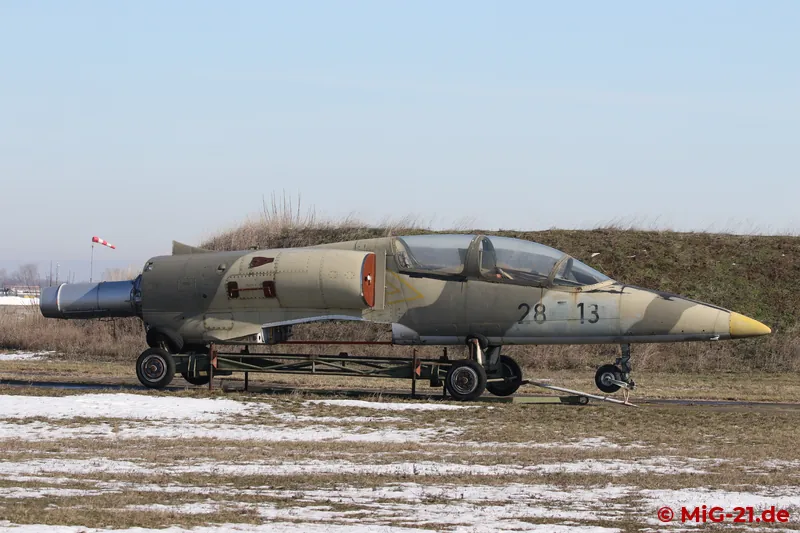
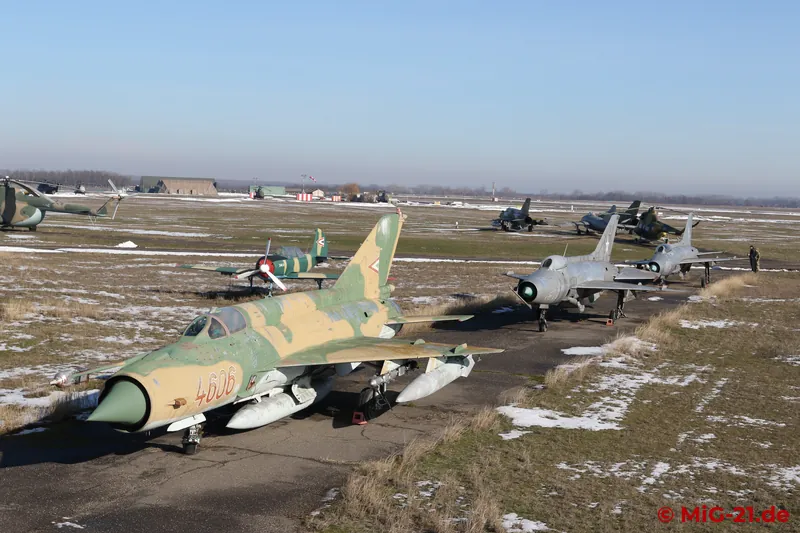
Besides helicopters there was also other aircraft to see on the base, obviously destined for the museum already mentioned. These include several L-39s, at least one of them from the GDR, ...
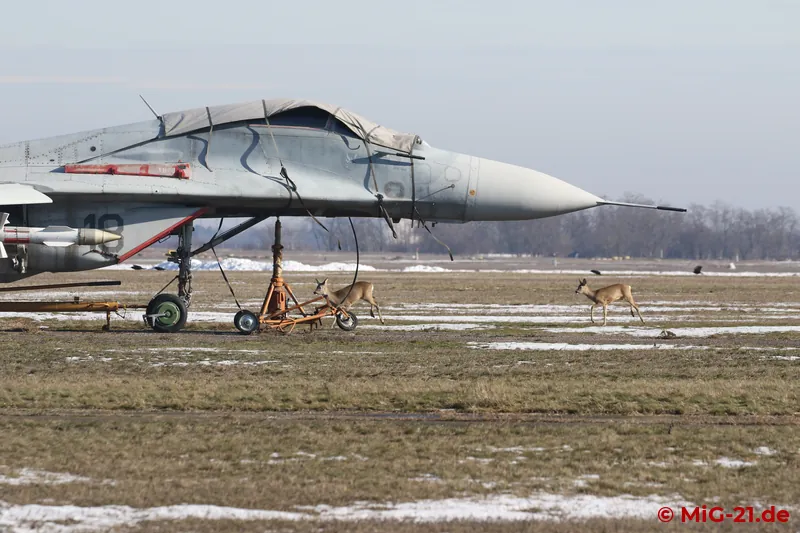
... a MiG-29 and ...
... – which of course immediately attracted the author's attention – several MiG-21s of the MF (in the foreground), ...
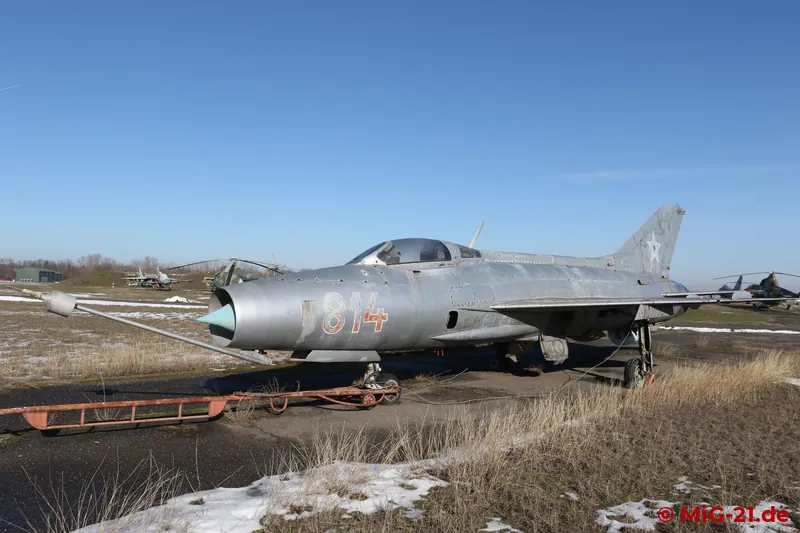
... F-13 ...
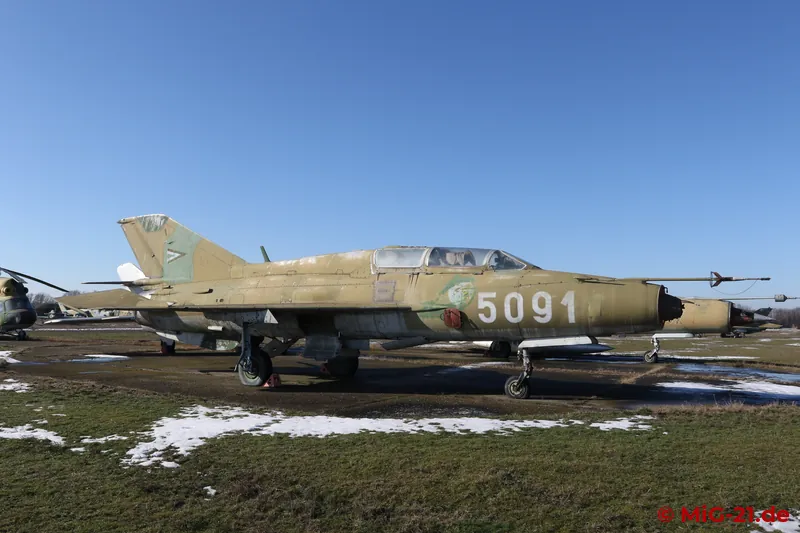
... and UM versions.
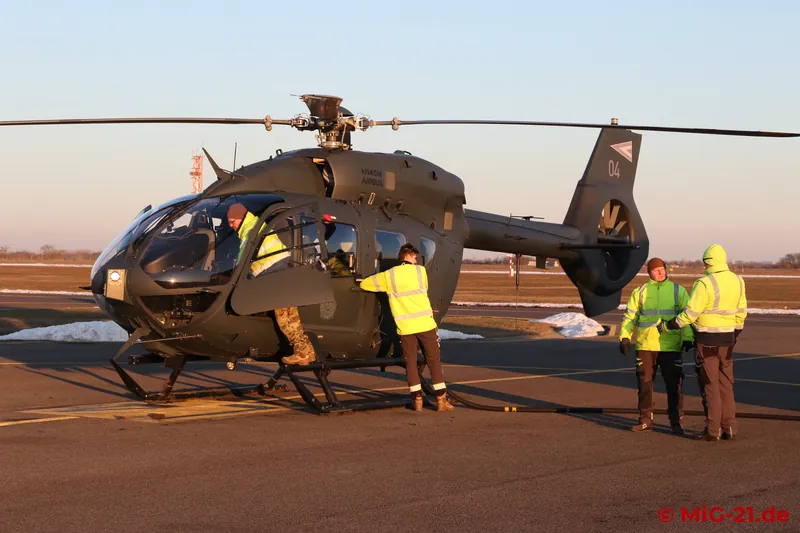
Then it was already time to board an H145M for the first photo flight. The Mi-24 ...
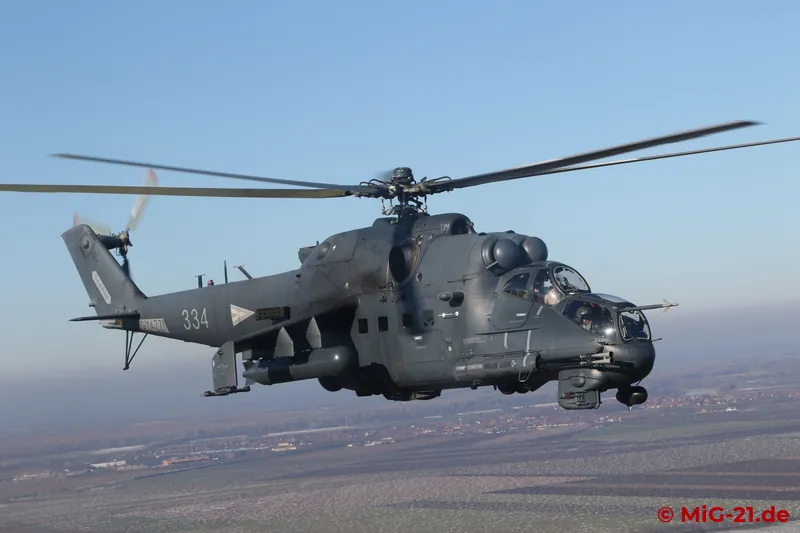
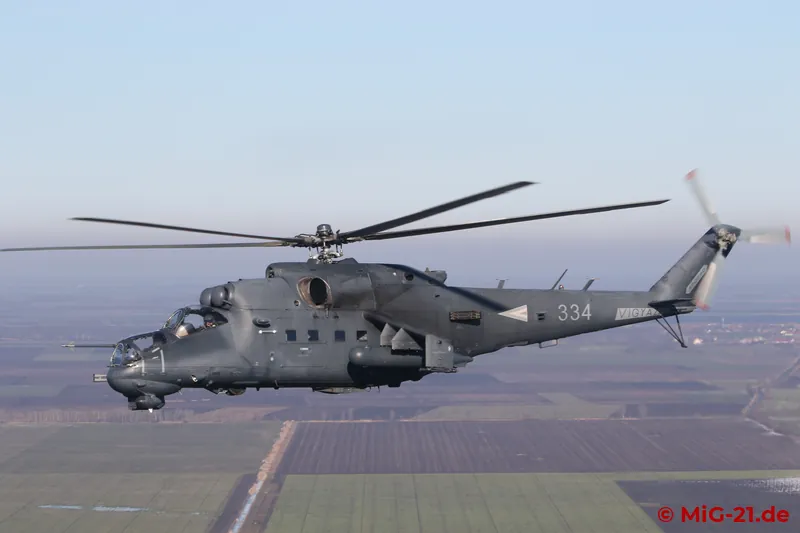
... looks at least as impressive from the air as from the ground ...
... and came into its own in the bright sunshine despite its light-absorbing grey paint.
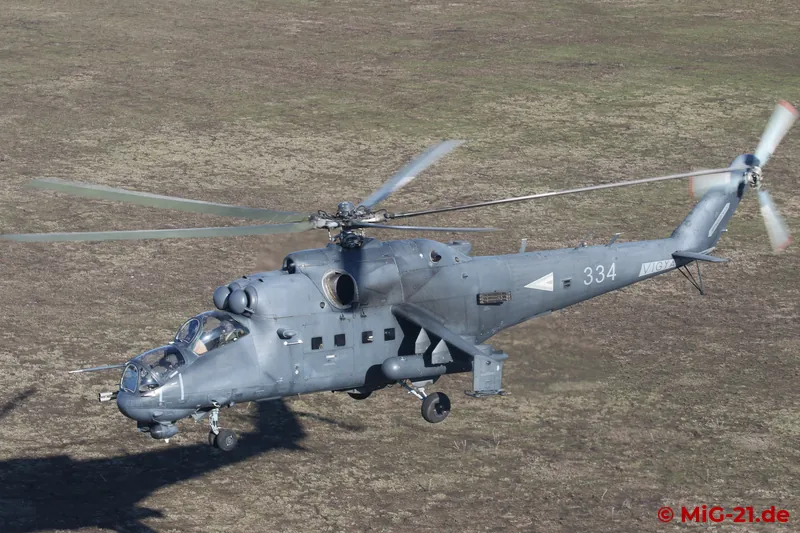
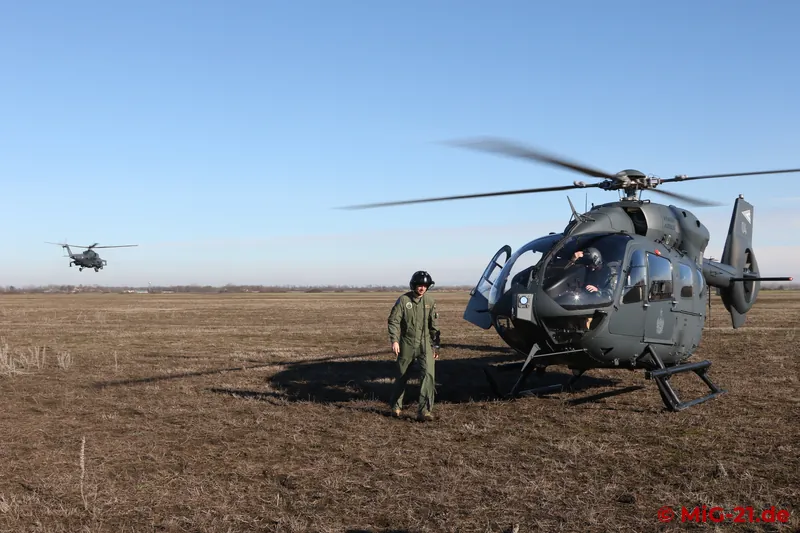
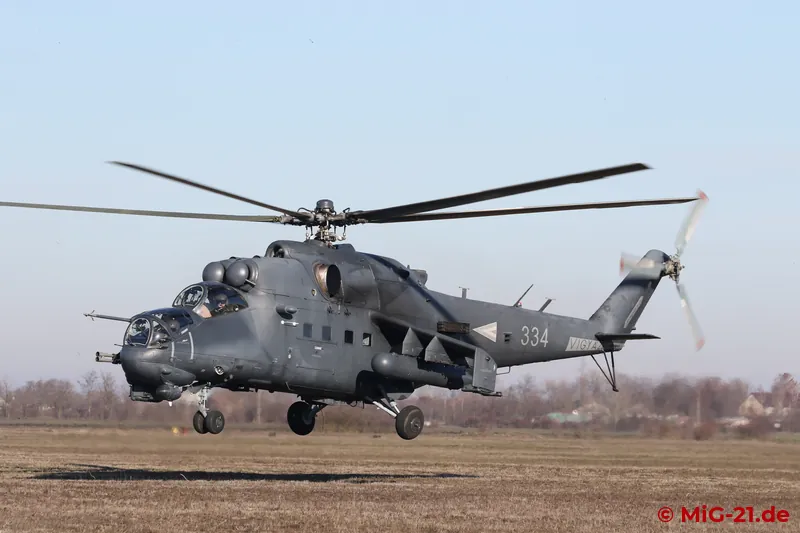
Each photo flight actually consisted of two flights, as there was an intermediate landing each time, during which the respective subject could also be photographed from the ground. Here the Mi-24 lands first ...
... and right afterwards our H145M touches down.
The Mi-24 makes some photogenic approaches, ...
... before hovering and waiting for us to get back on board.
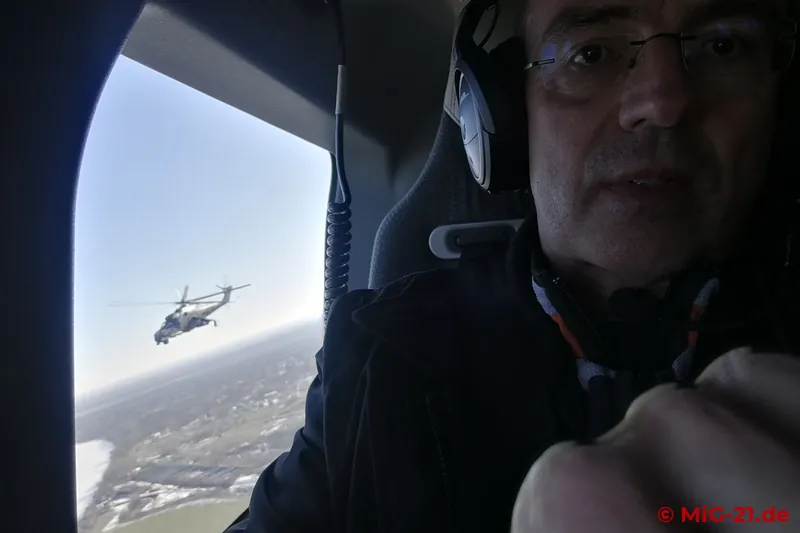
On the return flight ...
... there is also the opportunity for a selfie with a Mi-24 in the background – as a reminder of what is probably the last occasion on which the author was able to see a flying aircraft from NVA stocks (in this case the former 415).
Spectacular finale: the Mi-24 flies sideways as fast as our aircraft in forward flight.
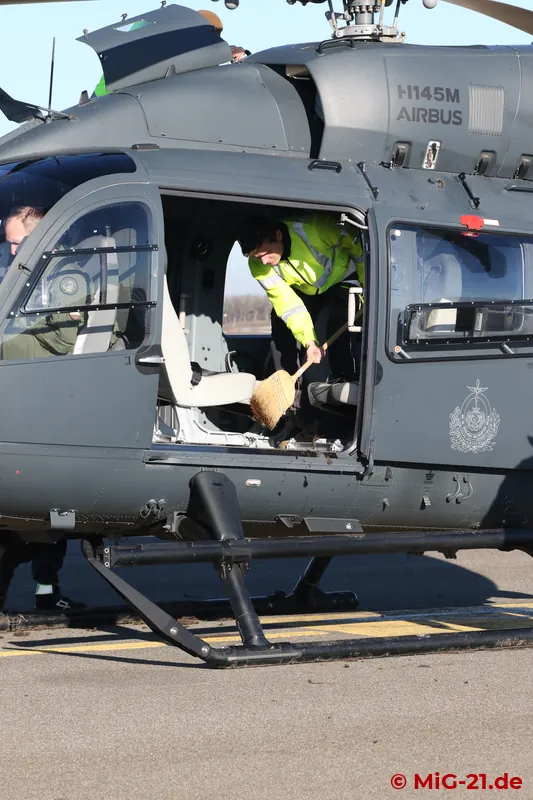
During the intermediate landing on a marshy meadow we dragged large lumps of mud into the aircraft, which are removed by the technical staff after landing using traditional technology.
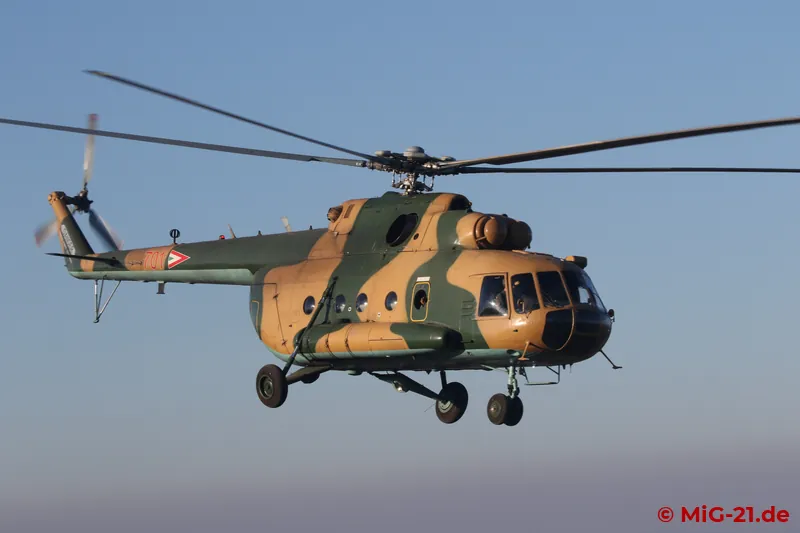
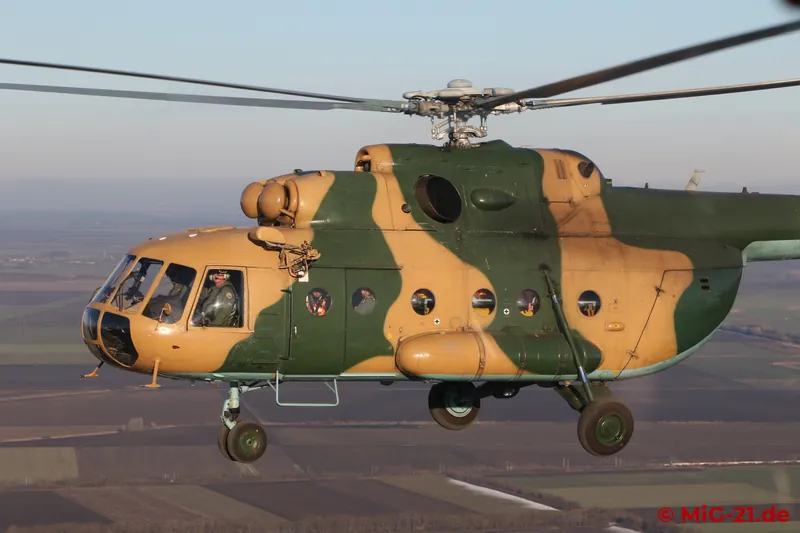
The sun is already quite low in the sky when we take off for the second round with the Mi-17.
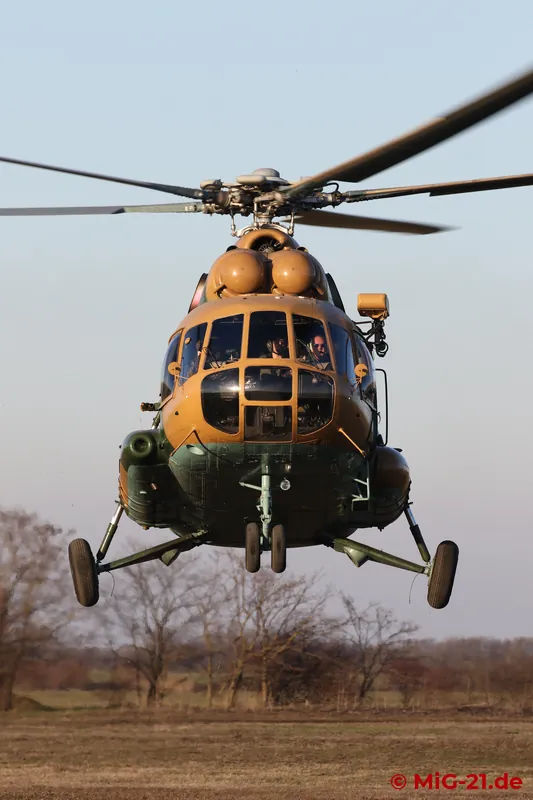
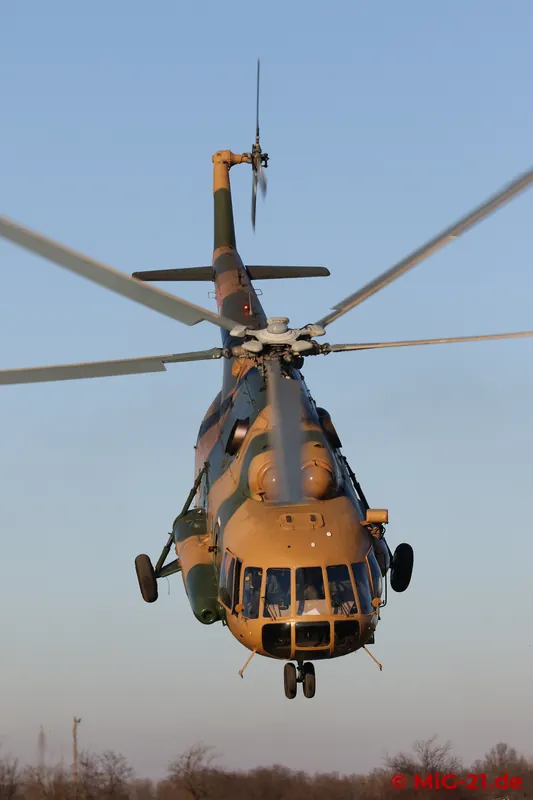
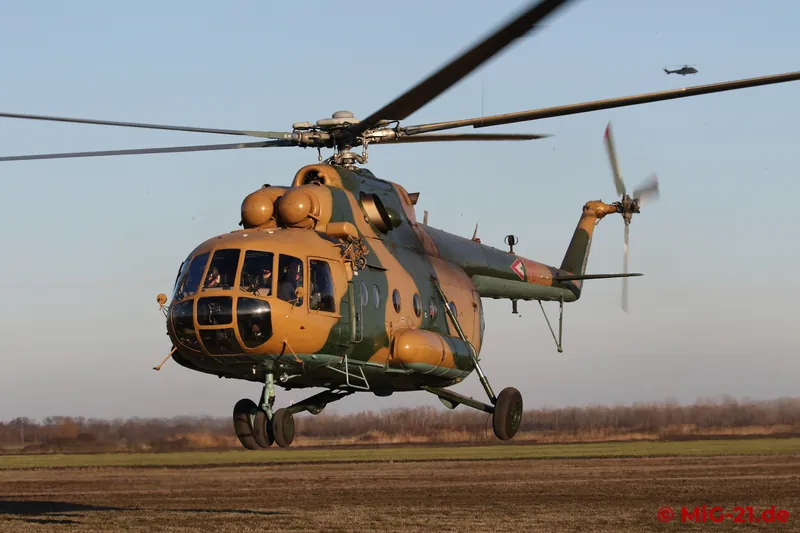
The Mi-17 fully compensates for its less impressive shape compared with the Mi-24 ...
... with the attractive camouflage in typically Hungarian colours.
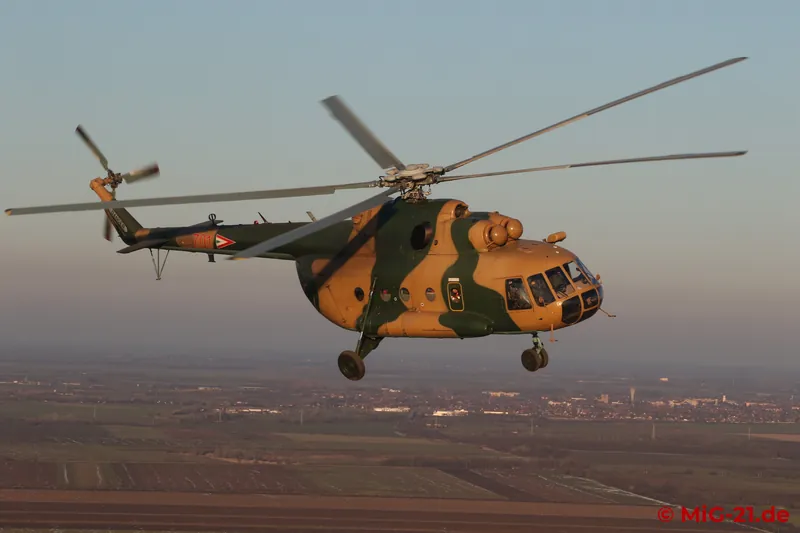
Thanks to the same powerplant as the Mi-24 ...
... the Mi-17 is just as agile.
After the intermediate landing ...
... it is back to Szolnok, but this time with an extra circuit and even more beautiful motifs.
After the work is done, our aircraft is prepared for flight operations the next day.
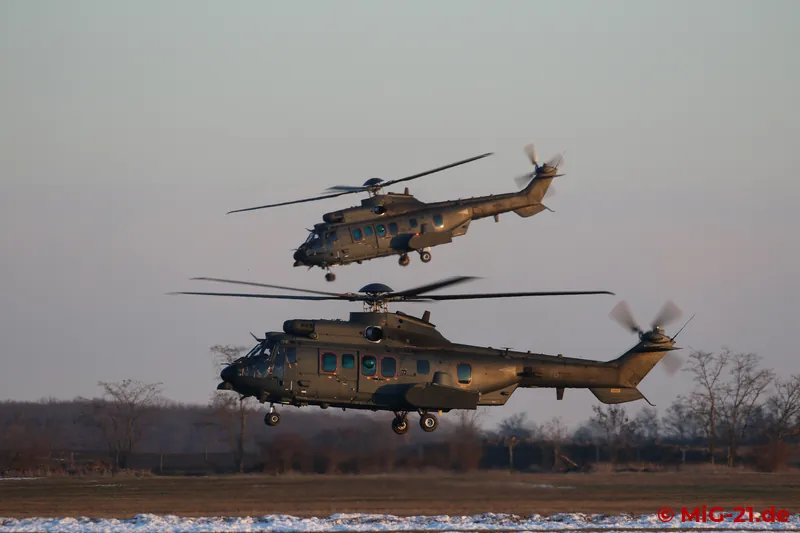
While we set off for home, the H225Ms also based at Szolnok train until dusk.
The author thanks the pilots Lieutenant Colonel Attila Suszter, Major István Kiss, Major Zsolt Bógyi, Captain László Kiss, Captain Szabolcs Szamosvölgyi and Captain Ferenc Hackler, all technicians and other members of the Hungarian Air Force who made this visit possible and, of course, very especially Lieutenant Colonel (GS) Daniel Passbach.