After the visit to Baza 71 Aeriană Câmpia Turzii, familiar from numerous stays, in September 2022, a trip to Feteşti follows in October, where the author had not been since 2007. Previous attempts to get there failed or led to Mihail Kogălniceanu, because the MiG-21s from Feteşti were based there for a long time.
This time it should go better – a little better, at any rate. At least there is confirmation from the base's press department that the author's visit is expected. However, no reliable statements can be obtained as to whether there will be flight operations on the planned date. The weather forecast is mixed, but as is well known, hope dies last ...
As the flight from Nuremberg to Bucharest only lands in the late afternoon and the visit to Feteşti, about 150 kilometres away, is to begin at 10 a.m. the next morning, the night is spent – to avoid a night drive on unfamiliar roads, but also the morning rush hour – in a rather uninviting hotel on the outskirts of Bucharest near the motorway to Constanța. The restaurant is already closed at 8 p.m., and a beer can only be obtained with difficulty. Late in the evening the message comes: "Flying only in the afternoon, meeting at the gate at 12 noon". So it could have been a nice evening in the centre of Bucharest. But never mind, all that matters is the success of the visit the next day.
The journey is unspectacular, the author much too early at the gate of the base, which after numerous rebuilds is in a different place than 15 years ago. So there is an opportunity for a little tour around the base – not least to look out for a photo position just in case. And lo and behold – the two QRA aircraft are in the air and come in to land a short time later – unfortunately too far away and in too poor light for good photos.
Then begins the long wait for the press officer, who finally arrives at the gate after what feels like an hour. The first impression is confirmed later: everything is more important than looking after the visitor – an experience the author had already had at Câmpia Turzii. Good that there is always an NCO who obviously enjoys looking after the guest. At Câmpia Turzii it is Adela, here at Feteşti Costel Preda, who tirelessly accompanies and supports the author.
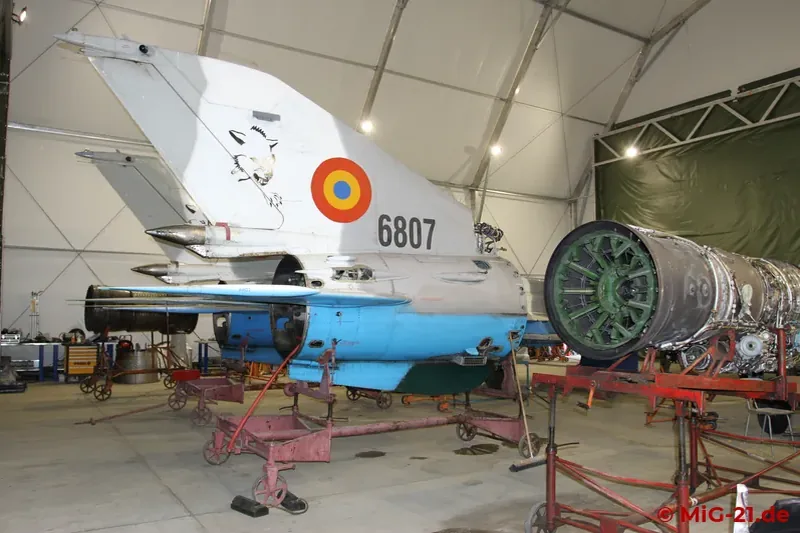
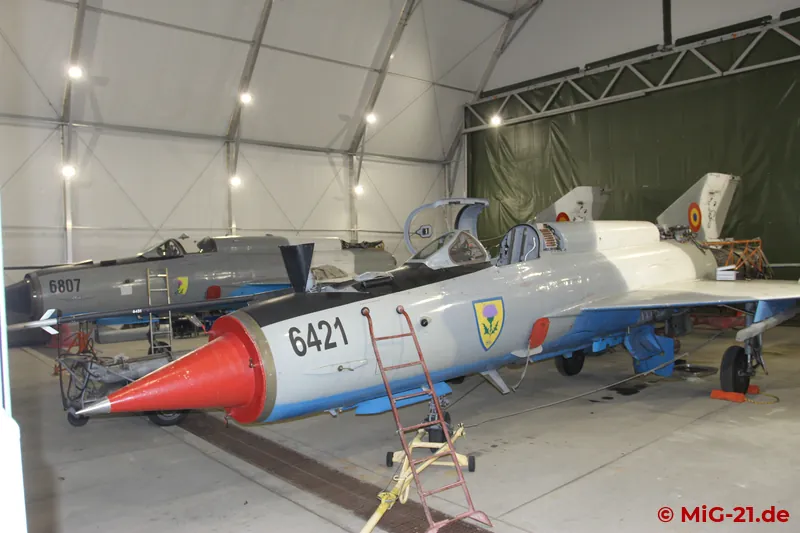
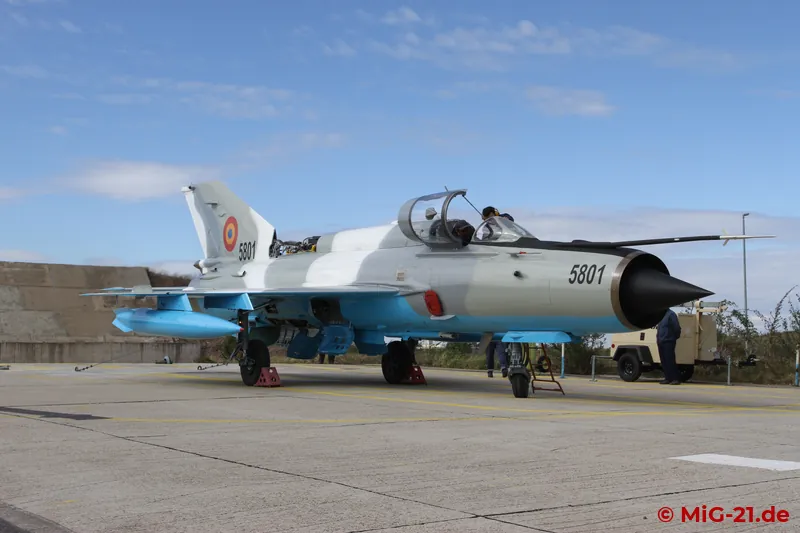
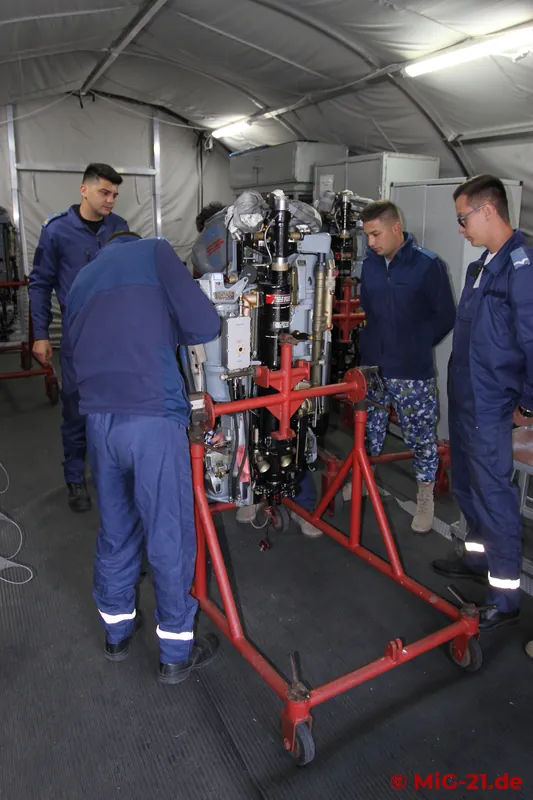
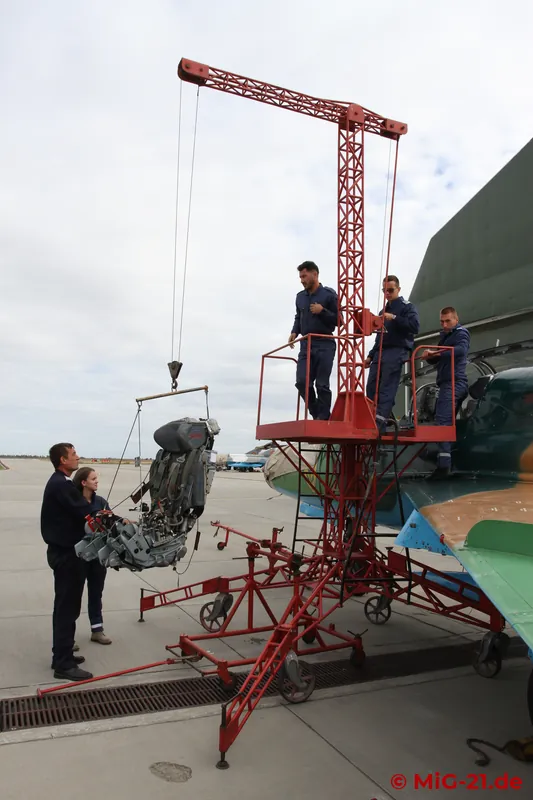
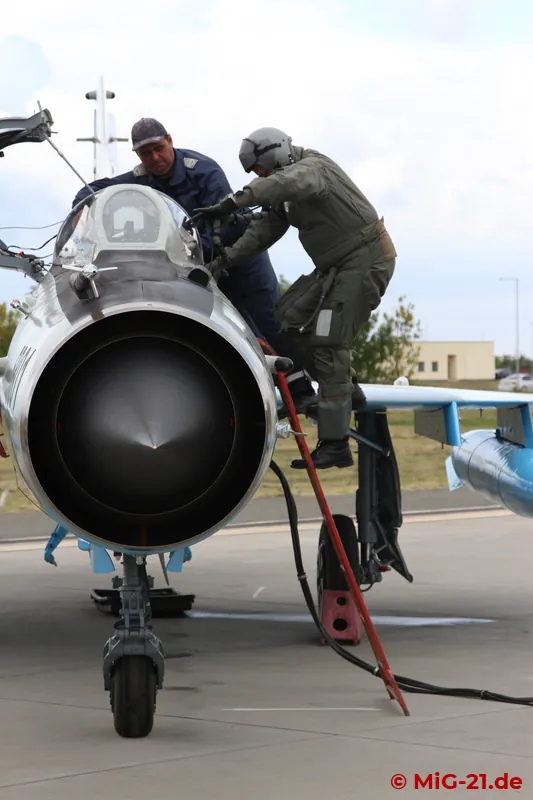
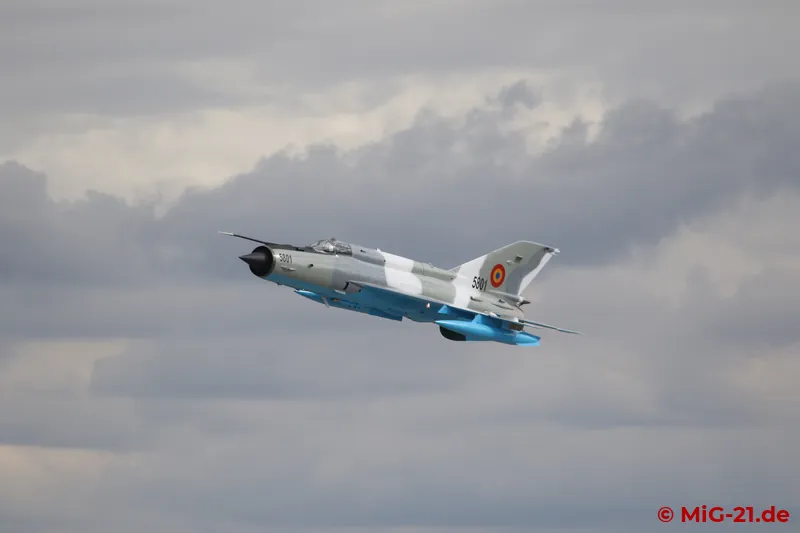
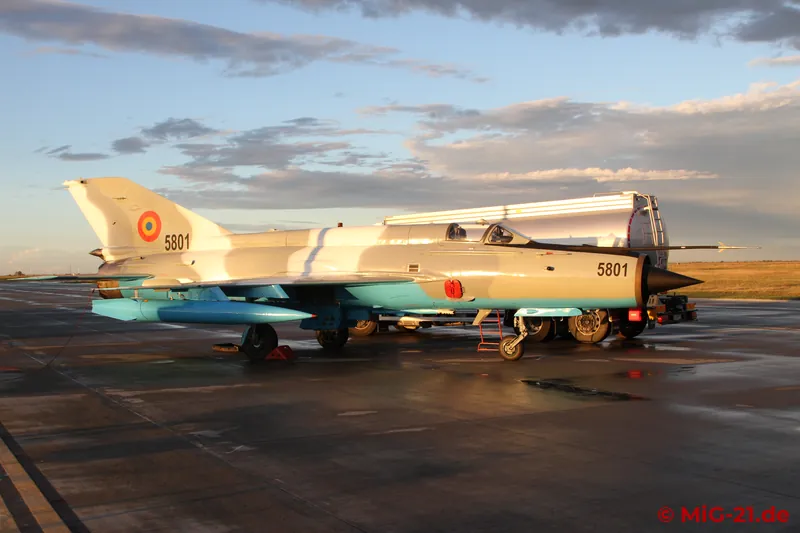
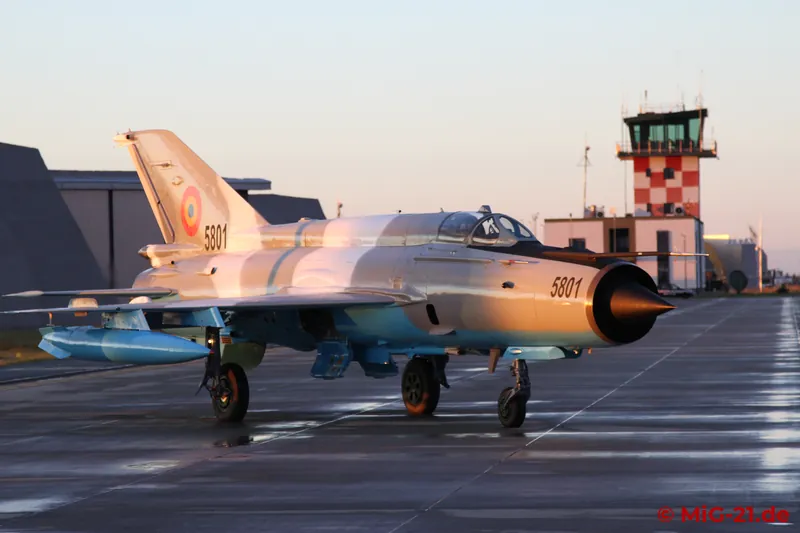
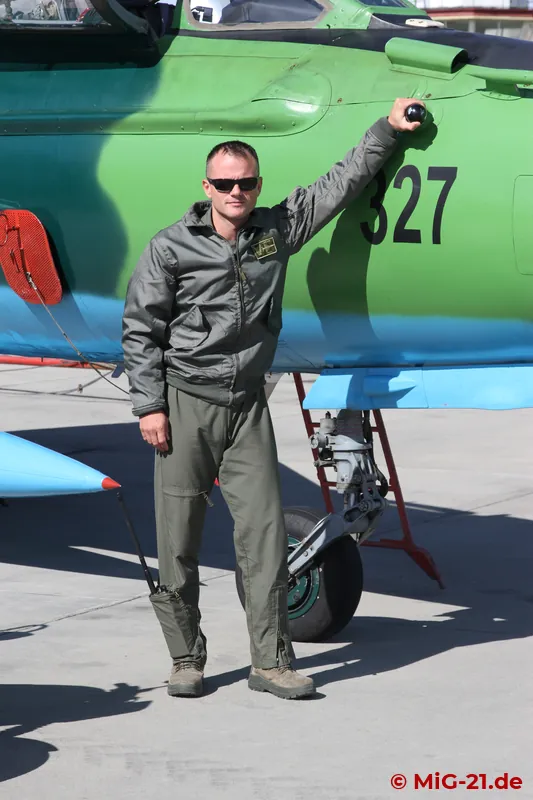
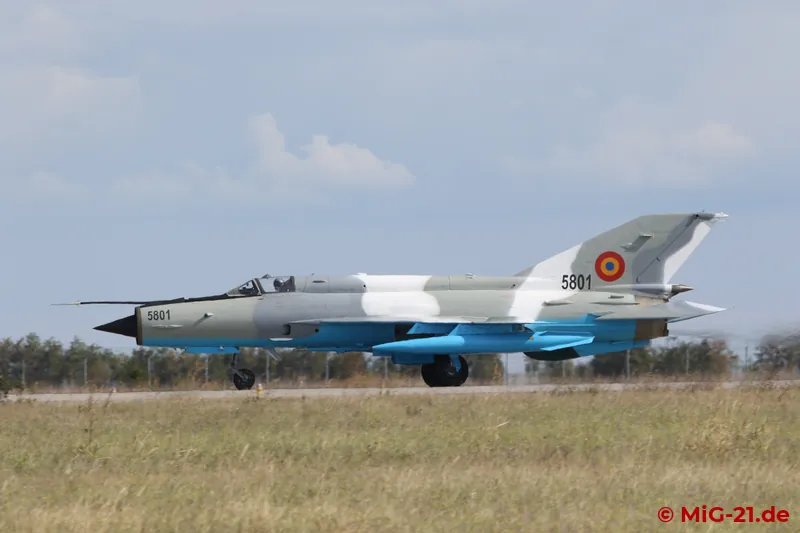
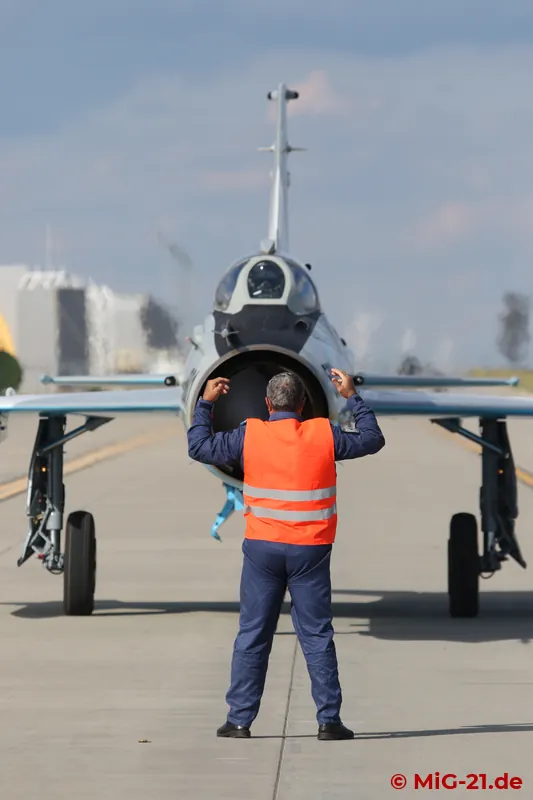
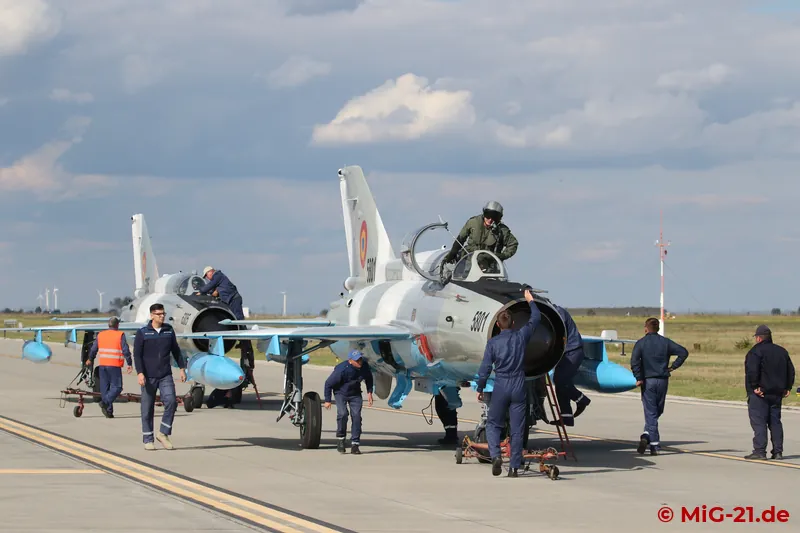
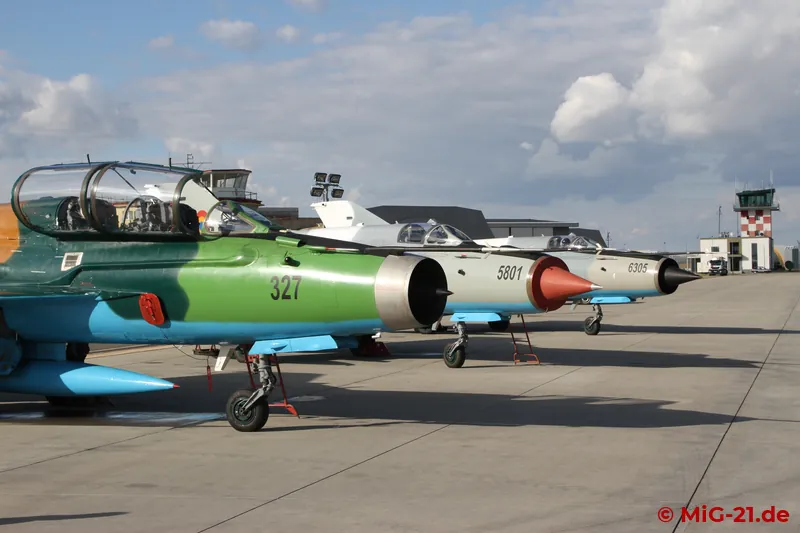
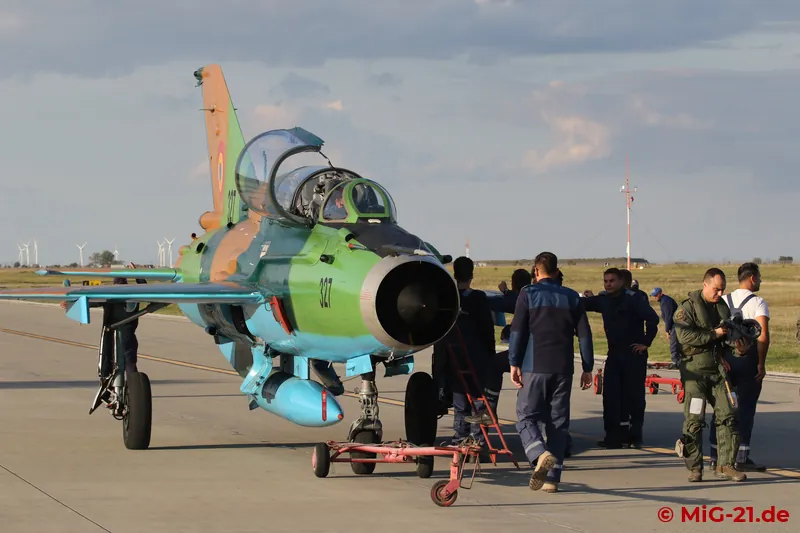
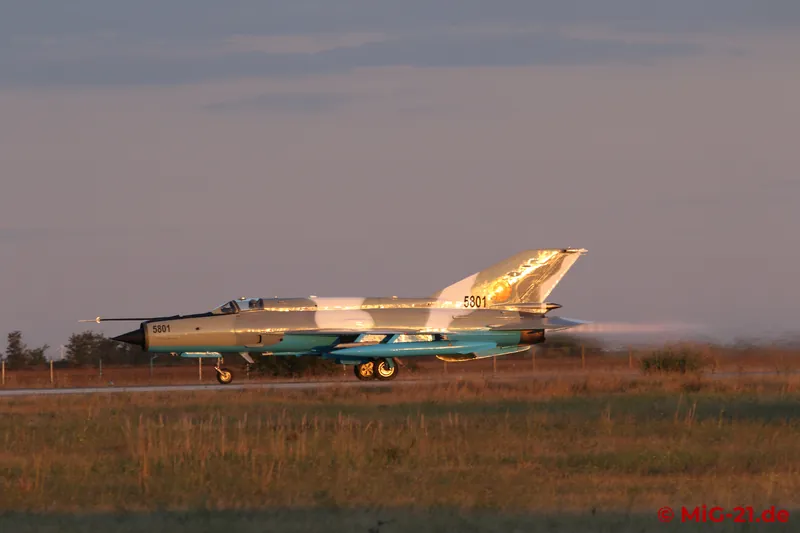
The welcome by the pilots in the squadron area is then very friendly, and there is also a reunion with an "old acquaintance", Căpitan Adrian Trifa, who had saved the author's day at Mihail Kogălniceanu in 2018. With the squadron commander Comandor Marincaș we go to the flightline, into the maintenance hangar, to the parachute and survival section and finally to the afterburner test run of 5801. The last MiG-21 LanceR overhauled at AEROSTAR Bacău had been ferried by Comandor Marincaș only days before – watched by the many AEROSTAR employees who had turned up, for whom an era is coming to an end.
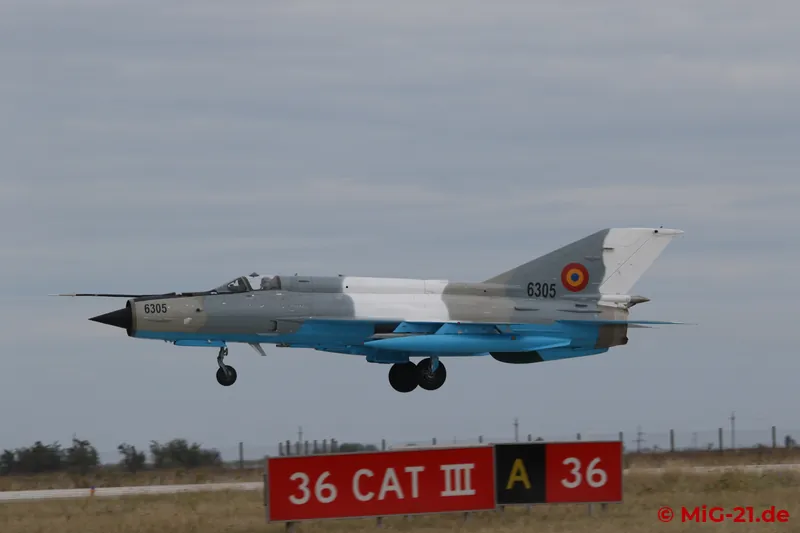
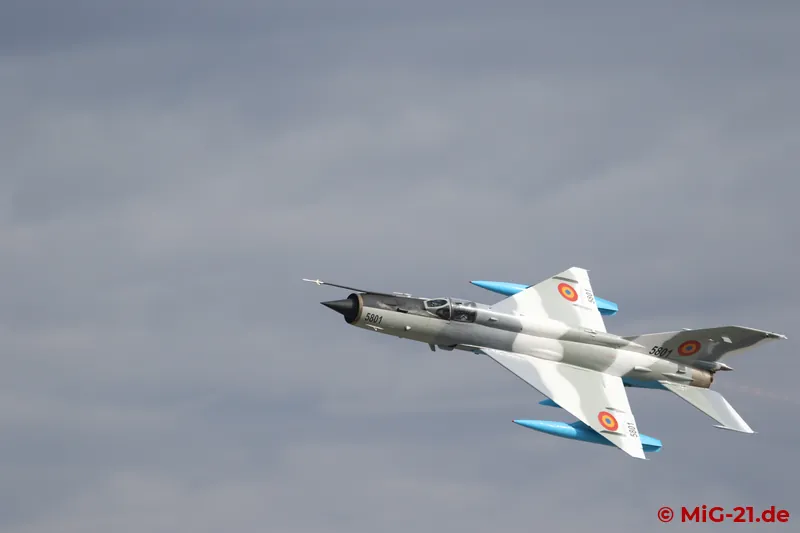
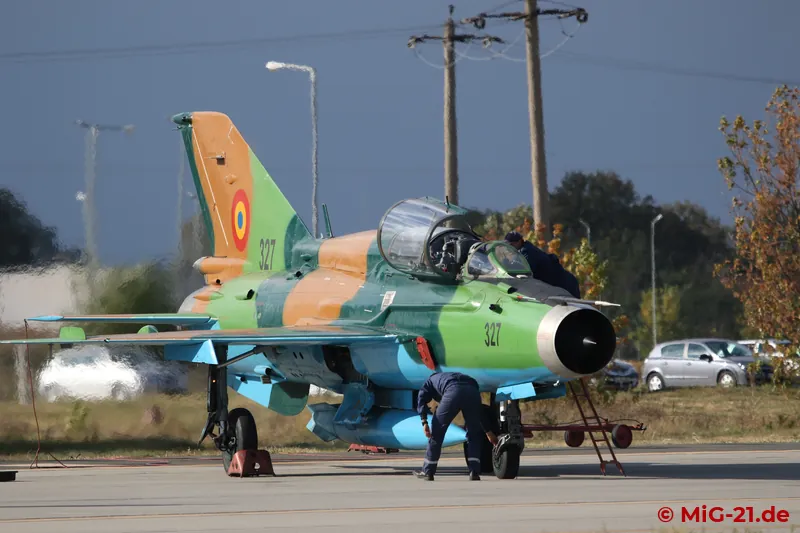
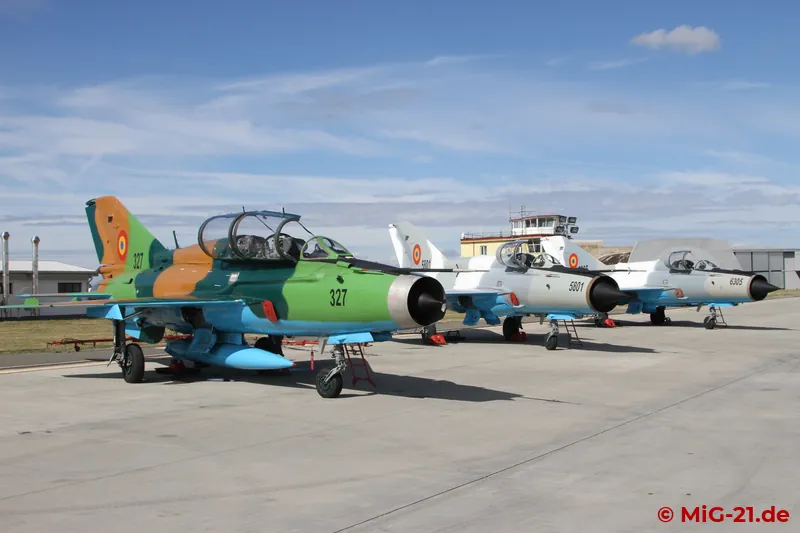
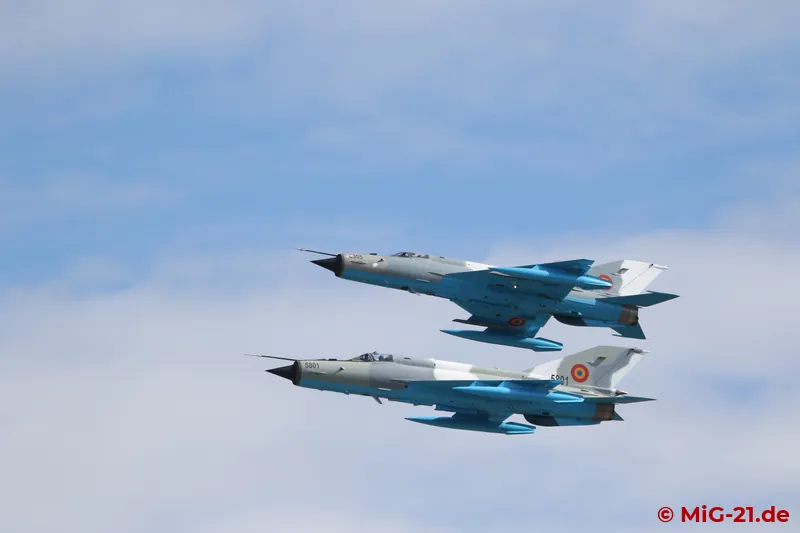
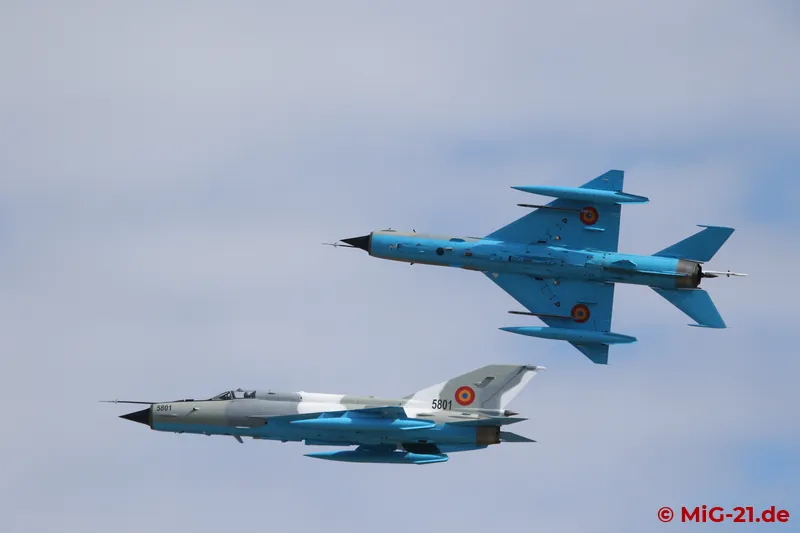
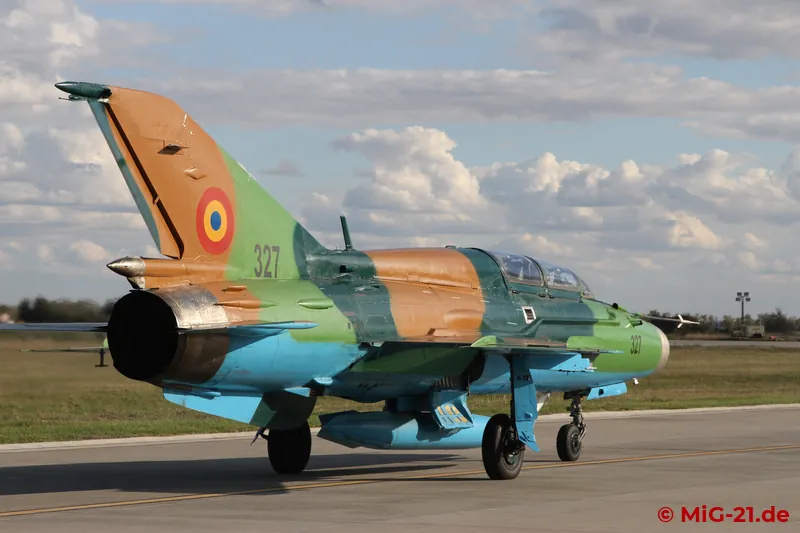
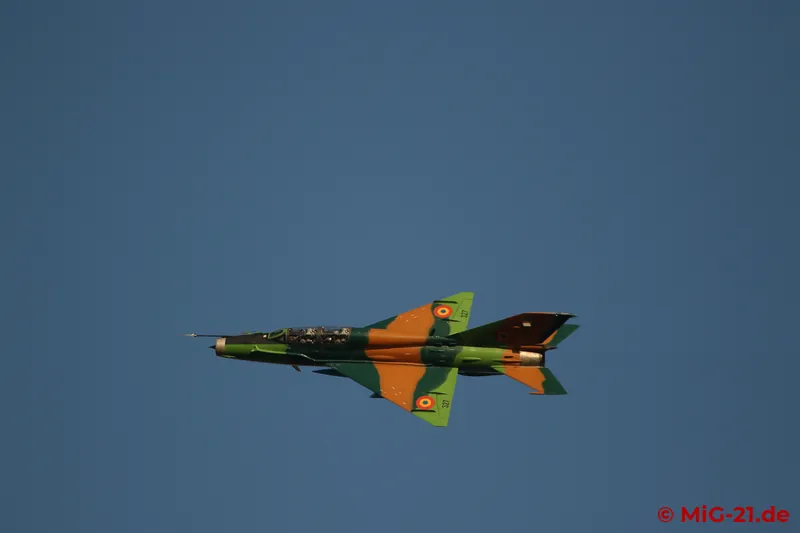
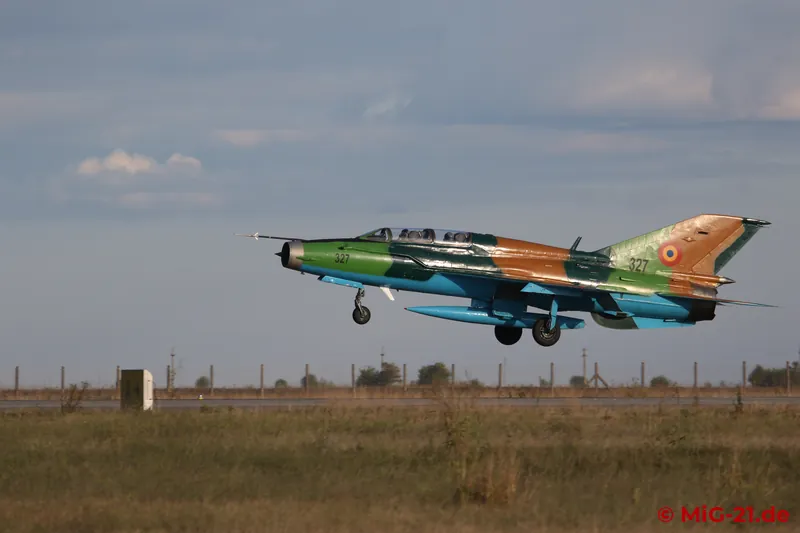
Then flight operations finally start. Only three aircraft – two single-seaters and one two-seater – fly and the weather is modest, but the author's delight is still great, not least because the pilots insist on bringing their aircraft into an optimal photo position specially. However – and here, too, memories of Mihail Kogălniceanu 2018 come up – a huge and, above all, almost black thunderstorm front approaches from the north-west. The associated wind causes a rapid change of sun and clouds, which turns the camera settings for good photos into a game of chance. Hardly have the aircraft of the second wave landed when the cloudburst begins.
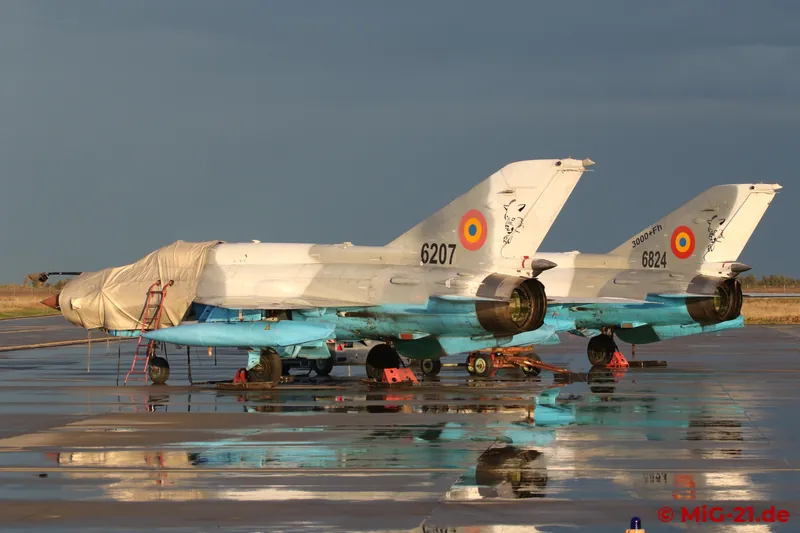
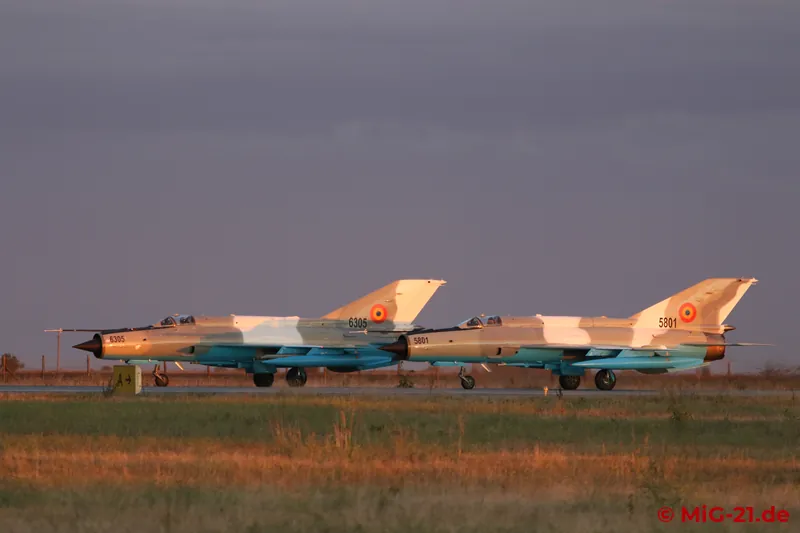
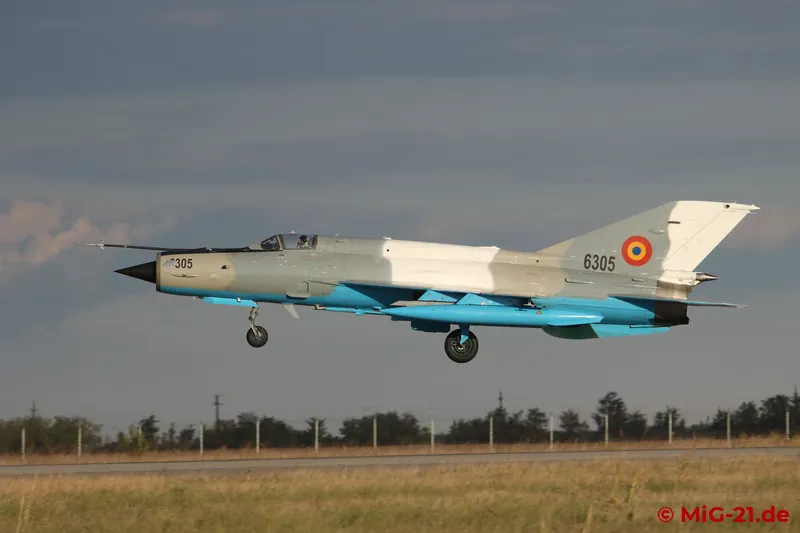
As quickly as the storm came, it disappears again, and then the low sun and wet concrete provide a dreamlike photo backdrop, especially for the two QRA aircraft. The only annoying thing is that the author does not notice that the aircraft are not fitted with Magic II missiles as at Câmpia Turzii, but with Python 3, of which the author has never taken photos in the mounted state ...
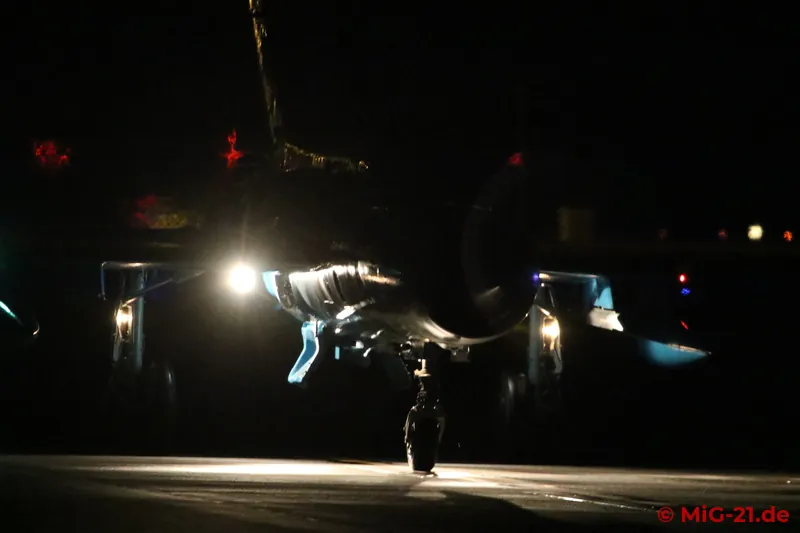
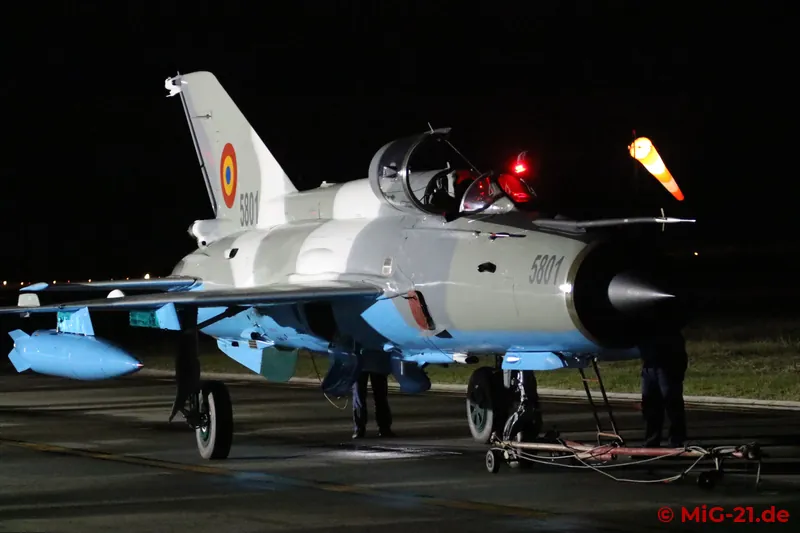
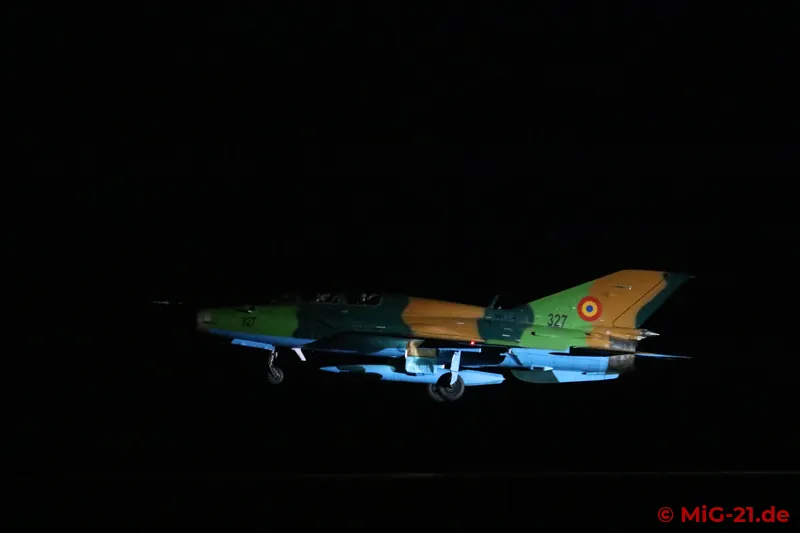
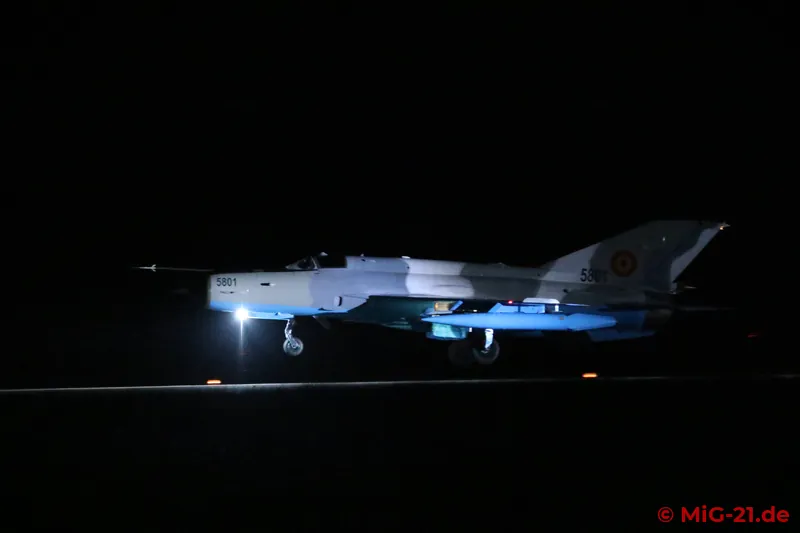
The evening sun then also shines on the aircraft taking off for night flying, from which they return in complete darkness. With the landing the first day of the visit ends, and after that the author actually has almost an hour's drive to the nearest hotel bookable via the internet. But here, too, Costel Preda can help and arrange a cheap overnight stay in the local hotel, in which – as it later turns out – the author had already stayed on his Romania trip 2002. A lot has changed there since then, so that "showering" under a trickle of cold water and sleeping with a hat on are things of the past. In a nearby restaurant there is a tasty Romanian dinner. Palincă and Stalinskaya vodka ensure a deep night's sleep.
The second day brings better weather and lots of time on the flightline. In addition, the author has the opportunity to talk to the technical staff and to experience their hospitality with an invitation to freshly grilled food. Finally he is also allowed to look at the aircraft documents. Some aircraft have already reached over 3000 flying hours (more than the originally planned service life), but all still have enough remaining service time for two or three more years of service, which clearly shows that the retirement planned for 2023 is purely political. Even though the end of operations seems to be a done deal, pilots and technicians have kept a little hope of continued operation, be it as an advanced trainer or as "Red Air" for the F-16. Everyone never tires of stressing that they like working on this aircraft and flying it. And – as was hinted to the author in conversation – quite a few plan to leave the army when MiG-21 operations end.
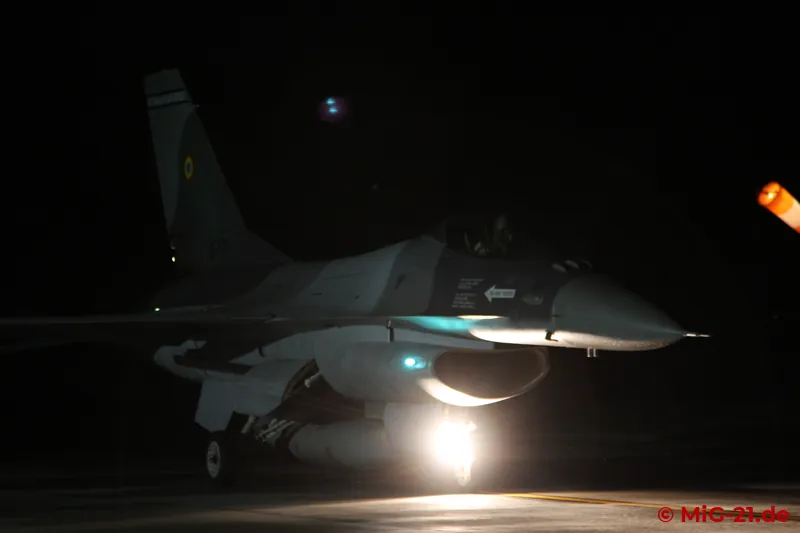
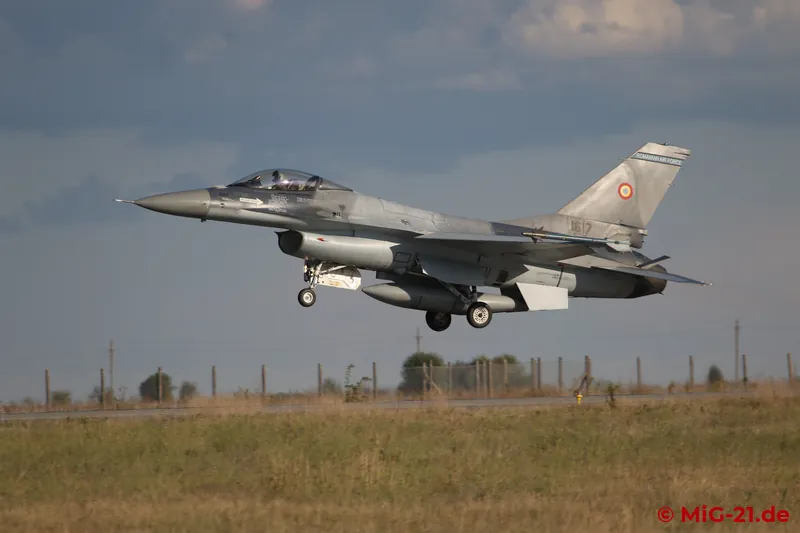
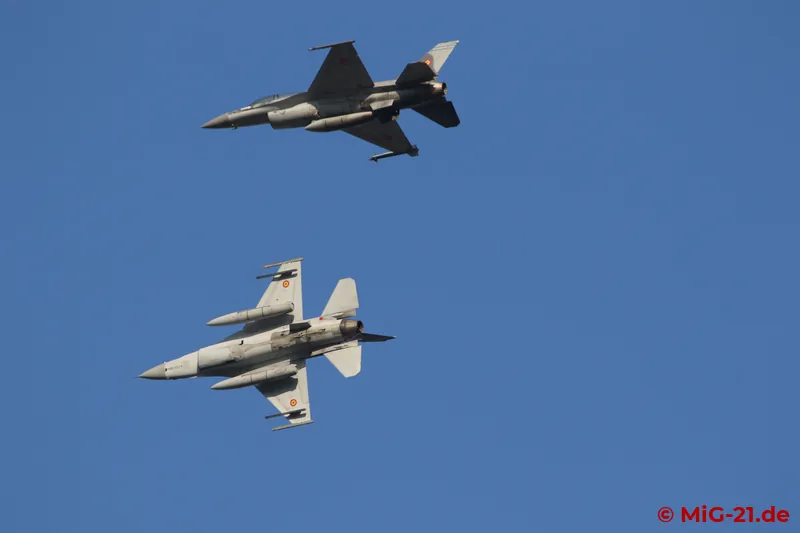
Again flying goes on into the night. This time the F-16s are active too, and given the optimal light the author has no choice but to take some pictures of the little-loved MiG-21 successor as well.
The good conditions on the second day give hope for the third day of the visit. Unfortunately, the helpful and patient Costel Preda announces that he cannot be there the next day. So the only contact left is the uncooperative press officer, who, however, cannot be reached at all on the morning of the following day. When she finally answers the phone, the devastating news is: no access that day, as there is a photography ban because of a planned live QRA launch. No explanation is given for this. But it would also be hard to explain why the activities of a weapon system that is to be retired in the foreseeable future, without its successor being operational, are subject to secrecy. However, as the author has promised Comandor Marincaș a copy of his book, he asks for access without taking photos and finally simply to be allowed to watch the launch, which is ultimately granted. A grim-looking uniformed man who speaks no foreign language is assigned to him for the duration of his stay.
On schedule at 2 p.m. the alarm bell rings, technicians and pilots run to the aircraft and the author after them. As the two QRA aircraft taxi off and take off, he enjoys the sight, the thunder of the engines and the smell of kerosene. When the QRA aircraft have long since flown away and the minder has "disappeared", the author decides to shorten the waiting time until their return with a few photos of the activities on the flightline. The same aircraft stand there that had already stood there on the previous days and had been captured in numerous pictures. But that turns out to be a serious mistake. Just at this moment of relaxed photography the guard appears shouting and drags the bewildered author first to his superiors and then to the base commander. No real misconduct can be established, but a return to the squadron area would probably hurt the self-esteem of the secrecy guardians. So after a brief farewell to his hosts, the author is escorted to the gate by the military police and thus, for the first time in more than 30 years of involvement with the MiG-21, thrown off an airfield!
What makes this incident particularly curious is the very different handling of "secrecy": while access to the tower is forbidden at Feteşti, it is no problem at all at Câmpia Turzii. While the QRA aircraft may not be photographed at all at Câmpia Turzii, nobody at Feteşti has a problem with it as long as the aircraft are parked and covered. And the camera may not be present at the QRA launch, although the author photographed similarly armed aircraft extensively during Baltic Air Policing 2007 at Šiauliai. The whole thing becomes a complete farce when, in April 2023, close-ups of the QRA from Câmpia Turzii appear on the Facebook site of the Plane Spotters Bacău.
After being thrown out, a curse lies on the trip: also driven away from the surroundings of the airfield by the military police, the author only reaches congested Bucharest two hours later, where he circles his hotel for another hour in the rush hour because Google Maps does not know Bucharest's one-way streets. The four rooms offered are all right next to the lift, face the street and have a – not soundproofed – connecting door to the neighbouring room, under normal circumstances three knock-out criteria when choosing a room. The absolute low point is reached when, on arrival at the airport the next morning, a delay of seven (!) hours is announced for the flight home, and the aircraft then takes off eight (!) hours later than planned. So a relaxed return in the afternoon becomes a bleary-eyed arrival at 1 a.m. – and yet the author is glad to have experienced the MiG-21s of Baza 86 Aeriană at close range once more.
The author thanks General de Flotilă Aeriană (ret.) Dr. Lian Someşan, Comandor Laurenţiu Mititelu, Comandor Silviu Marincaș, Maistru Militar Principal Costel Preda and all members of the Forţele Aeriene Române who made this trip possible.