Skip to content
MiG-21.de

Archive

49. Baza Lotnicza Pruszcz Gdański (Poland) 2026

In early August 2026 the author visited the 49. Baza Lotnicza (49th Air Base) at Pruszcz Gdański, inland from Poland’s Baltic coast – for the second time this year the Mi-24 was the reason for his trip. Within NATO, where Bulgaria, the Czech Republic, Slovakia, Hungary and Poland still flew the Soviet attack helicopter after the turn of the millennium, only Poland remains as an operator (apart from two airframes of uncertain serviceability in Bulgaria); elsewhere in Europe only Serbia still flies the improved Mi-35. Poland has just under 30 Mi-24s left, split between two squadrons at Inowrocław and one at Pruszcz Gdański. Some of them are deployed to forward bases on the eastern border to counter intruding drones, leaving only a rump fleet for training.

The occasion was something not seen for a long time: a formation flight of three Mi-24s. For the ground crews this meant getting all three helicopters serviceable, as there were no spares – only four Mi-24s were on base, one of them in maintenance. After an extended test run including a short flight, 175 and 270 took off as a pair in the morning for cross-country flights, returning to the airfield several times for touchdowns. Shortly after noon the third helicopter joined them for the highlight of the day: a formation departure, a low pass over the assembled photographers and, almost an hour later, a second, more photographer-friendly pass over the runway – bringing back memories of the air shows of the 1990s and early 2000s, when Czech, Slovak or Russian Mi-24s regularly flew such formations. Throughout the day two Mi-2s also kept flying their circuits. Built in Poland by WSK Świdnik, these helicopters are extremely economical to operate and are likely to remain in service for quite some time.

Besides the good technical condition of the helicopters, the modern ground equipment stood out – a sign of the sweeping modernisation of the Polish armed forces. As the Mi-24’s successor, 96 AH-64E Apache Guardians were ordered in 2024, with deliveries due from 2028 to 2032; since early 2026 eight leased AH-64Ds have been used for conversion training with the 56th BLOT at Inowrocław. Until then, the future of the Mi-24 depends on domestic maintenance capacity, as Russian and Ukrainian sources of spare parts have dried up. With stored airframes for cannibalisation, the 18 Mi-24s taken over from Germany in the 1990s – including 209 and 270 flown that day – and Wojskowe Zakłady Lotnicze Nr. 1 (WZL-1) in Łódź as overhaul facility, Poland is comparatively well placed. The chances are therefore good that the Polish Mi-24s will keep flying for some time yet – and the author hopes this was not his last encounter with them.
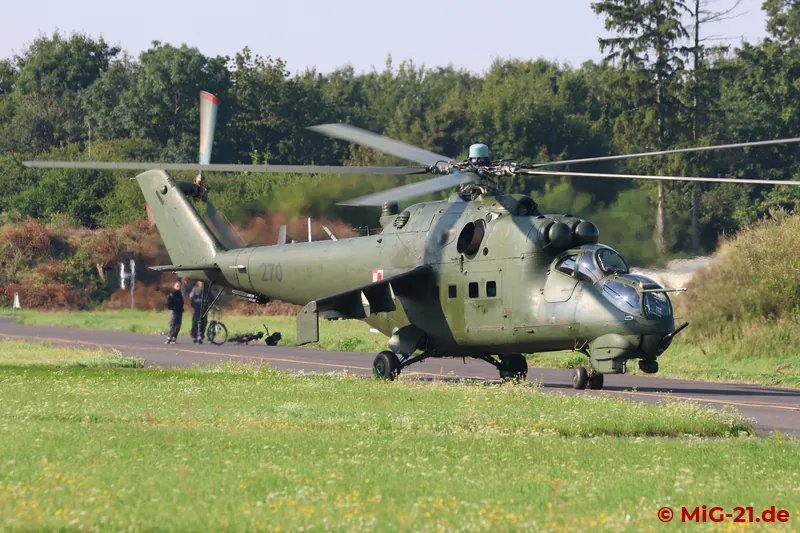
Flying starts early in the morning. 270 is one of the helicopters acquired from Germany in the 1990s.
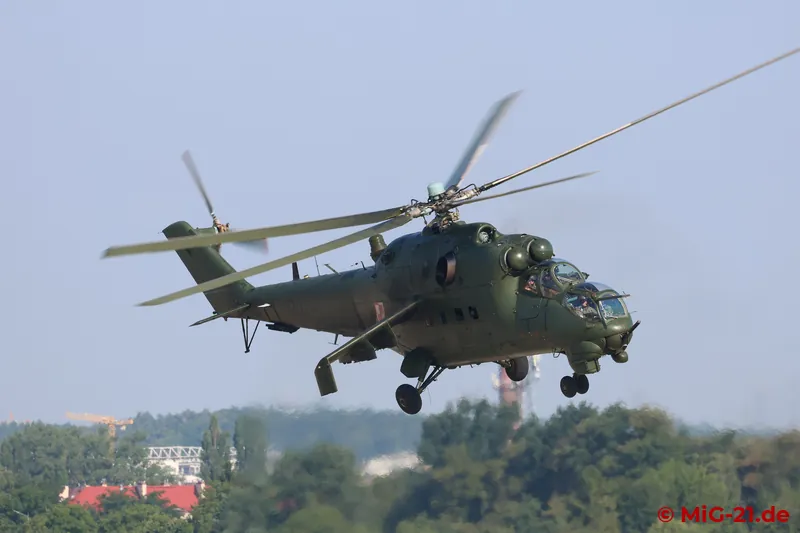
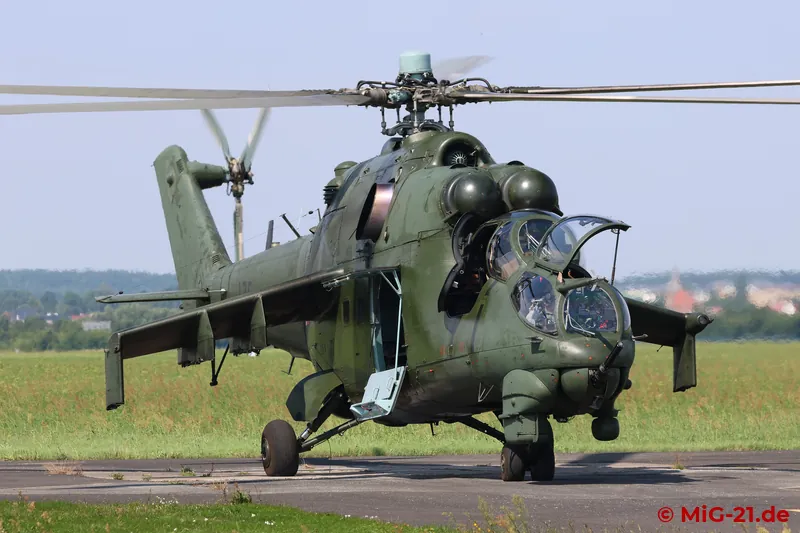
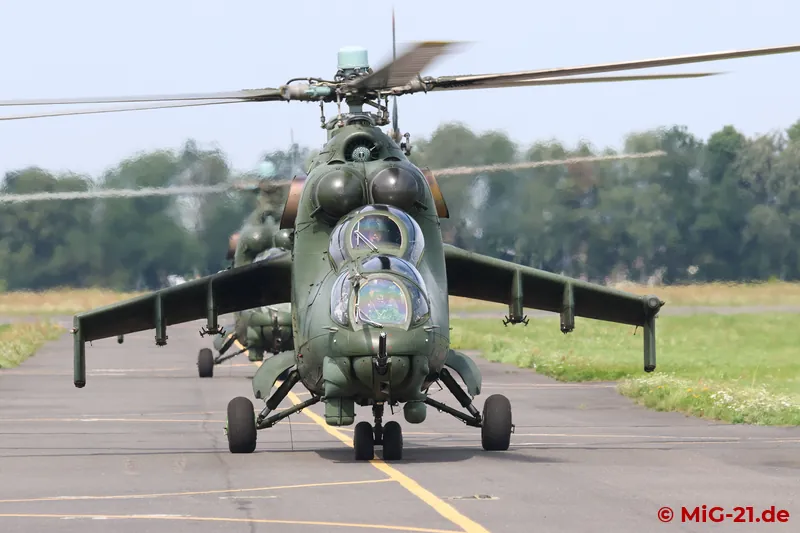
The Mi-24 looks unique from any angle. From the front, the most striking features are the wings – large for a helicopter – which offload the rotor at high …
The Mi-24 looks unique from any angle. From the front, the most striking features are the wings – large for a helicopter – which offload the rotor at high forward speeds and carry the external stores.
Test run in the air. Before setting off for the formation flight, the Mi-24s are tested thoroughly.
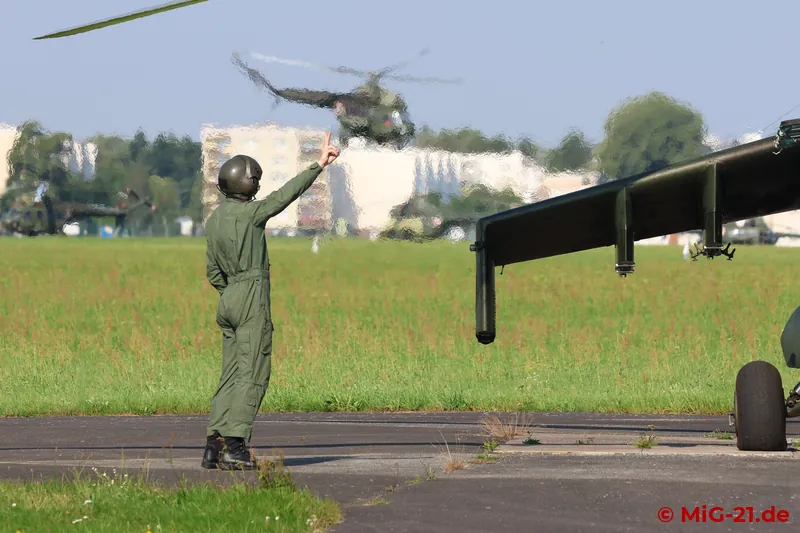
The flight engineer signals: “Test run completed successfully”. He then takes his seat in the cabin.
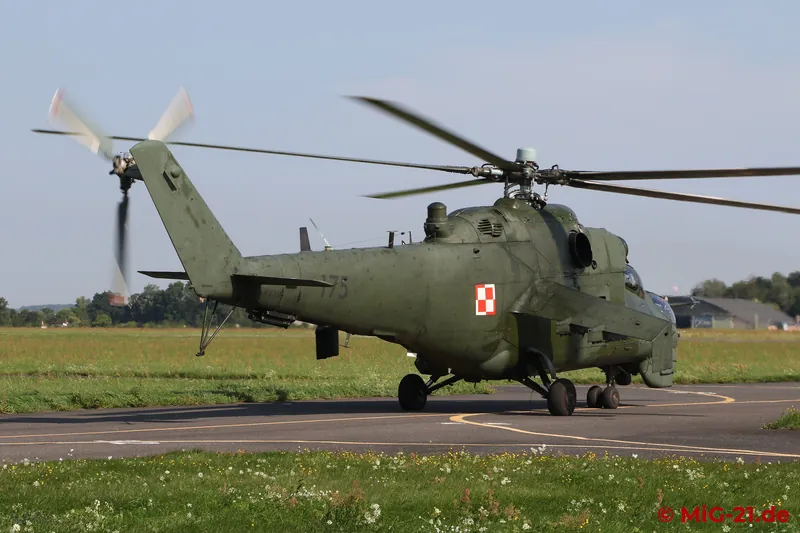
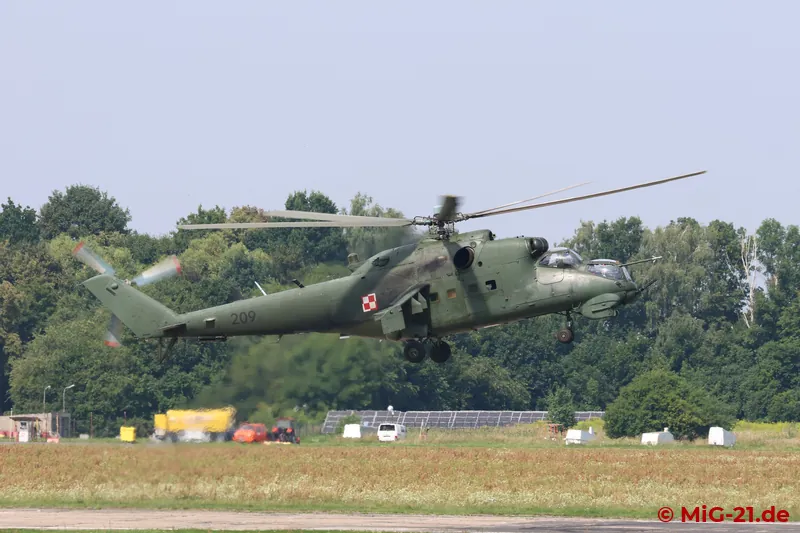
The Mi-24s at Pruszcz Gdański carry hardly any stencils or markings – just national insignia, serial and a tail rotor warning. Maintenance stencils and …
The Mi-24s at Pruszcz Gdański carry hardly any stencils or markings – just national insignia, serial and a tail rotor warning. Maintenance stencils and unit badges are absent.
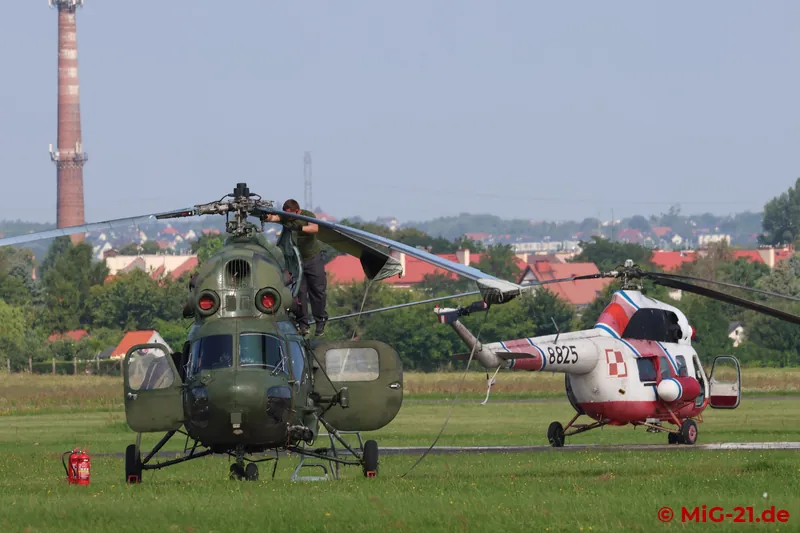
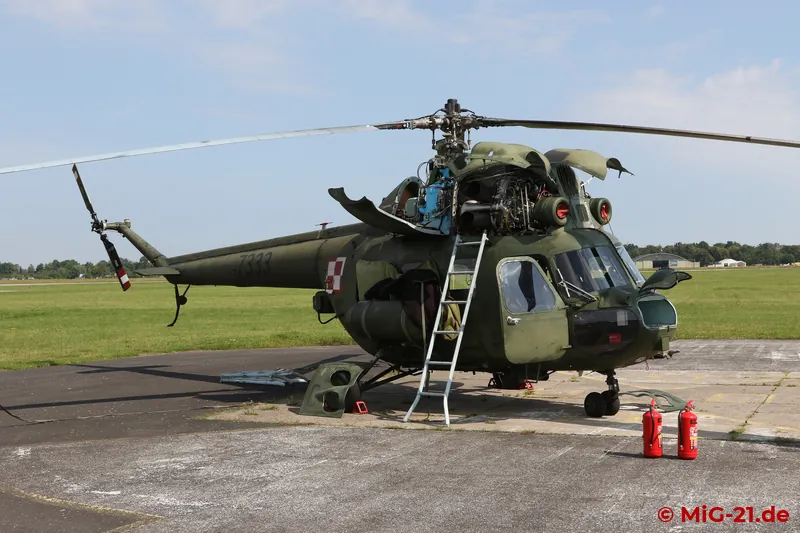
Maintenance on an Mi-2. Thanks to their simple design, the light helicopters are comparatively easy to handle.
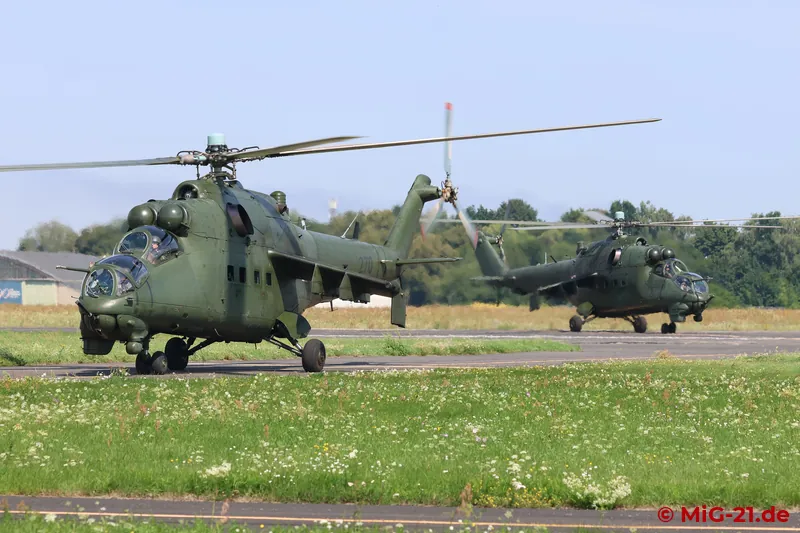
270 and 175 fly the first part of the programme as a pair, returning to the airfield several times for brief touchdowns.
Under the Mi-2’s cowlings sit two tiny-looking engines and a much more massive-looking main gearbox – an indication that a fair amount of power is …
Under the Mi-2’s cowlings sit two tiny-looking engines and a much more massive-looking main gearbox – an indication that a fair amount of power is transmitted here after all.
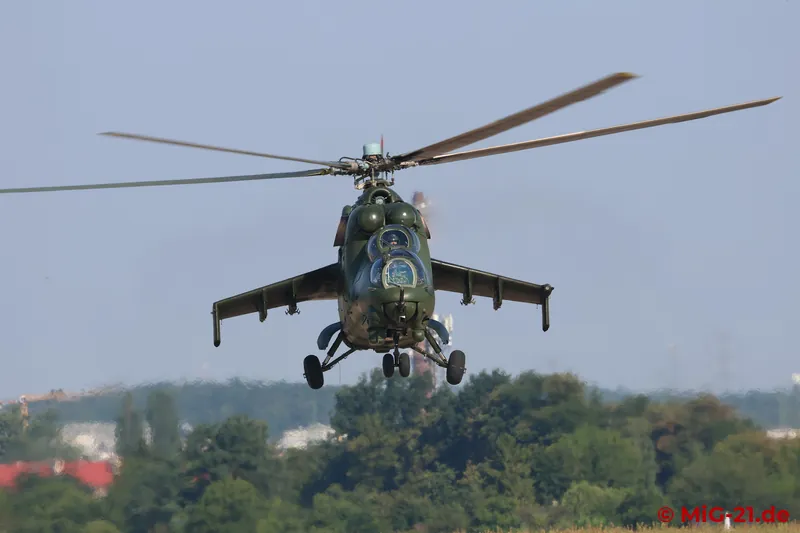
Returning from the morning sortie.
While the engines spool down, the crew already opens every door and hatch – without air conditioning the cabin quickly gets very hot.
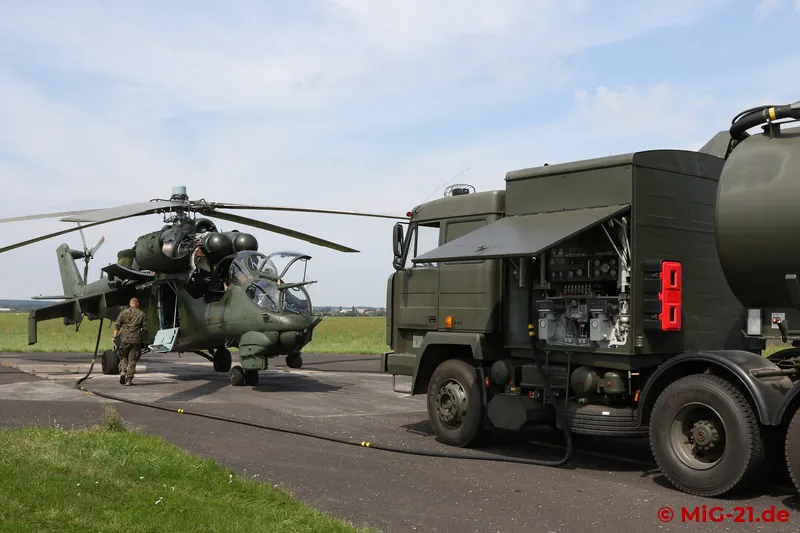
After the morning sortie an Mi-24 is refuelled. Almost 2,000 litres fit into the fuselage tanks.
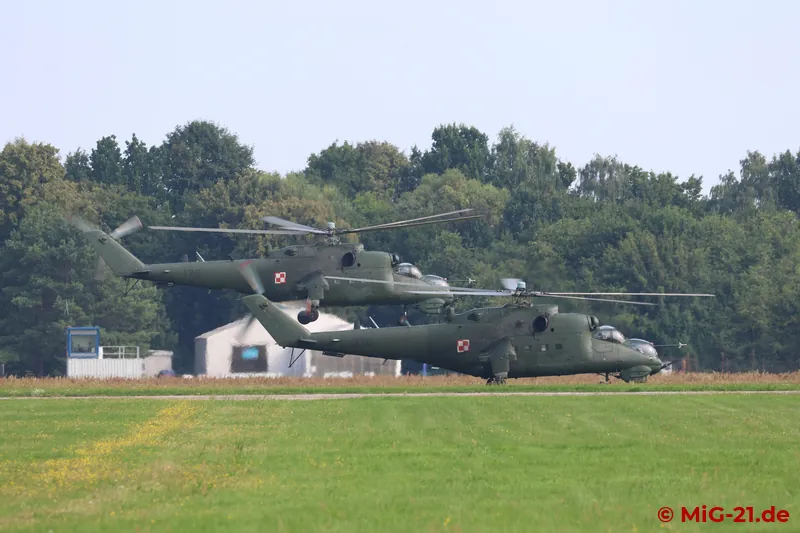
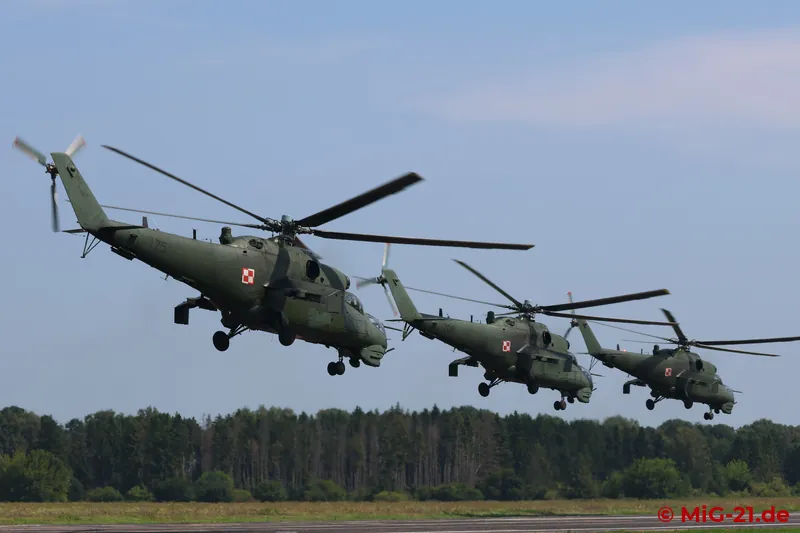
Departing in a three-ship formation.
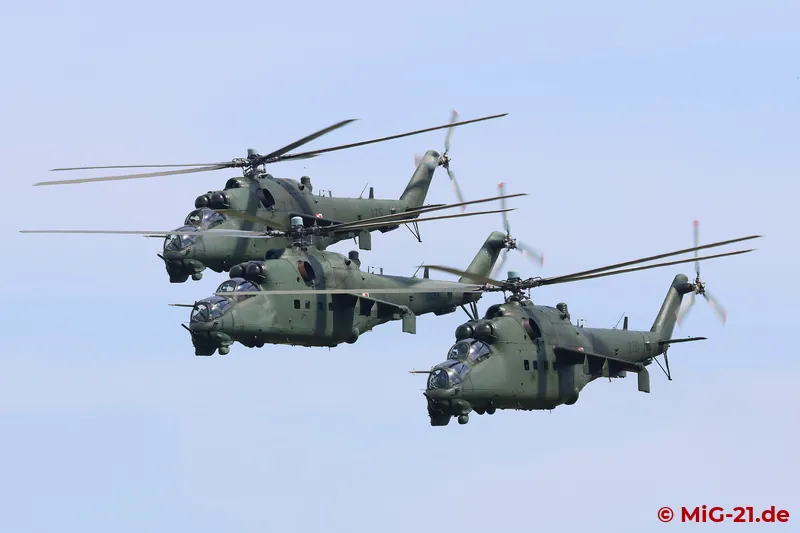
The shot of the day. With fleets shrinking, sights like this will become rare.
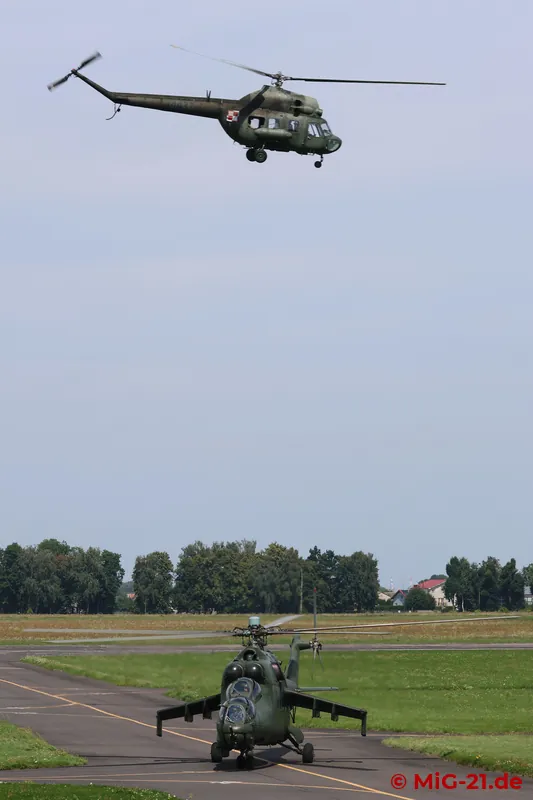
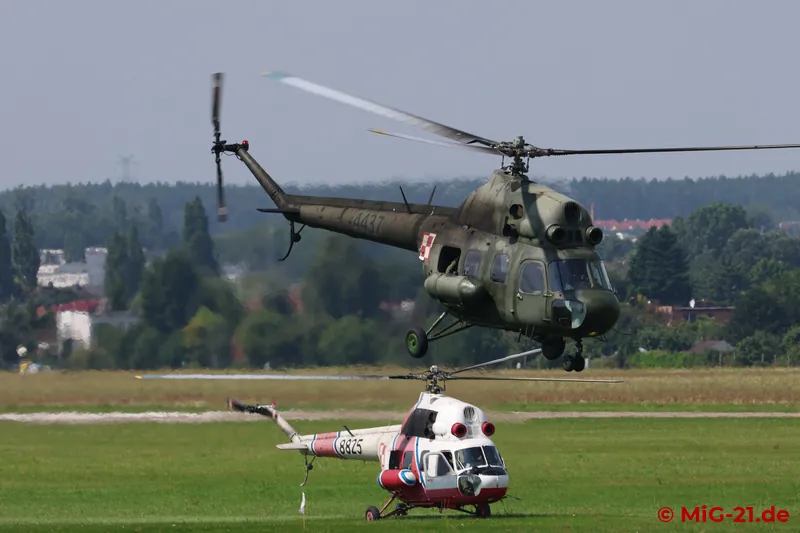
While the Mi-24 is done for the day, the Mi-2 keeps flying its circuits undeterred.
8825 in the background still wears the colours of its former SAR role. All other Mi-2s fly in camouflage and show clear signs of intensive use.
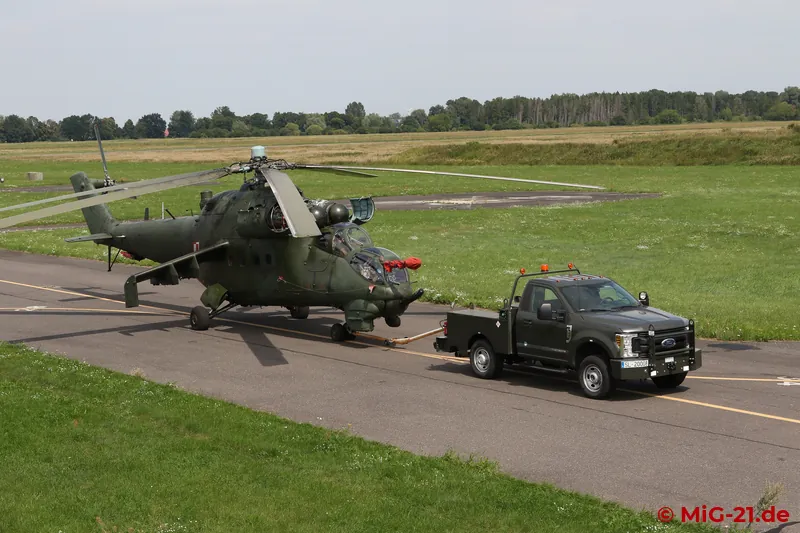
Soviet helicopter, American tug. Ground equipment has largely been modernised already, while long delivery times limit the replacement of the aircraft.
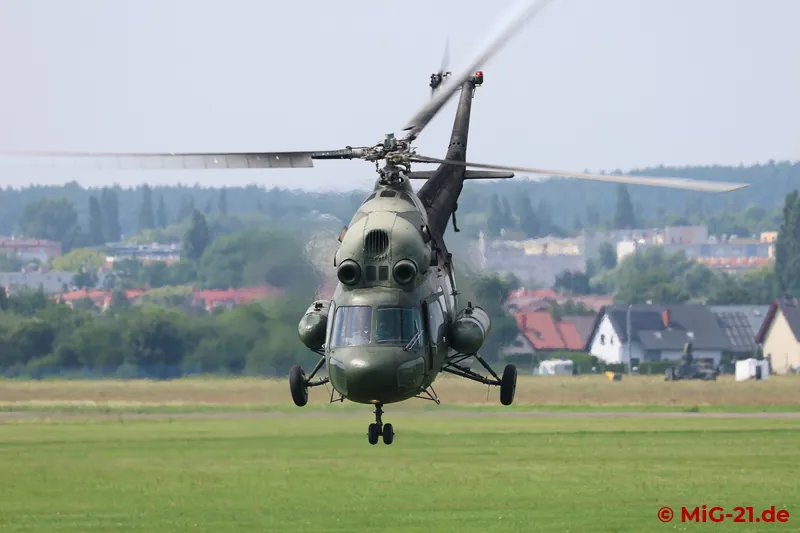
Action interlude: the Mi-2 pilot has spotted the photographers on top of a bunker and comes straight at them.
Landing after the last flight. The hot exhaust from the two TV3-117 engines is clearly visible.
To round off a successful flying day: eye to eye with the most charismatic attack helicopter of all.
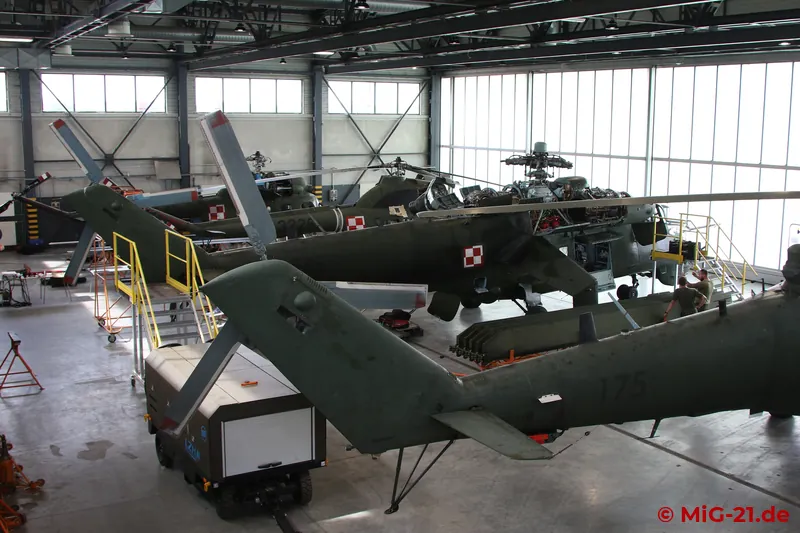
The maintenance hangar at Pruszcz Gdański. While 175 in the foreground is merely parked here, an Mi-24 and two Mi-2s in the background are undergoing …
The maintenance hangar at Pruszcz Gdański. While 175 in the foreground is merely parked here, an Mi-24 and two Mi-2s in the background are undergoing major periodic maintenance checks.