Note: Because of the strong personal connection, the following text, unlike the other articles in this section, is written from the author's first-person perspective.
March 5, 2025, 9 a.m. The sun is shining over Pleso air base on the outskirts of the Croatian capital Zagreb as if it knew about the special nature of this moment, for which I have actually waited almost 23 years. That is how long it has been since I received permission for the first and only time to visit the most important base of the Croatian Air Force (Hrvatsko ratno zrakoplovstvo – HRZ). In the years that followed, all requests were in vain, and only in 2011 did an open day offer a limited insight.
But today's visit is special not only because of the long wait – it is a farewell, not only to the Croatian MiG-21s, but to the MiG-21s in Europe altogether. Croatia's modestly upgraded and overhauled MiG-21s of the bisD and UMD versions were the last still flying in Europe. Since December 19 of last year that, too, is over. I was – unknowingly – present at the penultimate flight, as an onlooker at the fence, as so often in recent years at Zagreb international airport, with which the base shares its infrastructure.
Today, however, there is to be another opportunity to experience the MiG-21 at close quarters, albeit probably only on the ground. We – that is, besides me, the German military attaché in Zagreb, Lieutenant Colonel (GS) Burkhard Weber, and his office manager, Master Sergeant Diana Gramlich – are already expected by our Croatian hosts, the press officer of the Croatian Air Force, Major Antonija Trupinić, and the commander of the 191st Eskadrila Lovačkih Aviona (ELA), Lieutenant Colonel Zvonimir Milatović. It is thanks to the mediation of my two companions in Bundeswehr uniform that the visit finally came about after dozens of unsuccessful attempts over the years. The fact that the two of them are with us today to maintain contact with the Croatian side and – especially in the case of Ms Gramlich, a former crew chief on the Phantom and Eurofighter – to sniff kerosene air gives me the opportunity to thank them for their support, which is by no means a matter of course.
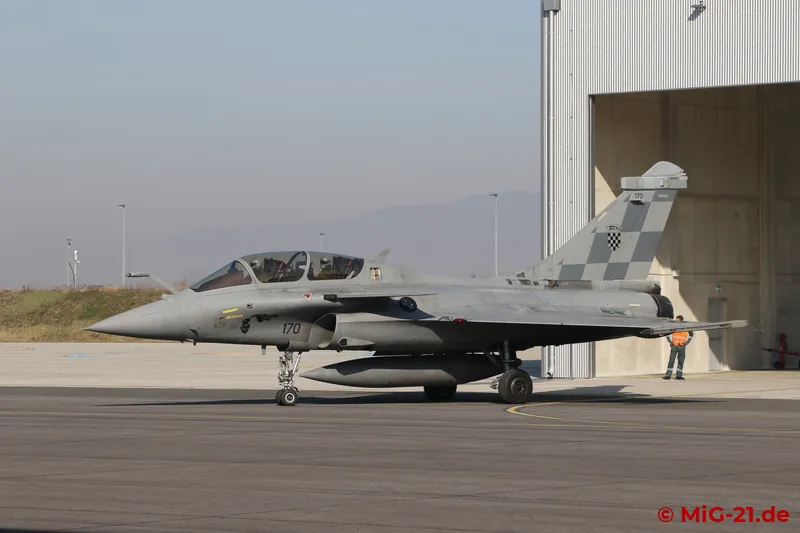
Our visit begins with a relaxed conversation in the common room of the squadron's newly built personnel building. And not only this building is new, but everything in the way of maintenance buildings and aircraft shelters in the neighbourhood. Rafale City the complex is called, built in preparation for the conversion of the Croatian combat aircraft fleet to the French multi-role aircraft, of which 10 of the 12 ordered are already in the country. In the common room, however, the MiG-21 era still dominates. Its twin-barrel GSh-23 cannon hangs on the wall, as does the R-60 air-to-air missile with which the Croatian MiG-21bisD on QRA were armed until the very end.
The typical shrill whistle of the Rafale engines interrupts our conversation and urges us to leave. Unlike the MiG-21s, the Rafales are flying today, and of course we want to be there for the take-off. Three aircraft – one two-seater and two single-seaters – stand with engines running in their shelters and are just carrying out their pre-flight checks, watched both by Croatian ground crew and by numerous French specialists on site as part of the manufacturer's support. For someone who knows the MiG-21, the whole process takes an incredibly long time, but powering up the systems of a complex fourth-generation aircraft simply takes much more time than switching on the equipment of a fighter designed in the 1950s.
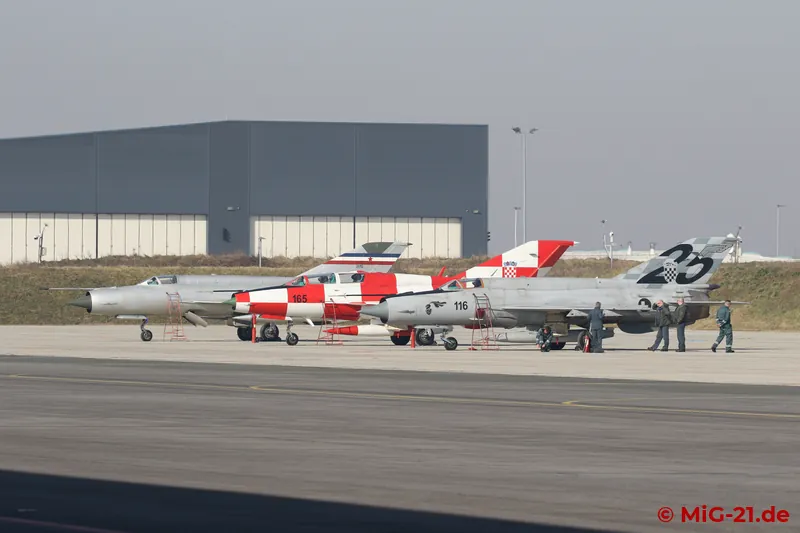
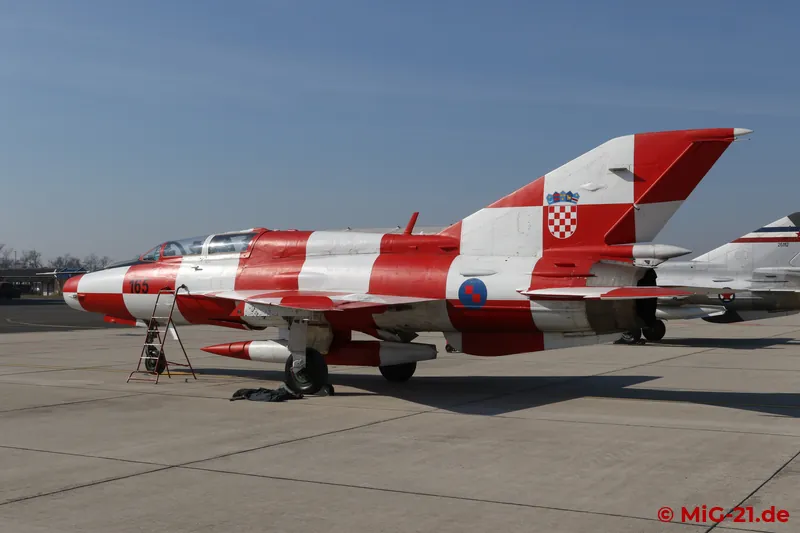
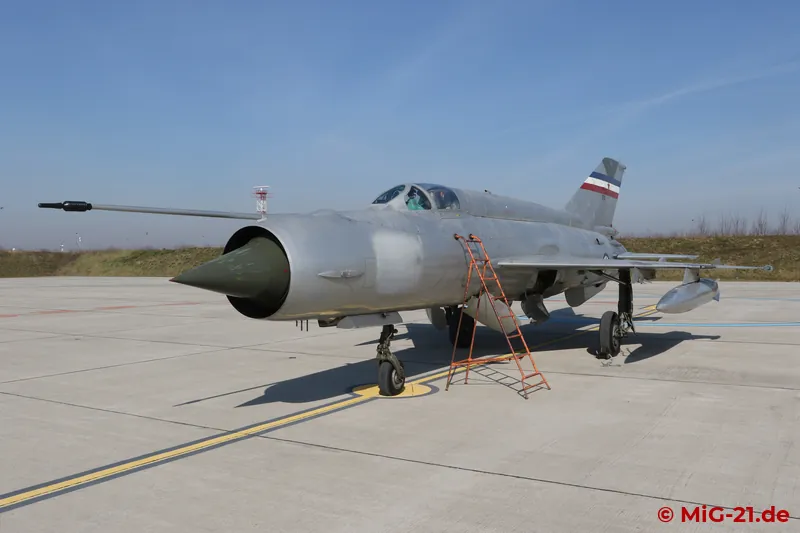
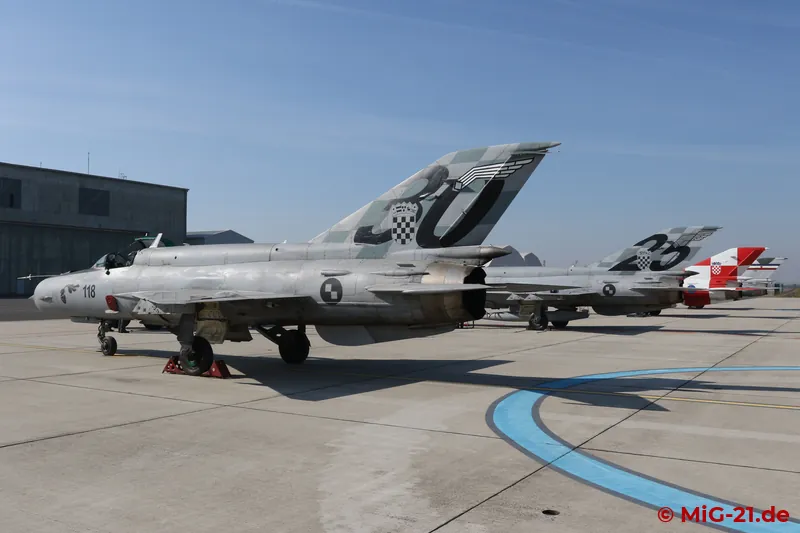
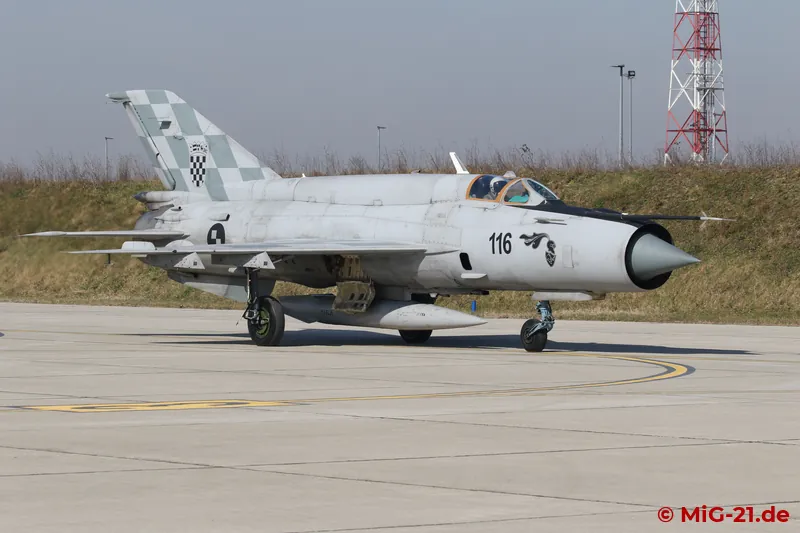
While we wait for the Rafales to taxi out, my gaze and my camera lens keep swinging to the flightline, because three MiG-21s stand there in the sunshine: the grey 116 with the large 25 on the fin, which also made the last flight in December, the red and white 165 in the Croatian national colours alias "Kockica", and the silver 26112 with Yugoslav national insignia, in which the first commander of the Croatian Air Force, Rudolf Perešin, fled to Austria in 1991.
Then the Rafales finally taxi off and we go over to the MiG-21s, where some technicians have already gathered. Asked about my wishes regarding the programme, I ask to be able to see and photograph a complete flight preparation – something I last saw in Croatia at the open day in 2011 mentioned above. Lieutenant Colonel Milatović offers to start the aircraft afterwards and taxi it a little. He is just no longer allowed to take off. I accept the offer enthusiastically, as it gives me exactly the pictures that have always been denied to me in recent years. And I express another wish straight away: I would like to photograph 118, which I had seen in one of the aircraft shelters and which received a large 30 on its fin for the 30th anniversary of the HRZ, from the left side, because this marking was only applied there, but I had only photographed the aircraft from the right since. That is no problem either, I am told. And while I had actually expected to walk to the aircraft's location later, it is simply towed next to the others.
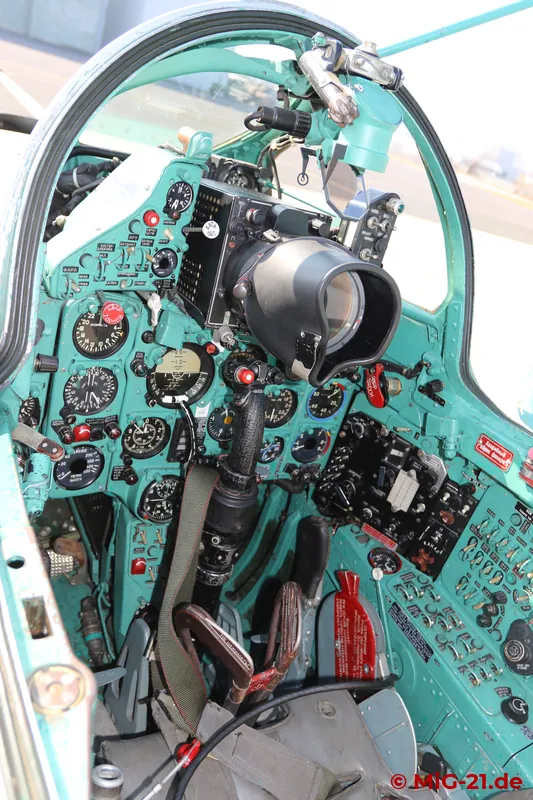
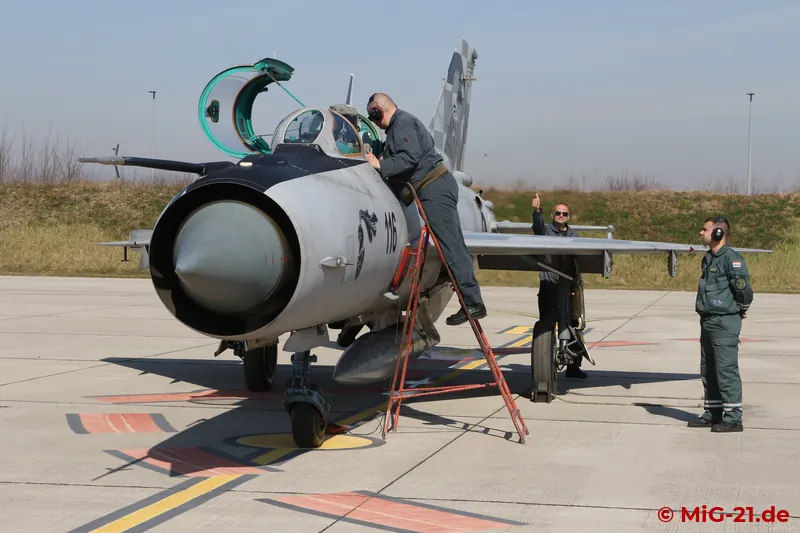
But now it is first time for photos of the technical servicing and for detail shots. 116, the aircraft of which I have taken the most pictures in all the years of my involvement with the MiG-21, is in visibly good condition but also shows traces of intensive use. Under the fuselage hangs a drop-tank signed by the pilots and technicians of the 191st ELA at the squadron anniversary in January 2024, which has since been carried on all last flights of both the individual aircraft and the pilots. Of course I take the opportunity to sit in the cockpit. Who knows whether there will ever be another chance?
After a few pictures of "Kockica", which has not flown for some time and obviously had to serve as a spare parts donor, I am drawn to 26112, which I saw for the first time at the AirVG airshow last year and which looks externally as if it had just landed at Klagenfurt. When I am then even allowed to look into the cockpit, the word "time capsule" comes to mind. Everything is exactly as it was 34 years ago. No later installations dilute the picture of the classic MiG-21. In addition, the version is a real rarity, namely the MiG-21R reconnaissance version. The NVA did not have it at all, and all other operators had at most one regiment, often only one squadron of it, including the Yugoslavs, whose 352nd iae (izviđačka avijacijska eskadrila – reconnaissance squadron) was based in the underground facilities of Željava near Bihać. Produced from 1966, this MiG-21 differs markedly from the later MiG-21bis, especially in the design of the cockpit.
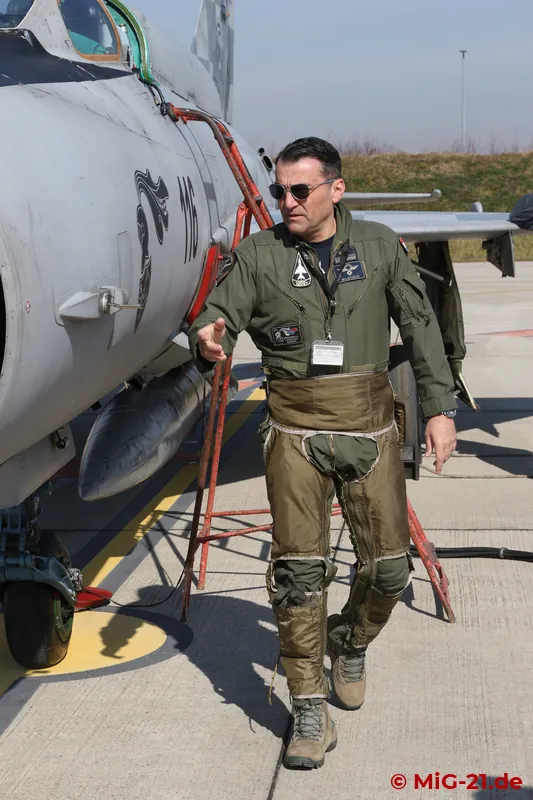
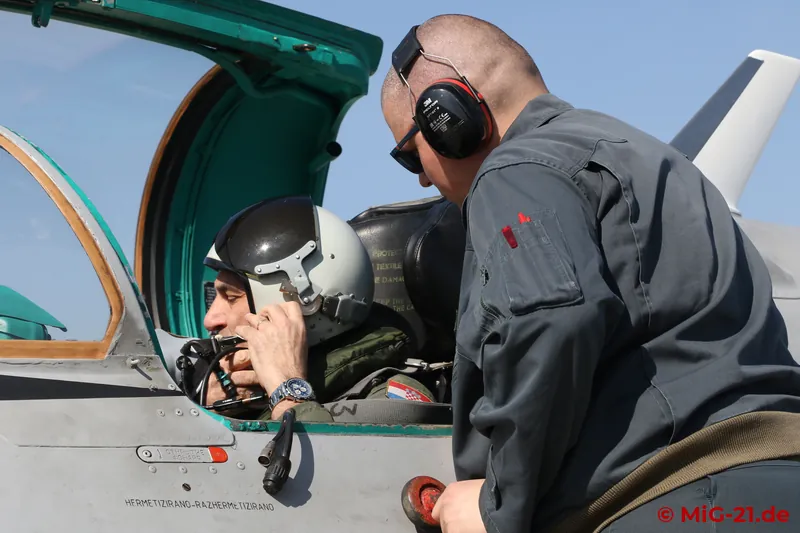
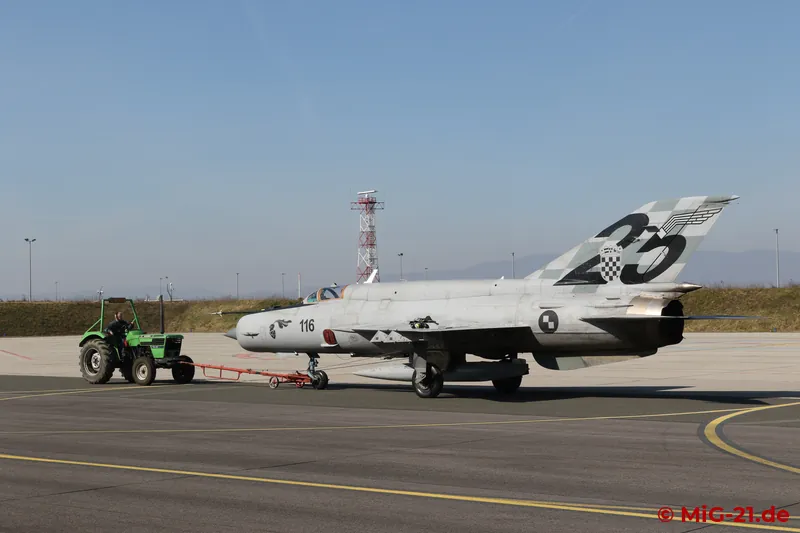
In the meantime 118 has arrived at the flightline, and after I have photographed the winged 30 from all angles, the start cart for the "take-off" of 116 is already rolling up, a Soviet APA-5 on a Ural truck. Lieutenant Colonel Milatović has fetched his complete equipment in the meantime – helmet, mask, life jacket and g-trousers – so that externally there will be no difference from a real take-off. And he insists on doing a complete and very detailed walk-around of his aircraft. He puts on his equipment, climbs into the cockpit and then the technician signals: start up! The start cart's engine rumbles into life and a short time later the engine of 116 spools up too. The external power cable is removed and the functional checks begin. The flaps are set to 25 and 45 degrees, the function of the flap blowing system is checked, and after the mechanic at the wing has signalled his OK, the technician closes and locks the canopy. Ladder, intake covers and chocks are removed. The technician gives the signal to taxi, Lieutenant Colonel Milatović releases the brakes and 116 taxies out for take-off. Or at least it looks like it, until at the end of the flightline it turns in and taxies back behind the other MiGs to its parking position. The aircraft does two more rounds until I signal that I have enough pictures in the can. Above all, I had always wanted the shots with the earth wall typical of Pleso in the background – now I have finally got them. The technician gives the signal to stop and Lieutenant Colonel Milatović brings the aircraft to a halt at its parking position. He had already opened the canopy while taxiing. It is certainly hot in the cockpit, as the sun is now at its zenith and the air conditioning only works at engine speeds of 50% and above, which are not reached while taxiing. Comfort was never a priority in Soviet aircraft design.
After the "flight", too, there is no deviation from procedure. The ladder is placed against the aircraft, intake screens and chocks go into their designated positions. Pilot and technician make their entries in the aircraft log. Everyone involved enjoys carrying out the familiar routines and yet would be much happier if the MiG-21 were really flying. According to the technicians, the aircraft documents are still valid until the end of April, so a flight would still be possible. But this is opposed by the official decision to end flight operations. The technicians respond to my objection that extending the operating permit is only an administrative act and that the aircraft could fly much longer with a pained expression. It becomes even more pained when I add that my expectation, and that of my Croatian friends, is that the MiG-21 will still fly for the 30th anniversary of victory in the Homeland War in August.
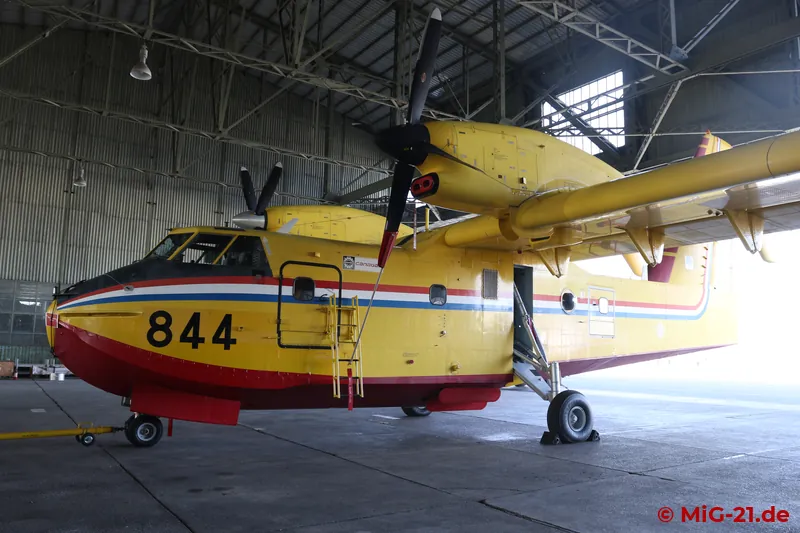
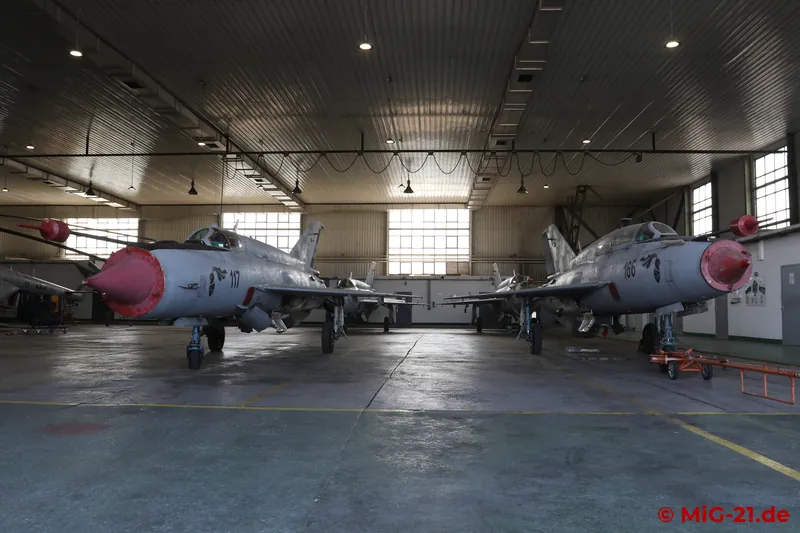
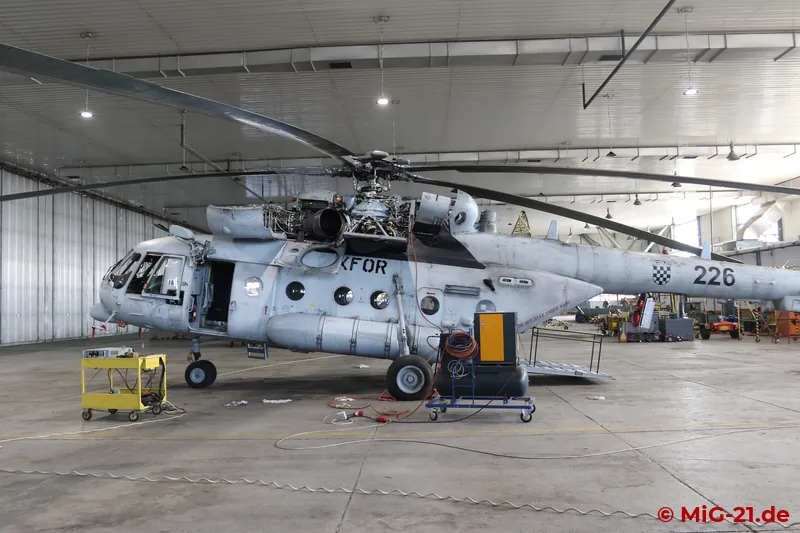
After the action part, my third wish is also to be fulfilled – to take pictures of all remaining aircraft, but above all of 134, which I never photographed because it only flew for a short time due to inconsistencies in the Ukrainian aircraft documents. That is not quite right, though. Originally intended for Yemen, I photographed it as 2235 at Odessa in 2009. Back then it was still yellow and brown; now it is grey, like the other Croatian MiGs. Together with its sister aircraft it is stored in the old hangar from Yugoslav times. Also there are a Canadair CL-415 fire-fighting aircraft and two Mi-171 helicopters, flown over for maintenance from their home base Lučko a few kilometres away.
Before I disappear into the depths of the hangar, it is time to say goodbye to my companions from the German military attaché staff, for whom another appointment is already waiting, and to thank them once more for their support, which was decisive for the success of today.
To my surprise, the hangar also contains 122, one of the MiG-21bisD with the green and grey paint from the overhaul at Aerostar Bacău. Wings and tailplane have been removed. Complete, on the other hand, are the single-seaters 131, 132 and 133 delivered from Ukraine, which also stand in the open part of the hangar. The latter still carries the three drop-tanks as in the static display at AirVG last May.
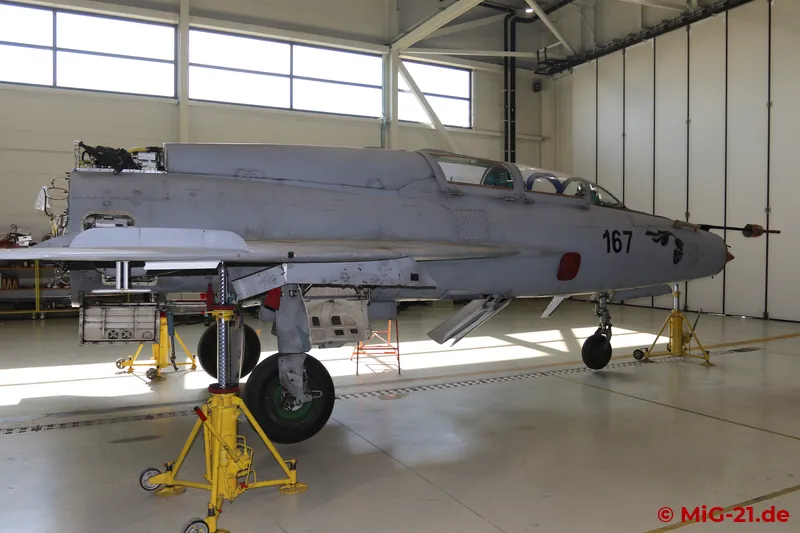
Behind large doors the remaining aircraft can be found – 134, which I was looking for, 135 and 117, which last flew over Knin for the victory celebrations in August 2024. As the only one of four two-seaters of the second upgrade round, 166 is also stored next to them. Its sister aircraft 164 crashed in December 2022 as a result of a technical defect. Lieutenant Colonel Milatović and his colleague Major Ivan Lukan ejected successfully. The red and white 165 is still standing outside on the flightline, and 167 is already being prepared in the QRA building for display at the Technical Museum in Zagreb. Of course I ask to photograph this aircraft as well, and this wish too is granted. 167 stands on jacks in the hall, with its tail removed and without an engine, and is to be brought into technically perfect condition over the next few weeks before being transferred to the museum.
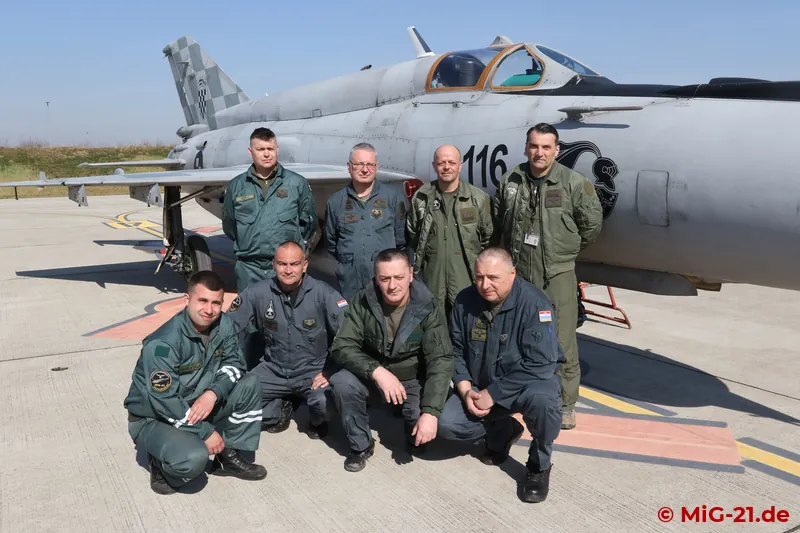
With that the visit programme is actually complete, but before the aircraft are towed away from the flightline, there is to be a picture with the "last of the Mohicans" of MiG-21 operations. Of the last three MiG-21 pilots on QRA, at least two are available, plus six technicians who are still working on the MiGs.
When these pictures are in the can, many more are taken during towing, after all that is part of the technical servicing too. Besides, over the years I have developed a special fondness for the mostly country-typical towing vehicles and am not disappointed this time either. A local tractor, made in Rijeka, pulls the aircraft back to their parking positions.
Only when the last aircraft has disappeared do we make our way back to the squadron building. With a heavy heart I have to decline the offer to also see the Rafale maintenance and the simulator, because by now I have been on the airfield for a full five hours and the drive home of over 850 kilometres still lies ahead of me. With warm thanks for the hospitality I say goodbye to Lieutenant Colonel Milatović and his colleagues. In brilliant sunshine and with the good feeling of having said a dignified farewell to Europe's last MiG-21s, I set off for home.
The author thanks Lieutenant Colonel (GS) Burkhard Weber, Major Antonija Trupinić, Lieutenant Colonel Zvonimir Milatović and all members of the Croatian Air Force who made this visit possible.